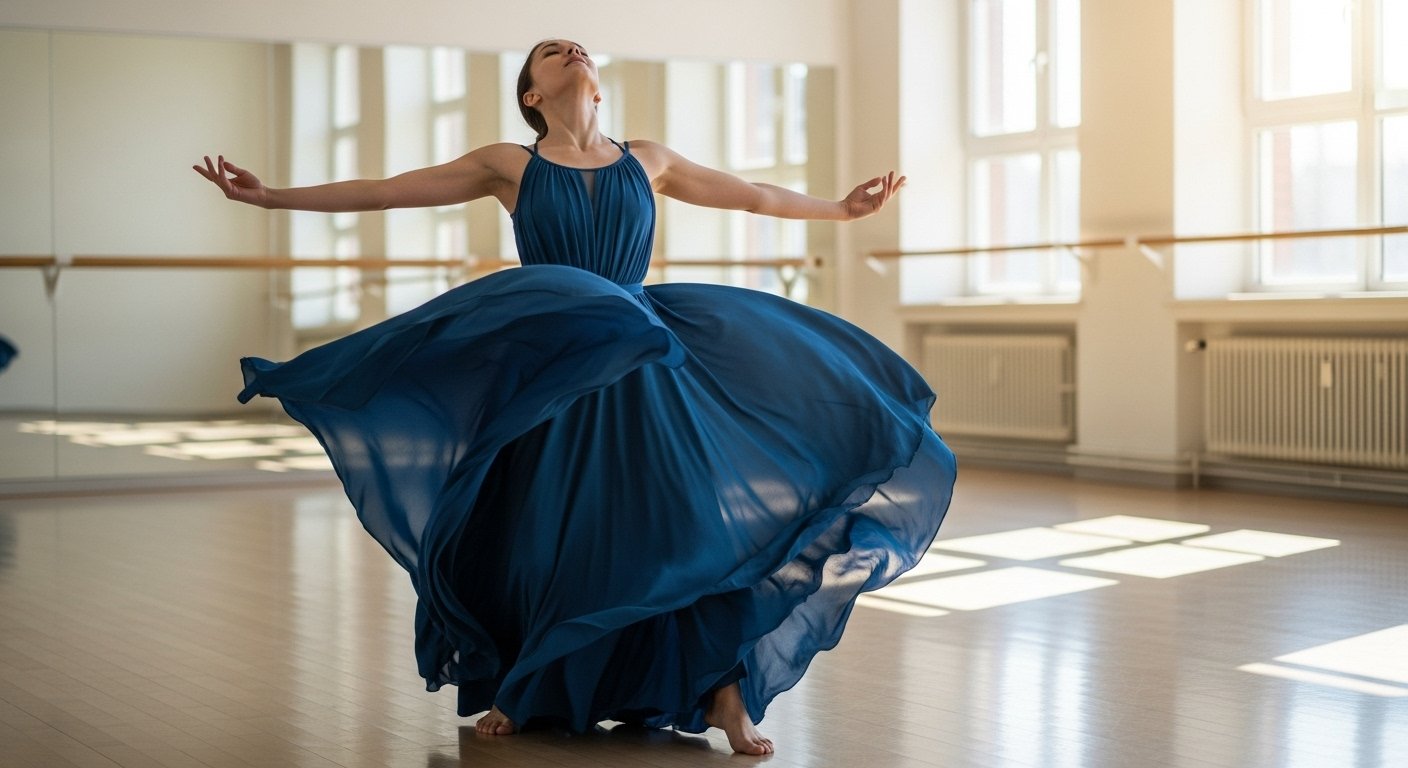
Unlocking your creative potential goes far beyond sitting at a desk or staring at a blank canvas. Movement and embodied creativity tap into the wisdom of the body to unleash deep creative flow, fostering innovation and fresh ideas. This blog explores how embodied practices can transform your creative process, enhance mental clarity, and inspire original work.
Table of Contents
- Understanding Embodied Creativity and Its Importance
- How Movement Enhances Creative Flow
- Top Practices to Unlock Embodied Creativity
- The Science Behind Movement and Creativity
- Creating Your Own Embodied Creativity Routine
- Benefits of Embodied Creativity in Daily Life
- Tips for Sustaining Creative Flow Through Movement
- Common Obstacles and How to Overcome Them
- Tools and Resources for Movement-Based Creativity
- Frequently Asked Questions (FAQs)
- Conclusion: Embrace Your Body to Fuel Creativity

Understanding Embodied Creativity and Its Importance
Embodied creativity connects the mind and body, highlighting how physical movement influences creative thinking.
Embracing this holistic approach shifts creativity from a purely intellectual exercise to an immersive experience that engages senses, emotions, and intuition.
When we move our bodies, we can break habitual thought patterns and access deeper insights that often remain hidden in stillness.
This practice is essential for artists, writers, innovators, and anyone seeking to enrich their creative output authentically.
Many people find that when they allow their bodies to lead, mental blocks dissolve and fresh perspectives emerge. Emphasizing embodiment fosters a deeper connection with one’s authentic self and creative potential.
Ultimately, embodied creativity cultivates resilience, adaptability, and a richer expression of originality.
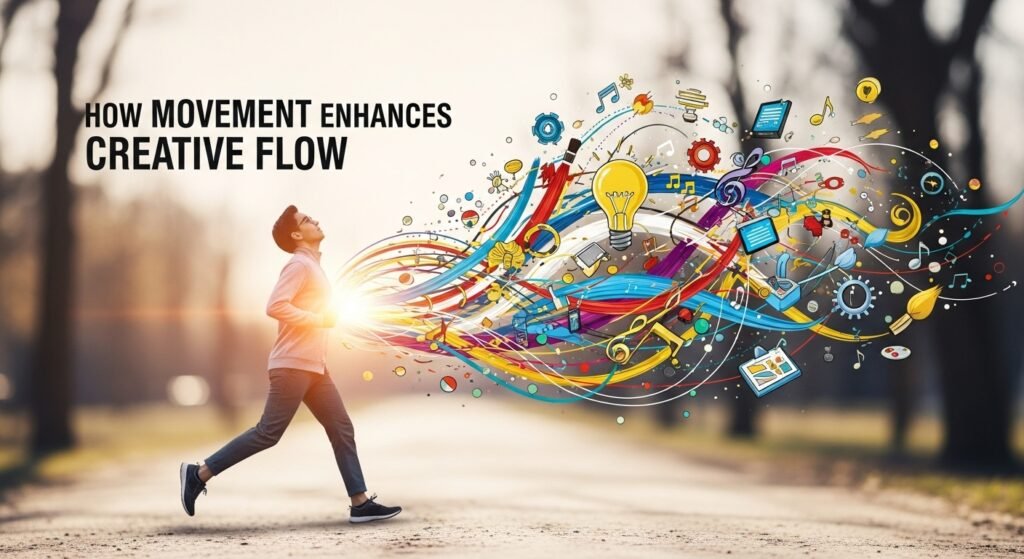
How Movement Enhances Creative Flow
Movement activates multiple brain regions responsible for problem-solving, imagination, and emotional processing.
Physical activity—whether dancing, yoga, or simple stretches—increases blood flow and oxygen, boosting brain function.
It also reduces stress and activates the parasympathetic nervous system, allowing the mind to enter a relaxed state, known as flow, where ideas surface effortlessly.
Integrating movement into creative routines helps dissolve mental blocks and nurtures continuous inspiration.
- Increases Blood Flow to the Brain: Physical movement boosts circulation, delivering more oxygen and nutrients to brain cells, which enhances cognitive function and creative thinking.
- Stimulates Neurotransmitter Release: Activities like dancing or walking trigger the release of dopamine and serotonin, chemicals that improve mood and motivation crucial for creative flow.
- Reduces Stress and Anxiety: Movement activates the parasympathetic nervous system, helping to lower cortisol levels and create a relaxed mental state conducive to innovation.
- Breaks Mental Ruts: Physical activity disrupts habitual thought patterns, encouraging flexible thinking and opening new pathways for creative ideas.
- Enhances Body Awareness: Engaging the body increases sensory input and mindfulness, deepening the connection between intuition and conscious creativity.
- Promotes Flow State Entry: Movement facilitates a harmonious mind-body rhythm, making it easier to enter and sustain the immersive, focused state known as creative flow.
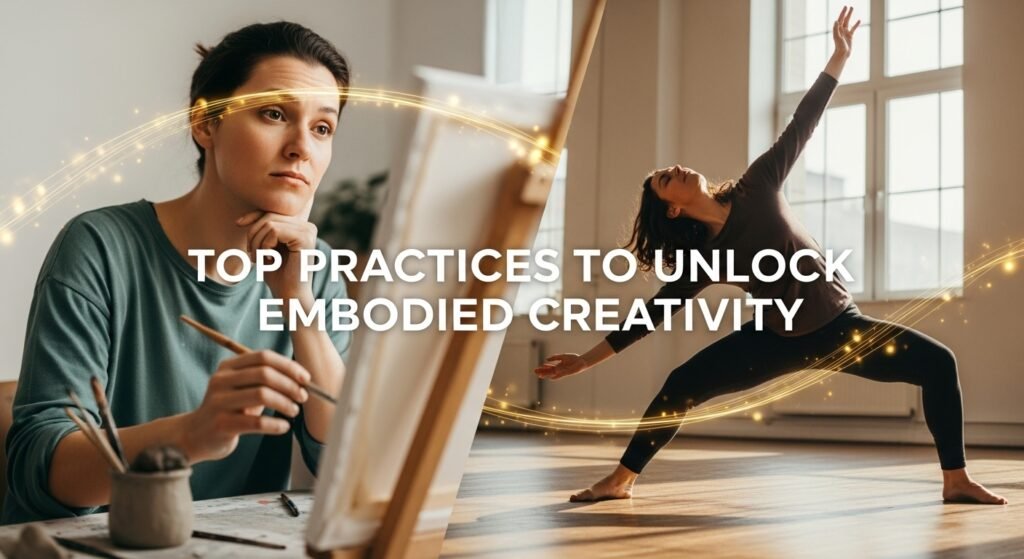
Top Practices to Unlock Embodied Creativity
Incorporating movement into creative practices helps unlock fresh perspectives and flow states. Some effective practices include:
- Expressive Dance: Freely moving to music without judgment.
- Mindful Walking: Walking with focused attention on breath and body sensations.
- Yoga Flow: Linking breath with fluid poses to enhance body awareness.
- Improvisational Movement: Spontaneous movement based on impulses and feelings.
- Tai Chi or Qigong: Slow, intentional movements that harmonize energy.
- Body Scan Meditation: Tuning into bodily sensations to promote mindfulness.
- Stretching Breaks: Activating muscles to break sedentary patterns.
- Creative Play: Using playful movements like skipping or hopping.
- Breathwork with Movement: Coordinating breathing exercises with gentle motion.
- Guided Movement Visualization: Imagining dynamic movement patterns to stimulate creativity.
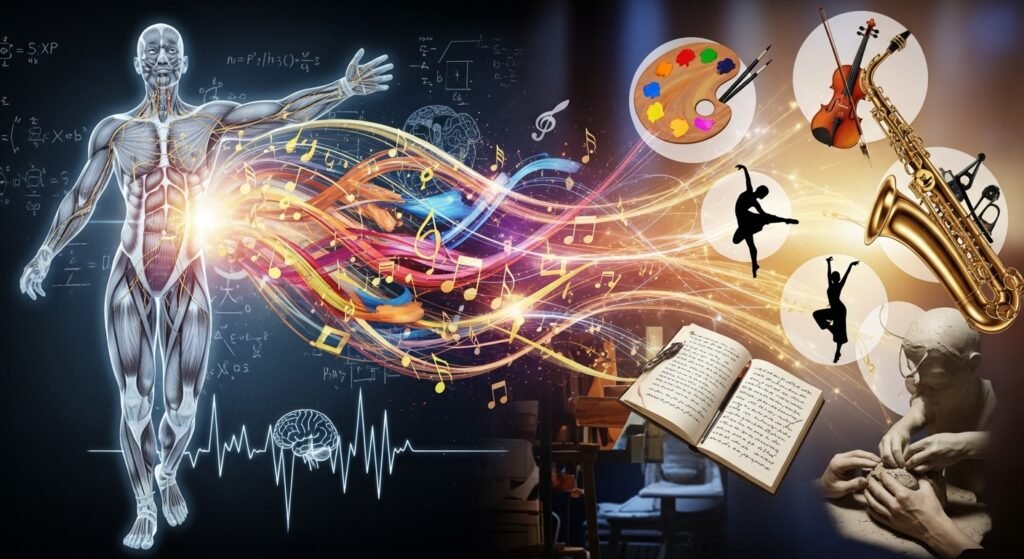
The Science Behind Movement and Creativity
Scientific studies offer evidence that physical activity significantly enhances creative thinking.
Research shows that aerobic exercises like walking increase divergent thinking, a key component of creativity. Movement stimulates dopamine release, improving motivation and novelty seeking.
Neuroplasticity—the brain’s ability to reorganize itself—is boosted by consistent embodied practices, enabling more flexible and innovative thought processes.
This biological basis explains why moving the body sparks creative breakthroughs.
- Research indicates that the freedom to make self-determined movements, rather than any movement itself, plays a key role in enhancing flexible thinking and creativity by allowing the brain to engage in novel and spontaneous ways.
- Movement increases blood flow and oxygen to the brain, which supports higher cognitive functions and stimulates brain regions involved in creativity and problem-solving.
- Creativity is supported by the dynamic interaction of multiple brain networks, including the default mode network (DMN), which facilitates spontaneous idea generation, and the executive control network (ECN), which evaluates and refines those ideas.
- Movement stimulates neurotransmitter release, such as dopamine, which boosts motivation, mood, and the brain’s capacity for innovative thinking.
- The brain’s ability to switch efficiently between the DMN and ECN during movement allows for a rich integration of imaginative thinking and critical analysis, essential for creative breakthroughs.
- Neuroplasticity, the brain’s capacity to reorganize and form new connections, is enhanced by regular physical activity, promoting more flexible and original creative thinking over time.
These scientific insights explain why engaging the body through movement can unlock creativity in practical and meaningful ways.
Creating Your Own Embodied Creativity Routine
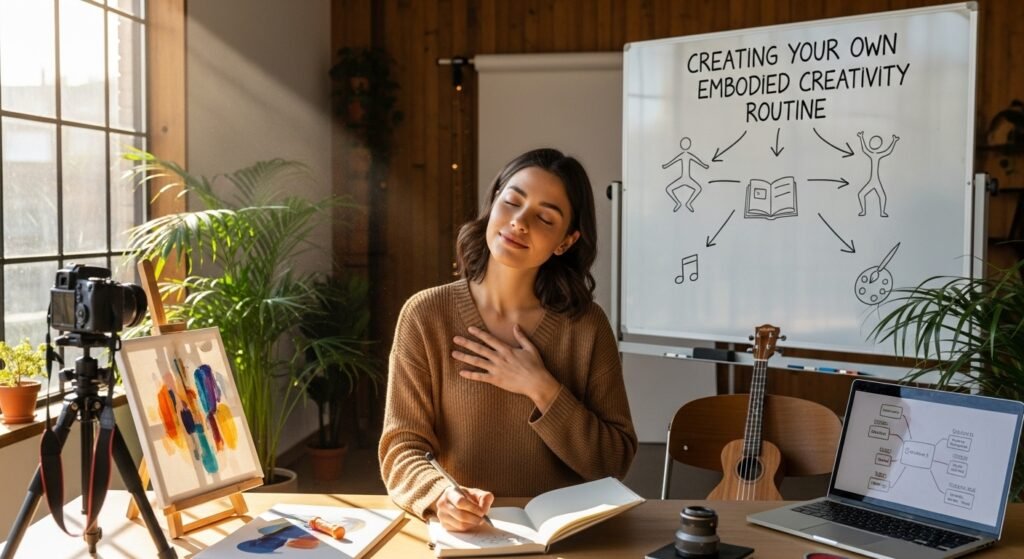
Creating a personalized embodied creativity routine is a powerful step toward making movement an integral part of your creative process.
Start by tuning into your body’s needs and preferences, selecting movement practices that feel enjoyable and inspiring rather than forced.
Consistency matters, so incorporate these practices regularly, even if just for a few minutes each day. Set a calming space free from distractions where you can focus fully on your body’s sensations.
Begin your routine with mindful breathing or a brief body scan to anchor your awareness.
Experiment with different types of movement, like yoga, walking, or expressive dance, to find what best ignites your creativity.
Combine movement sessions with creative tasks such as journaling or sketching to capture fresh ideas.
Keep a journal of how your body feels before and after movement to track its impact on your creativity. Allow flexibility for rest and adaptation, honoring your body’s rhythms.
Over time, you’ll deepen your mind-body connection, cultivating a steady flow of creative energy that supports innovation and well-being.
Tips to Build Your Routine:
- Start with 5-10 minutes of movement daily and gradually increase time.
- Mix mindfulness practices with active movements like stretching or dance.
- Use music or nature sounds to inspire your sessions.
- Pair movement with creative brainstorming or writing afterwards.
- Keep a creativity journal to record insights and progress.
- Adjust your routine based on how your body and mind respond each day.
This approach transforms your creative work into a holistic, embodied experience that nurtures innovation at every level.
Benefits of Embodied Creativity in Daily Life
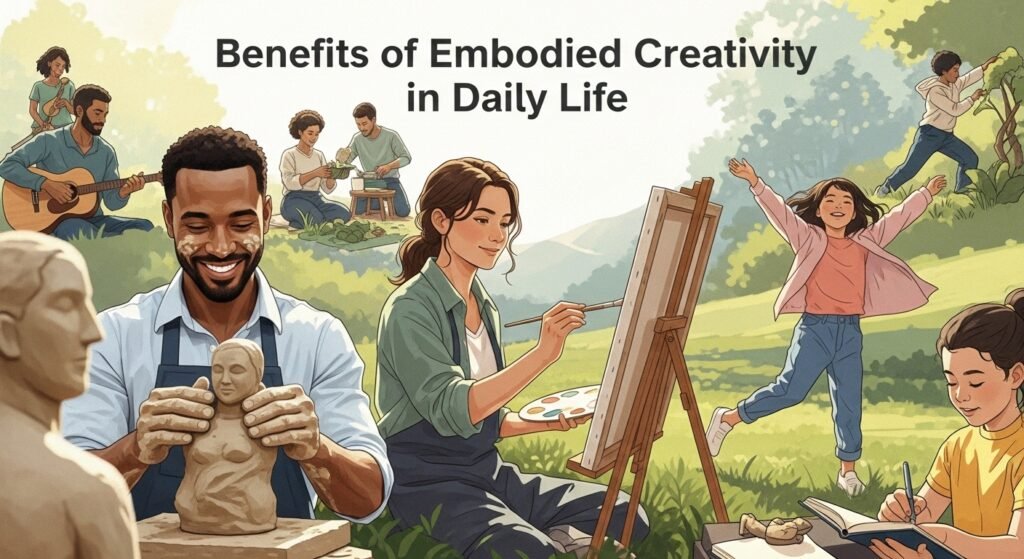
Engaging in embodied creativity offers numerous benefits beyond artistic expression:
- Enhanced problem-solving ability
- Reduced creative blocks and burnout
- Improved mood and stress resilience
- Stronger connection between mind and body
- Greater self-awareness and emotional intelligence
- Increased energy and motivation
- Deeper engagement during creative tasks
- Fresh perspectives and innovation
- Overall mental and physical well-being
Tips for Sustaining Creative Flow Through Movement
Sustaining creative flow through movement requires developing habits that consistently engage both body and mind.
Establishing a regular routine of movement, whether through stretching, walking, or dancing, conditions the brain to anticipate creative activity.
Using music as a trigger for movement can deepen focus and stimulate emotional connections, enhancing flow.
It’s important to balance movement intensity with rest to avoid burnout and maintain mental clarity.
Experimenting with different movement styles keeps the practice fresh and inspiring, preventing stagnation.
Lastly, cultivating mindfulness during movement helps you stay present, allowing creative ideas to emerge naturally without forcing them.
Maintaining a steady creative flow requires intention and care. To sustain movement-based creativity:
- Schedule consistent movement breaks.
- Vary movements to avoid monotony.
- Use music or nature sounds to inspire spontaneity.
- Practice non-judgmental awareness of your body’s signals.
- Combine movement with other creative activities.
- Create a dedicated space that encourages physical expression.
- Stay hydrated and well-nourished for optimal performance.
- Rest when needed; overexertion can block creativity.
- Connect with community groups or classes for motivation.
- Reflect regularly on how movement influences your work.
Movement Practices to Unlock Creative Flow
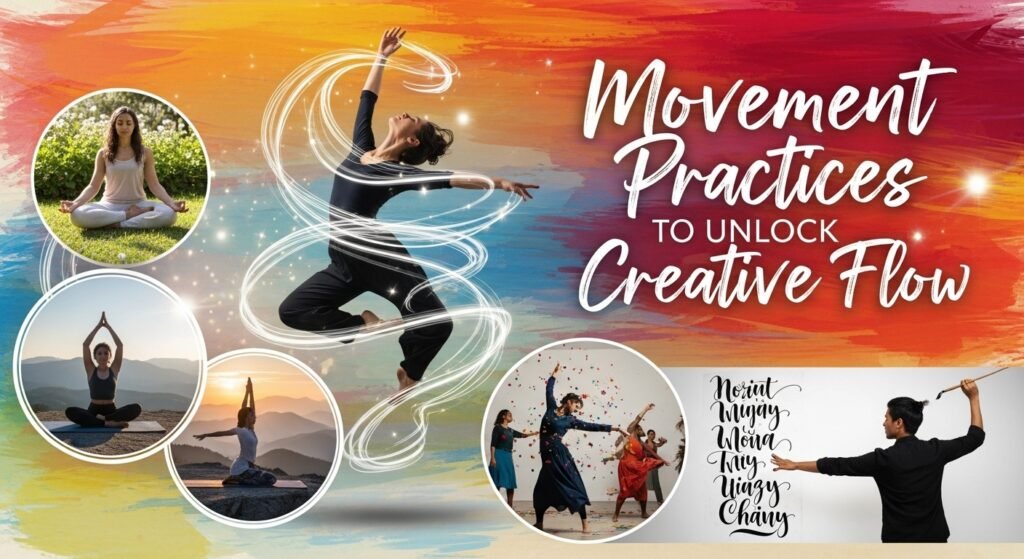
Incorporating practical movement exercises into your routine can significantly enhance embodied creativity and help unlock your creative flow. Below are detailed, easy-to-follow movement practices designed to activate your body, stimulate your mind, and foster a seamless flow of creative energy.
Expressive Dance (10 minutes)
Stand in an open space and play your favorite music. Allow your body to move freely without any structured steps or judgment. Focus on how your body feels and responds to the rhythm. Let your arms, legs, and torso express emotions or ideas through spontaneous movement. This practice releases tension, encourages emotional expression, and enhances intuitive creativity.
Mindful Walking (15 minutes)
Choose a quiet path, preferably outdoors. Walk slowly and with intention, paying close attention to the sensations of each step—how your feet lift, move forward, and touch the ground. Coordinate your breath with your steps, such as inhaling for three steps and exhaling for three steps. This practice grounds your creativity by connecting your mind with the natural rhythm of your body and environment.
Yoga Flow (20 minutes)
Engage in a gentle sequence of yoga poses that connect breath and movement. Include poses like Cat-Cow, Downward Dog, Warrior, and Child’s Pose. Move fluidly between poses, focusing on breath awareness, flexibility, and release of muscular tension. Yoga flow enhances body awareness, calms the nervous system, and creates mental space for creative ideas to surface.
Improvisational Movement (10 minutes)
Set a timer and invite yourself to move however you feel compelled for that time. Use any part of your body—hands, feet, torso, neck—and vary the speed, direction, and intensity. Imagine you are expressing a story or emotion through movement. Improvisational movement helps shake off rigid thinking patterns and fosters authenticity and originality in creativity.
Tai Chi or Qigong (15 minutes)
Follow a beginner Tai Chi or Qigong routine with slow, deliberate movements emphasizing balance, breath, and energy flow. These practices harmonize physical and mental energy, promoting relaxation and heightened sensory awareness, both critical for accessing creative insights.
Body Scan Meditation with Movement (10 minutes)
Start seated or standing comfortably. Slowly scan your body from head to toe, noticing areas of tension or stagnation. Then gently move those areas with small rotations, stretches, or shakes. This mindful scanning combined with movement enhances self-awareness and invites creative energy release.
Stretching Breaks (5 minutes)
Take short breaks to stretch major muscle groups—neck, shoulders, back, wrists, and legs. Stretching not only improves circulation but also interrupts sedentary habits that can dull mental sharpness, making it easier to jump back into creative tasks with fresh energy.
Creative Play (10 minutes)
Engage in playful movements like skipping, hopping, or spinning. These light-hearted actions invigorate the body and mind, reduce stress, and open up pathways for joyful, imaginative thinking.
Breathwork with Movement (10 minutes)
Combine deep breathing exercises with gentle movements like arm lifts, side stretches, or gentle twists. For example, inhale deeply while raising your arms overhead, and exhale as you lower them. Coordinating breath with movement syncs body rhythms and clears mental clutter, enabling a focused creative flow.
Guided Movement Visualization (10 minutes)
Close your eyes and visualize moving through different environments, such as walking through a forest, dancing in a meadow, or flowing like water. Then, physically translate these visualizations into corresponding movements. This practice awakens imagination and body connection simultaneously, enriching creative expression.
These movement practices are designed to be adaptable and can be mixed and matched according to your preferences and schedule. Integrating them daily or several times a week can cultivate a rich, embodied creative flow that empowers every aspect of your work and life.
Common Obstacles and How to Overcome Them
Many face challenges when integrating embodied creativity and movement into their routines.
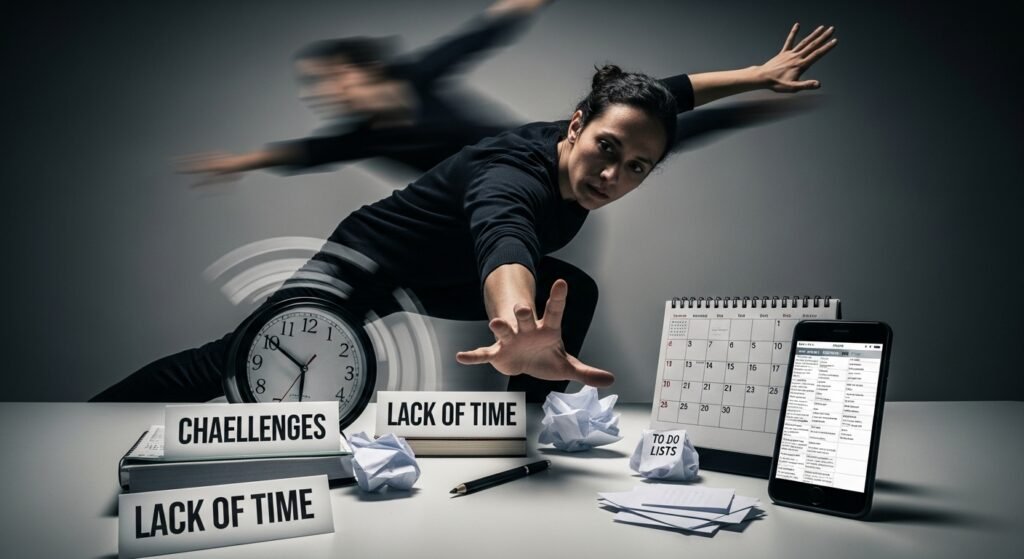
One common obstacle is a lack of time due to busy schedules, which can be addressed by incorporating short, intentional movement breaks.
Another hurdle is self-consciousness or fear of judgment, which can be eased by practicing in private or with trusted groups.
Physical limitations may also restrict movement choices, but adaptive practices like gentle stretching or seated exercises provide alternatives.
Resistance to change or unfamiliarity with movement practices can create mental barriers; cultivating curiosity and starting small can help overcome this.
Lastly, mental fatigue or stress can block creative flow, but mindful movement serves as an effective reset to refresh both body and mind.
Embracing flexibility and patience is key to sustaining embodied creativity.
Creative individuals often face challenges adopting movement:
- Time constraints—integrate micro-movements or short walks.
- Self-consciousness—start in private spaces or use guided audio.
- Physical limitations—choose gentle, adaptive movement practices.
- Resistance to change—focus on curiosity rather than performance.
- Mental fatigue—use movement as a mental reset tool.
Addressing these obstacles fosters a sustainable creative process rooted in embodiment.
Tools and Resources for Movement-Based Creativity
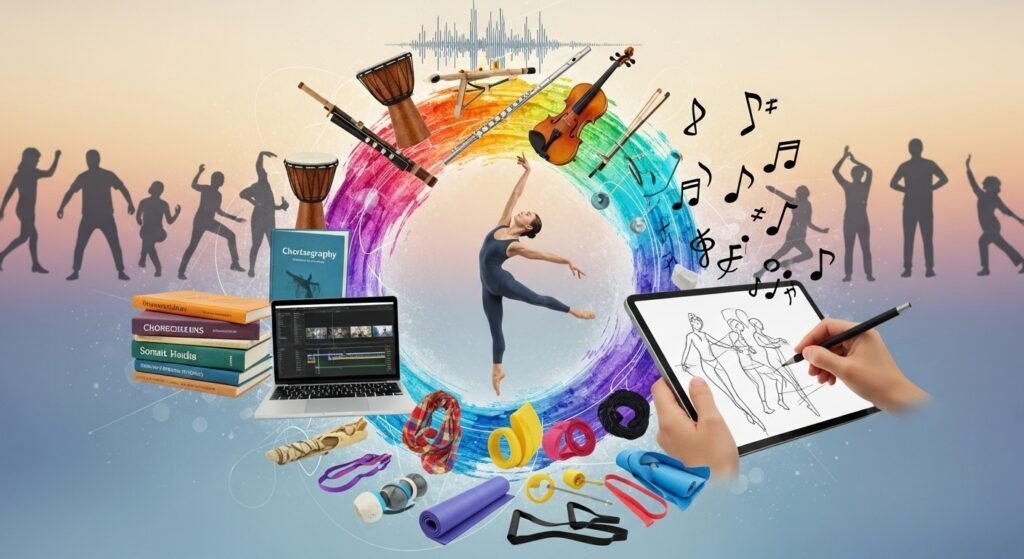
Many tools facilitate embodied creativity practices:
| Tool/Resource | Description | Use Case |
|---|---|---|
| Movement Apps | Offer guided dance, yoga, and breathwork sessions | Structure daily routines |
| Journals | Track creative insights and physical experiences | Reflect after movement |
| Music Playlists | Curated selections for different movement styles | Inspire rhythm and mood |
| Online Classes | Tai Chi, improvisation, or expressive dance | Learn new techniques and community connection |
| Wearable Trackers | Monitor physical activity and heart rate | Optimize timing for creative bursts |
Frequently Asked Questions (FAQs)
- What is embodied creativity?
Embodied creativity is using physical movement to enhance creative thinking and expression by connecting the mind and body. - How does movement stimulate creativity?
Movement increases blood flow to the brain, releases dopamine, and reduces stress, all of which support creative flow. - Can simple movements help, or does it require intense exercise?
Even simple movements like stretching and mindful walking can significantly boost creativity. - How often should I practice embodied creativity?
Daily practice of 5-20 minutes can make a noticeable difference in creative flow. - Is embodied creativity only for artists?
No, professionals in any field can benefit from movement to enhance problem-solving and innovation. - What types of movement are best for creativity?
Expressive dance, yoga, tai chi, and mindful walking are popular and effective options. - Can movement overcome creative blocks?
Yes, movement helps break stagnant thinking and invites fresh ideas. - How do I integrate movement into a busy schedule?
Use short movement breaks or combine movement with routine tasks like walking meetings. - Are there mental benefits apart from creativity?
Movement also improves focus, mood, stress resilience, and mental clarity. - Can group movement activities enhance creativity?
Yes, group activities often boost motivation, inspiration, and social creativity.
Conclusion: Embrace Your Body to Fuel Creativity
Movement and embodied creativity are powerful allies in the quest to unlock creative flow. By integrating mindful physical practices into daily routines, you engage the whole self—mind, body, and spirit—fostering a fertile environment for innovation and inspiration. Whether through dance, yoga, walking, or playful movement, honoring your body’s wisdom transforms how you create and connect with your inner muse. Embrace this dynamic approach and watch your creativity flourish like never before.