
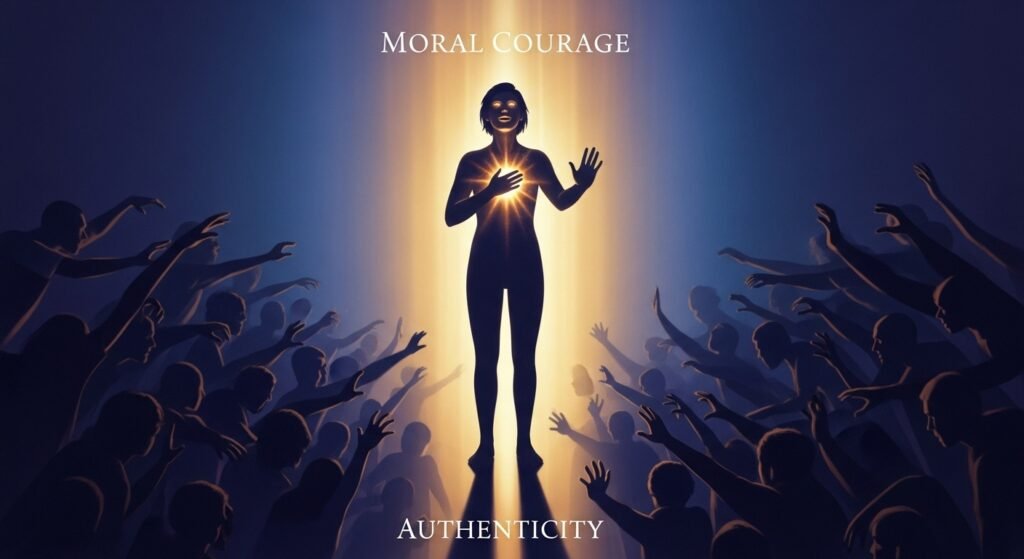
Moral courage & authenticity are the twin pillars of a fulfilled and empowered life. In a world that often rewards conformity and silence, choosing to stand firm in your truth requires bravery and deep self-awareness. Discover how embracing moral courage and wholeheartedly living with authenticity not only transforms your personal growth but also inspires trust and meaningful connection in every area of life.
In an age where societal pressures often dictate conformity, cultivating moral courage and authenticity becomes an essential pursuit for meaningful living. Bahlon, a recognized thought leader in personal development and spiritual growth, offers profound lessons on how to embody these virtues to foster true empowerment, deep inner peace, and impactful relationships.
Table of Contents
- Introduction: The Power of Moral Courage and Authenticity
- Who is Bahlon? Insights into His Philosophy
- Lesson 1: Understanding Moral Courage and its Role in Authentic Living
- Lesson 2: The Transformative Power of Vulnerability in Courage
- Lesson 3: Overcoming Fear as a Pathway to Moral Bravery
- Lesson 4: Aligning Your Actions with Inner Truth for Authenticity
- Lesson 5: Cultivating Resilience through Integrated Moral Courage
- Practical Steps to Develop Moral Courage and Authenticity
- How Moral Courage Enhances Leadership and Personal Relationships
- Case Study: Real-World Application of Bahlon’s Teachings
- Frequently Asked Questions (FAQs)
- Conclusion: Embodying Courage and Authenticity for a Fulfilling Life
Introduction: The Power of Moral Courage and Authenticity
Moral courage is the strength to act according to your ethical beliefs despite fear or social pressure, while authenticity is the practice of living transparently and true to your inner self.
Together, these qualities create a powerful foundation for a fulfilled, impactful life.
Bahlon teaches that developing moral courage and authenticity unlocks profound personal transformation and fosters deeper, more honest connections.
Living courageously and authentically empowers you to navigate challenges with integrity and grace, fostering lasting self-respect and inspiring others.
- Moral courage empowers ethical decision-making.
- Authenticity strengthens self-confidence and trust.
- These qualities promote psychological resilience.
- Encourage transparent, respectful communication.
- Deepen personal and professional relationships.
- Support alignment between values and actions.
- Foster growth beyond fear and conformity.
- Enhance leadership grounded in integrity.
- Build emotional intelligence and vulnerability.
- Lead to a more meaningful, purpose-driven life.
Understanding the interplay of moral courage and authenticity is the first step towards transformational growth.

Who is Bahlon? Insights into His Philosophy
Bahlon is a personal development and spiritual mentor with a focus on empowering individuals to live lives of courage, authenticity, and aligned purpose.
Drawing on psychological principles and spiritual wisdom, Bahlon offers practical frameworks and contemplative insights that facilitate deep inner growth.
His teachings inspire people globally to overcome fear, embrace vulnerability, and act with integrity in alignment with their core truth.
Bahlon promotes the idea that moral courage and authenticity are accessible to everyone willing to embark on the inner journey.
- Integrates ancient wisdom with modern psychology.
- Advocates mindfulness and conscious awareness.
- Encourages transformational self-inquiry.
- Emphasizes living in harmony with personal values.
- Teaches emotional resilience and vulnerability as strengths.
- Supports leadership with compassion and ethical clarity.
- Provides meditative and journaling tools.
- Promotes community and collective awakening.
- Inspires holistic well-being and spiritual alignment.
- Offers scalable, adaptable practices for growth.
Bahlon’s philosophy centers on awakening authentic living through courage and conscious connection.

Lesson 1: Understanding Moral Courage and its Role in Authentic Living
Moral courage is more than just bravery; it is the conscious choice to uphold your ethical beliefs despite potential backlash or fear.
Bahlon stresses its importance as a cornerstone for authentic living and meaningful impact.
Without moral courage, authenticity becomes fragile and susceptible to external compromises.
True authenticity requires standing firm in your values, speaking your truth, and honoring your inner wisdom.
This lesson highlights that moral courage is a muscle developed through practice and self-compassion.
- It requires internal clarity on values and purpose.
- Enables integrity even under pressure.
- Strengthens trustworthiness and self-respect.
- Promotes ethical leadership and influence.
- Calls for emotional and spiritual bravery.
- Fosters honesty and transparency.
- Mitigates fear of rejection or criticism.
- Inspires empowerment and accountability.
- Encourages consistent alignment with truth.
- Serves as foundation for lifelong growth.
Moral courage anchors authenticity in real-world challenges.

Lesson 2: The Transformative Power of Vulnerability in Courage
Bahlon teaches that vulnerability is not weakness but a gateway to courage and authentic expression.
Embracing emotional exposure enables you to confront fears, reveal your truth, and build genuine connections.
Vulnerability fosters trust by inviting reciprocity and openness in relationships and leadership.
It requires moral courage to remain present with discomfort and uncertainty, ultimately strengthening resilience and deepening fulfillment.
- Vulnerability builds empathetic understanding.
- Encourages authentic communication and connection.
- Breaks down isolation caused by superficial appearances.
- Allows processing and healing of emotional wounds.
- Invites creativity and personal growth.
- Supports risk-taking necessary for change.
- Enhances emotional intelligence.
- Cultivates trust in yourself and others.
- Demonstrates moral courage in action.
- Inspires others to embrace their truth.
The courage to be vulnerable transforms relationships and self-acceptance.

Lesson 3: Overcoming Fear as a Pathway to Moral Bravery
Fear is the primary barrier to moral courage and authenticity.
According to Bahlon, acknowledging fear without allowing it to dictate actions is essential.
He advocates for mindful awareness, compassionate self-talk, and incremental exposure to fear-inducing situations.
Bahlon’s lesson emphasizes that fear is a natural signal, not a stop sign.
By embracing fear consciously, you expand your capacity for courageous living and deepen your connection with your higher self.
- Identify specific fears limiting authenticity.
- Use mindfulness to observe fear non-judgmentally.
- Practice reframing fear as opportunity.
- Employ breathwork or grounding techniques.
- Start with small courageous acts.
- Build supportive relationships for accountability.
- Journal fears and growth experiences.
- Visualize positive outcomes and strengths.
- Seek professional guidance if needed.
- Celebrate progress over perfection.
Transforming fear into fuel empowers sustained moral courage.

Lesson 4: Aligning Your Actions with Inner Truth for Authenticity
Authenticity flourishes when your actions consistently align with your inner truth and values.
Bahlon highlights this alignment as essential for living congruently, avoiding inner conflicts that cause stress or self-doubt.
This lesson teaches the importance of listening to your intuition and making conscious choices that reflect your core beliefs.
Acting authentically builds confidence, nurtures meaningful relationships, and fosters peace with yourself.
- Reflect regularly on your values and desires.
- Pause before decisions to check alignment.
- Communicate transparently with others.
- Release behaviors driven by fear or approval.
- Set boundaries reflecting your truth.
- Model authenticity to inspire others.
- Embrace imperfections honestly.
- Use affirmation and visualization to reinforce alignment.
- Recognize and adjust when misaligned.
- Integrate mindfulness and spiritual connection in daily life.
Authentic action is the bridge connecting intention to fulfilled living.

Lesson 5: Cultivating Resilience through Integrated Moral Courage
Cultivating resilience through moral courage means developing the inner strength to remain true to your values despite facing difficulties or setbacks.
Bahlon teaches that resilience grows when you consciously integrate your ethical commitments with compassionate self-care.
This includes practicing mindfulness to observe fears and doubts without judgment and using reflective exercises to reaffirm your purpose and intentions.
Engaging supportive communities provides emotional sustenance and accountability, helping you withstand moral distress.
Resilience also requires the willingness to learn from failures and adapt with grace while maintaining integrity.
By nurturing this integrated resilience, you can navigate uncertainty with clarity, respond constructively to adversity, and sustain authentic living.
This ongoing cultivation strengthens your character and inspires others to act courageously.
- Accept challenges as growth opportunities.
- Practice self-care and compassion.
- Maintain a supportive community around you.
- Establish routines that reinforce values.
- Use reflection and mindfulness to process setbacks.
- Redefine failure as feedback.
- Keep connection with your higher self or spiritual guidance.
- Reiterate your commitment to core principles.
- Celebrate resilience milestones.
- Teach resilience by example.
Resilience grounded in moral courage supports fearless and fulfilled living.

Practical Steps to Develop Moral Courage and Authenticity
Developing moral courage and authenticity begins with clearly identifying and understanding your core values, as they provide the foundation for ethical action.
Practice mindfulness to become aware of fears and patterns that hold you back from speaking your truth.
Gradually face situations that require courage, starting small to build confidence and resilience.
Embrace vulnerability by sharing your authentic thoughts and feelings in safe environments.
Surround yourself with supportive people who encourage integrity and honesty, helping you stay committed to living authentically despite challenges.
Regular reflection, journaling, and self-compassion nurture ongoing growth and strength in your moral courage journey.
- Identify your core values and beliefs.
- Practice mindfulness to recognize fear patterns.
- Engage in honest self-dialogue and journaling.
- Challenge yourself regularly to speak your truth.
- Build supportive relationships that encourage bravery.
- Use breath and meditation to calm the nervous system.
- Reflect on daily choices for alignment.
- Develop gratitude for growth experiences.
- Cultivate vulnerability in safe settings.
- Commit to lifelong learning and self-awareness.

How Moral Courage Enhances Leadership and Personal Relationships
Moral courage is a vital quality that significantly enhances both leadership and personal relationships by fostering trust, integrity, and respect.
Leaders who act with moral courage are willing to make difficult decisions aligned with their values, even when facing opposition or risk.
This integrity inspires confidence and loyalty from their teams, encouraging transparency and ethical behavior throughout the organization.
Moral courage also helps leaders navigate conflicts effectively by addressing issues openly and fairly.
In personal relationships, moral courage enables honest communication and vulnerability, which deepen intimacy and build stronger emotional bonds.
It empowers individuals to set healthy boundaries and advocate for fairness while maintaining compassion.
Practicing moral courage cultivates resilience, allowing both leaders and individuals to maintain authenticity through challenges.
Ultimately, moral courage strengthens connections by creating safe environments where integrity and authenticity are valued and demonstrated consistently.
Case Study: Real-World Application of Bahlon’s Teachings
Sarah, a mid-level manager, struggled with expressing dissent in a corporate culture favoring conformity.
Inspired by Bahlon, she embraced moral courage by speaking truthfully with empathy and setting healthy boundaries.
Her authenticity transformed team dynamics, boosting morale and innovation.
Over 12 months, Sarah’s leadership style shifted from fear-driven to values-led, enhancing her confidence and professional relationships.
Summary Table: 5 Transformative Lessons from Bahlon on Moral Courage & Authenticity
| Lesson | Core Insight | Outcome |
|---|---|---|
| Moral Courage Defined | Stand firm despite fear | Integrity and empowered action |
| Vulnerability as Courage | Embrace emotional openness | Deep connection, resilience |
| Overcoming Fear | Use mindfulness and gradual exposure | Expanded bravery, self-trust |
| Alignment with Inner Truth | Choices reflect authentic values | Congruence, peace, self-respect |
| Resilience via Moral Courage | Bounce back with integrity | Emotional strength and sustained growth |
Frequently Asked Questions (FAQs)
- What is moral courage and why is it important?
Moral courage is the strength to act according to your ethical beliefs despite fear or social pressure. It is important because it enables living authentically and ethically, even when facing adversity. - How does moral courage differ from physical courage?
Physical courage involves facing physical danger, whereas moral courage relates to standing up for what is right in social or ethical contexts, often facing emotional or reputational risks. - What role does authenticity play in moral courage?
Authenticity means living in alignment with your true self and values. It is the foundation of moral courage because authentic individuals are more likely to stand firm in their ethical beliefs. - How can I develop moral courage?
Developing moral courage involves self-reflection to clarify values, practicing vulnerability, mindfulness to observe fear without reaction, gradually facing fears, and seeking supportive communities. - Why is vulnerability important for authenticity?
Vulnerability allows openness and emotional honesty, which are essential for authentic living. It fosters deeper connections and builds the capacity for moral courage. - Can moral courage improve leadership effectiveness?
Yes, leaders who display moral courage inspire trust, foster transparency, and create ethical cultures that encourage authentic behavior in their teams. - How does fear inhibit moral courage and authenticity?
Fear of rejection, criticism, or social ostracism can prevent individuals from acting authentically or standing up for their values, limiting moral courage. - What are some signs I am not living authentically?
Feelings of inner conflict, dissatisfaction, pretending to be someone else, avoidance of difficult conversations, and inconsistent behavior with your values. - Is moral courage something that can be learned?
Absolutely. Moral courage can be developed through intentional practice, cultivating self-awareness, embracing vulnerability, and building resilience. - How can I support others in cultivating moral courage and authenticity?
Encourage open dialogue, model vulnerability and integrity, create safe spaces for honest expression, offer empathetic support, and provide constructive feedback.
https://youtu.be/GMt2nX3Yvrg?si=EOmYyLB-7JK1n457
Conclusion: Embodying Courage and Authenticity for a Fulfilling Life
Bahlon’s teachings illuminate the path of moral courage and authenticity as transformative forces that align you with your highest self. By embracing vulnerability, overcoming fear, acting congruently with your inner truth, and cultivating resilience, you foster a rich inner life and inspiring outer presence. These lessons empower you to navigate life’s challenges bravely and live fully with integrity. Begin your journey today by committing to uncover and embody these essential qualities, and unlock your fullest potential for a life of meaning, connection, and fulfillment.