
Emotional healing journeys are profound paths of self-discovery, restoration, and transformation that deeply change how you experience life and yourself.
Whether navigating grief, trauma, or hidden wounds, these journeys empower you to reclaim your inner peace, build resilience, and live authentically.
Unlike superficial fixes, true emotional healing involves going deep into your feelings with patience, compassion, and conscious intention.
This blog explores the essential stages, benefits, and practices of emotional healing journeys, guiding you to unlock the power within and transform your life with sustainable growth and freedom.
Table of Contents
- What Are Emotional Healing Journeys?
- The 7 Key Stages of Emotional Healing
- Recognizing Signs You Need Emotional Healing
- Powerful Techniques and Practices for Healing Emotions
- The Role of Mindfulness and Presence in Healing
- Emotional Healing Retreats: Immersion for Transformation
- How Emotional Healing Impacts Relationships
- Overcoming Common Obstacles on Your Healing Journey
- Integrating Emotional Healing into Everyday Life
- Emotional Healing for Personal Growth and Empowerment

1. What Are Emotional Healing Journeys?
Emotional healing journeys are intentional processes through which individuals acknowledge, process, and transform emotional wounds and pain.
These journeys often arise as responses to trauma, loss, or unresolved emotional experiences that affect mental, physical, and spiritual well-being.
Emotional healing is not about bypassing pain but engaging with it fully, creating a pathway from suffering to freedom.
The process fosters self-awareness, compassion, and resilience, gradually restoring emotional balance and clarity.
- Emotional healing involves deep self-reflection.
- It requires accepting and expressing feelings honestly.
- Healing is non-linear; setbacks may occur.
- Emotional journeys help release past traumas.
- They nurture integration of mind, body, and spirit.
- Healing journeys promote authentic self-connection.
- They enhance emotional intelligence and regulation.
- Practices often include therapy, meditation, and journaling.
- Healing invites transformation and empowerment.
- It builds foundations for healthier relationships.
2. The 7 Key Stages of Emotional Healing
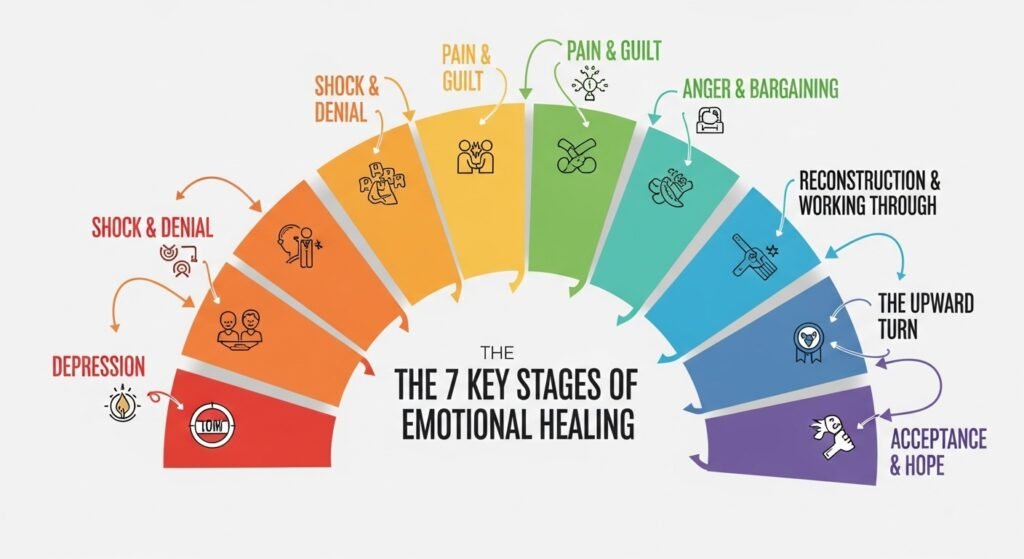
The emotional healing journey typically unfolds through seven interconnected stages: awareness, acceptance, processing, release, growth, integration, and transformation.
Awareness is the recognition of emotional pain; acceptance involves allowing emotions without resistance.
Processing includes exploring root causes, often through therapeutic methods.
Release allows letting go of pent-up emotions.
Growth represents learning and strengthening resilience, while integration involves embodying new insights.
Finally, transformation is the profound change in how one relates to self and life.
- Awareness brings hidden pain into conscious view.
- Acceptance prevents emotional suppression and prolongation.
- Processing requires active engagement with feelings.
- Release frees trapped energy and emotional baggage.
- Growth strengthens psychological and emotional capacities.
- Integration aligns new insights into daily living.
- Transformation reshapes identity and perspective.
- Stages may overlap and recur dynamically.
- Support systems enhance progress through stages.
- Patience and self-compassion are vital throughout.

3. Recognizing Signs You Need Emotional Healing
Identifying when you need emotional healing is crucial for timely transformation.
Signs include persistent sadness, anxiety, difficulty forming close relationships, emotional numbness, or recurring negative patterns.
Physical symptoms such as chronic fatigue or tension may also point to unresolved emotional wounds.
Recognizing these signals prompts you to begin or deepen your healing journey, fostering growth and recovery.
- Chronic emotional distress signals healing needs.
- Relationship struggles often stem from inner wounds.
- Physical symptoms can correlate with emotional pain.
- Avoidance behaviors may mask unresolved trauma.
- Emotional numbness hinders authentic living.
- Self-sabotage points to underlying unmet needs.
- Recognizing patterns invites conscious change.
- Seeking support enhances healing chances.
- Early recognition prevents deeper suffering.
- Healing benefits overall well-being and vitality.
4. Powerful Techniques and Practices for Healing Emotions
Several effective techniques support emotional healing journeys.
Mindfulness meditation cultivates present-moment awareness and emotional regulation.
Journaling helps articulate and clarify emotions.
Therapeutic methods like EMDR, CBT, and somatic therapies target trauma at cognitive and bodily levels.
Breathwork and expressive arts facilitate emotional release.
Building a supportive community encourages healing through connection and validation.
- Mindfulness alleviates emotional overwhelm.
- Journaling supports emotional processing.
- EMDR and CBT address cognitive distortions.
- Somatic therapies release stored body tension.
- Breathwork invigorates energy flow.
- Artistic expression facilitates non-verbal healing.
- Peer support reduces isolation.
- Professional guidance ensures safety and effectiveness.
- Self-care routines sustain healing momentum.
- Integrating multiple techniques enriches outcomes.

5. The Role of Mindfulness and Presence in Healing
Mindfulness and presence are foundational to emotional healing, offering tools to observe emotions without judgment, fostering acceptance and ease.
These practices ground you in the current moment, reducing rumination and anxiety.
Mindfulness-based interventions have demonstrated efficacy in moderating emotional responses and cultivating resilience, making them indispensable for navigating healing journeys.
- Mindfulness fosters non-reactive awareness.
- Enhances emotional regulation skills.
- Supports self-compassion during difficult emotions.
- Reduces impact of traumatic memories.
- Improves focus and reduces stress.
- Encourages a curious, open attitude toward feelings.
- Builds capacity for sustained healing.
- Facilitates integration of emotional insights.
- Can be practiced through meditation or daily activities.
- Helps maintain grounding during emotional surges.

6. Emotional Healing Retreats: Immersion for Transformation
Emotional healing retreats provide immersive environments for accelerated healing.
By stepping away from daily stressors, retreats offer dedicated time, guidance, and supportive communities to process emotions deeply.
Retreat participants often experience enhanced calm, emotional release, and renewed perspectives.
The retreat setting cultivates inner peace and restoration, catalyzing sustainable change.
- Retreats remove external distractions for focus.
- Provide structured healing modalities.
- Create safe spaces for vulnerability.
- Facilitate deep emotional release.
- Promote connection with like-minded individuals.
- Offer expert therapeutic and spiritual guidance.
- Encourage holistic healing: mind, body, spirit.
- Support habit changes after retreat.
- Stimulate creative and intuitive growth.
- Often lead to lasting life shifts.

7. How Emotional Healing Impacts Relationships
Emotional healing journeys profoundly influence relationships by fostering authenticity, empathy, and healthy boundaries.
Healing helps break dysfunctional cycles and patterns inherited or learned in childhood.
It cultivates a capacity for intimacy and vulnerability, transforming how individuals relate to themselves and others.
Strong relationships rooted in healed emotional foundations support continued growth and joy.
- Healing enhances emotional availability.
- Improves communication and understanding.
- Builds trust and reduces conflict triggers.
- Supports forgiveness and empathy.
- Encourages setting respectful boundaries.
- Breaks cycles of intergenerational trauma.
- Enables healthier attachment styles.
- Promotes relationship satisfaction.
- Supports collaborative problem-solving.
- Relationships become sources of growth.

8. Overcoming Common Obstacles on Your Healing Journey
Healing emotional wounds is rarely straightforward.
Common obstacles include denial, fear of vulnerability, replaying trauma, and feeling isolated.
Overcoming these requires patience, support, and self-compassion.
Recognizing obstacles as part of the process helps maintain motivation.
Utilizing varied healing tools and professional help can ease transitions through tough phases.
- Denial delays recognition of pain.
- Fear of vulnerability hinders openness.
- Trauma replay can trap emotional energy.
- Isolation reduces healing resources.
- Self-judgment impedes compassion.
- Resistance to change is natural.
- Support systems build resilience.
- Consistent practices sustain progress.
- Professional guidance helps navigate complexity.
- Embracing setbacks as learning accelerates healing.

9. Integrating Emotional Healing into Everyday Life
For emotional healing to translate into lasting transformation, integration into daily life is essential.
This involves applying new insights, emotional regulation skills, and self-care habits consistently.
Mindful pauses, journaling, and nurturing relationships help maintain growth momentum.
Integration fosters resilience to new challenges and enriches quality of life.
- Integration requires conscious effort and consistency.
- Daily mindfulness supports emotional balance.
- Journaling reinforces insights and tracking progress.
- Self-care maintains energetic and mental health.
- Healthy relationships reflect healing progress.
- Setting small goals fosters tangible results.
- Building rituals embeds positive habits.
- Reflection allows course correction.
- Integration sustains long-term well-being.
- Holistic lifestyle changes enhance effectiveness.

10. Emotional Healing for Personal Growth and Empowerment
Emotional healing journeys culminate in profound personal growth and empowerment.
By resolving internal wounds, you reclaim personal power and freedom.
Healing unlocks creativity, compassion, and authentic self-expression.
Empowered individuals navigate life with clarity, courage, and purpose, contributing positively to their communities and the world.
- Healing fosters self-confidence and autonomy.
- Encourages alignment with core values.
- Builds capacity for resilience and adaptability.
- Enhances compassion for self and others.
- Inspires purposeful action and creativity.
- Opens pathways for spiritual growth.
- Strengthens leadership and emotional intelligence.
- Reduces fear and limiting beliefs.
- Cultivates joy and fulfillment.
- Supports meaningful contribution to society.
Summary Table: Emotional Healing Journeys at a Glance
| Stage/Aspect | Key Focus | Outcome | Practices/Tools |
|---|---|---|---|
| Awareness | Recognizing emotional pain | Starting point for healing | Mindfulness, self-inquiry |
| Acceptance | Allowing emotions without judgment | Emotional openness | Meditation, breathwork |
| Processing | Understanding root causes | Cognitive and emotional clarity | Therapy, journaling |
| Release | Letting go of trapped emotions | Emotional freedom | Somatic therapies, expressive arts |
| Growth | Building resilience | Expanded emotional capacity | Positive mindset practices |
| Integration | Embodying insights | Sustainable transformation | Daily rituals, reflection |
| Transformation | Profound life and identity shift | Empowered and authentic living | Continuous self-development |
Frequently Asked Questions (FAQs)
1. What is an emotional healing journey?
An intentional process to acknowledge, process, and transform emotional wounds for personal growth.
2. How long does emotional healing take?
Healing timelines vary per individual; it’s a nonlinear, ongoing process requiring patience.
3. Can emotional healing happen without therapy?
Yes, but professional support often accelerates and deepens healing.
4. What are common signs I need emotional healing?
Persistent emotional distress, anxiety, relationship difficulties, or physical symptoms.
5. What role does mindfulness play in healing?
It helps observe emotions non-judgmentally leading to greater acceptance and clarity.
6. How do retreats support emotional healing?
By providing immersive, supportive environments for focused healing experiences.
7. Can healing improve my relationships?
Yes, healing fosters empathy, better communication, and healthy boundaries.
8. What if I get stuck during my healing journey?
Seek support, be patient, and explore new techniques; setbacks are normal.
9. How do I maintain gains after emotional healing?
Through consistent integration practices like journaling, mindfulness, and self-care.
10. Can emotional healing lead to empowerment?
Absolutely, it builds resilience, authenticity, and purposeful living.
External Links
Here are some high-quality external links you can include in your blog on “Emotional Healing Journeys” to enhance credibility, provide further reading,
- The 7 Stages of Emotional Healing: A Roadmap to Peace
https://www.growingself.com/seven-stages-of-emotional-healing/
A detailed guide outlining the key stages involved in emotional healing. - The Power of Emotional Healing in Personal Growth | Wisdom Within
https://iamwisdomwithin.com/blog/posts/the-power-of-emotional-healing-in-personal-growth/
Explores how emotional healing supports overall personal development and well-being. - Emotional Healing Retreat: Top 5 Transformative Benefits
https://www.intensivetherapyretreat.com/emotional-healing-retreat/
Information on the benefits of immersion retreats for accelerated emotional healing. - The Key Stages of Healing Emotionally: What to Expect
https://www.mindcalmr.com/post/the-key-stages-of-healing-emotionally-what-to-expect
Describes the emotional healing process and what one can anticipate at each stage. - How to Begin a Healing Journey: Steps for Self-Healing
https://mentallystrong.com/healing-journey/
Practical tips and steps to initiate an emotional healing journey effectively.
Conclusion: Embracing Emotional Healing Journeys to Transform Your Life
Emotional healing journeys are transformative processes that guide you from pain and suffering toward wholeness, peace, and empowered living.
The path is dynamic and deeply personal, requiring awareness, acceptance, processing, and integration of emotions.
While challenges and setbacks are common, persistence, support, and self-compassion enable gradual and meaningful healing.
As you engage in this journey, you rediscover your resilience, authenticity, and purpose, often cultivating healthier relationships and a renewed sense of freedom.
Emotional healing is not a destination but a lifelong commitment to growth and self-care, allowing you to live with courage and clarity in alignment with your true self.