
Shadow work and inner healing: how to heal old wounds with compassion is a transformative journey of reclaiming your wholeness by embracing the hidden parts of yourself. By courageously facing emotional shadows with kindness and understanding, you unlock deep healing and empowerment. This mindful practice dissolves limiting patterns rooted in past pain, fostering self-compassion and authentic growth. Discover how to engage with your inner darkness safely to create profound healing and lasting peace.
Table of Contents
- Understanding Shadow Work: The Path to Inner Healing
- Recognizing Old Wounds and Their Impact
- Cultivating Compassion for the Shadow Self
- Techniques for Effective Shadow Work
- Integrating Inner Healing Into Daily Life
- Overcoming Resistance and Fear in Shadow Work
- Spiritual and Psychological Benefits of Inner Healing

Understanding Shadow Work: The Path to Inner Healing
Shadow work is the conscious exploration of unconscious parts of yourself—traumas, suppressed emotions, fears, and limiting beliefs—that influence your behavior and worldview.
This deep inner work involves shining light on hidden aspects to reclaim control and foster integration.
By acknowledging the shadow without judgment, you develop self-awareness necessary for profound healing.
Shadow work empowers transformation by converting old wounds into sources of strength and wisdom.
Approached with compassion, it invites greater wholeness and well-being beyond surface-level change.
Key Concepts of Shadow Work
- The shadow includes unconscious fears and desires
- It influences behavior and emotional patterns
- Bringing unconscious material into awareness initiates healing
- Non-judgment is essential in shadow exploration
- Emotional honesty nurtures transformation
- Integration balances light and dark aspects
- Compassion dissolves shame about the shadow
- It is an ongoing, gentle process

Recognizing Old Wounds and Their Impact
Old wounds often manifest as patterns of avoidance, self-sabotage, emotional reactivity, or relational difficulties.
They stem from unmet needs or traumatic experiences, carrying unresolved pain in the subconscious.
Recognizing these wounds requires honesty and courage, as they can be deeply buried or disguised as defenses.
These emotional scars can limit self-expression, hinder intimacy, and perpetuate cycles of suffering if left unhealed.
Awareness is the first step to breaking free and starting the compassionate journey of inner healing.
Signs of Unhealed Wounds
- Recurring negative thoughts or self-criticism
- Difficulty trusting others or forming attachments
- Emotional triggers causing disproportionate reactions
- Fear of vulnerability or rejection
- Patterns of damaging behavior or avoidance
- Physical symptoms linked to stress or trauma
- Feeling disconnected from self or life
- Resistance to change or growth
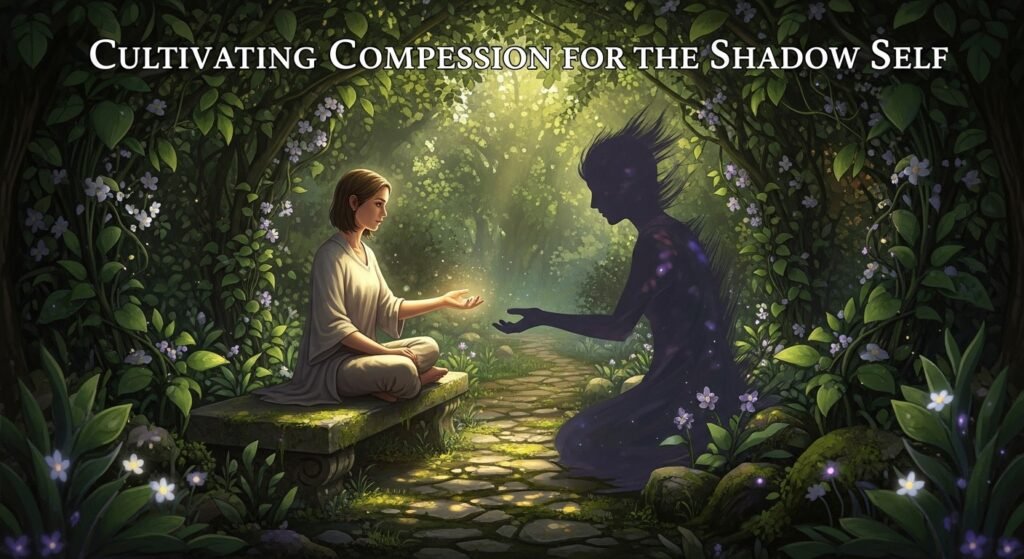
Cultivating Compassion for the Shadow Self
Compassion is the healing balm for shadow work, transforming judgment into kindness and shame into understanding.
Compassionate self-acceptance creates a safe internal space where painful memories can surface without overwhelm.
It shifts the focus from blame to curiosity and nurture. This attitude allows integration rather than repression or escape.
Cultivating compassion for yourself’s shadow fosters psychological safety, emotional resilience, and self-love, essential ingredients for lasting inner healing.
Ways to Practice Compassion
- Use loving-kindness meditation toward self
- Speak gently in your inner dialogue
- Accept all emotions as valid signals
- Visualize embracing your shadow with love
- Forgive yourself and others for past wounds
- Journal compassionate reflections
- Set nurturing boundaries with judgmental voices
- Seek supportive therapy or groups

Techniques for Effective Shadow Work
Harnessing practical techniques enhances the safety and effectiveness of shadow work.
Methods such as journaling, guided meditation, and inner child work facilitate deep exploration while maintaining compassionate grounding.
Art therapy and dream analysis unlock unconscious insights non-verbally.
Somatic practices release held trauma stored in the body.
Working with a trusted mentor or therapist provides guidance and integration support, ensuring a balanced and personalized healing trajectory.
Recommended Shadow Work Techniques
- Daily free writing to explore subconscious themes
- Inner child dialogue to heal past hurts
- Mirror work to build self-acceptance
- Dream journaling for symbolic messages
- Body scans or movement to release trauma
- Visualization to meet and comfort shadow parts
- Guided shadow meditation recordings
- Psychotherapy or coaching for support

Integrating Inner Healing Into Daily Life
Integration is key to embodying the benefits of shadow work beyond introspection.
Simple daily practices deepen insight and nurture the healed self.
Mindful pauses to notice triggers, compassionate affirmations, and connection with safe community reinforce new patterns.
Prioritizing rest and self-care supports nervous system regulation.
Integration turns insights into sustainable lifestyle changes, enriching your relationships, creativity, and sense of freedom.
Integration Practices
- Practice daily mindfulness and emotional check-ins
- Use affirmations aligned with shadow healing
- Journal reflections on growth and setbacks
- Surround yourself with supportive people
- Develop healthy routines for emotional self-care
- Use grounding techniques after difficult sessions
- Celebrate small healing milestones
- Maintain openness to ongoing learning

Overcoming Resistance and Fear in Shadow Work
Resistance and fear are natural barriers in shadow work, often stemming from apprehension about facing pain or change.
Identifying resistance as a protective mechanism allows gentle navigation around overwhelm.
Gradual pace, active self-compassion, and external support help manage fear’s intensity.
Reframing shadow work as empowerment, not punishment, rebuilds trust in the process.
Embracing discomfort as a threshold to growth opens the door to breakthrough and self-mastery.
Strategies to Overcome Resistance
- Start with small, manageable shadow work tasks
- Use grounding and relaxation techniques
- Celebrate courage in facing discomfort
- Seek professional or peer support
- Remind yourself of long-term healing goals
- Use visualization to imagine safe exploration
- Avoid perfectionism or hurried progress
- Practice patience and self-kindness
Spiritual and Psychological Benefits of Inner Healing
Engaging in shadow work with compassion yields profound spiritual and psychological benefits.
It dissolves limiting beliefs, releasing mental and emotional blockages.
This awakening fosters a sense of unity within oneself, aligning with higher purpose and authentic self-expression.
Psychologically, it enhances emotional regulation, reduces anxiety, and improves relationship dynamics.
Inner healing also expands self-awareness and empathy, vital for holistic transformation and lasting peace.
Benefits Realized Through Shadow Work
- Greater emotional freedom and resilience
- Deepened self-awareness and authenticity
- Healing of old traumas and wounds
- Improved relationships and empathy
- Enhanced creative and intuitive capacities
- Stronger connection with spiritual essence
- Reduced anxiety, fear, and shame
- Sustained inner peace and well-being
Detailed Table: Shadow Work and Inner Healing Techniques
| Technique | Focus Area | Benefits | Tools & Resources | Time Commitment | Ideal Frequency | Accessibility | Healing Impact |
|---|---|---|---|---|---|---|---|
| Journaling | Self-reflection | Uncovers subconscious patterns | Notebook, prompts | 10-20 minutes daily | Daily | Highly accessible | High |
| Inner Child Work | Emotional healing | Resolves childhood trauma | Guided meditations, therapy | 15-30 minutes sessions | Weekly | Moderate | Very high |
| Mirror Work | Self-acceptance | Builds compassion and confidence | Mirror, affirmations | 5-10 minutes daily | Daily | Highly accessible | Moderate to High |
| Dream Journaling | Symbolic insight | Accesses unconscious messages | Dream journal | 5-15 minutes | Daily | Highly accessible | Moderate to High |
| Somatic Practices | Trauma release | Relieves physical tension | Movement, breathwork | 15-30 minutes | Daily/weekly | Highly accessible | High |
| Guided Shadow Meditation | Conscious exploration | Safe, supported inner work | Audio recordings | 10-20 minutes | 3-5 times weekly | Highly accessible | High |
| Therapy or Coaching | Professional guidance | Personalized integration | Licensed practitioners | Variable | Weekly or biweekly | Moderate | Very High |
| Visualization Techniques | Emotional nurturance | Comforts shadow aspects | Quiet space, meditation aids | 5-15 minutes | Daily | Highly accessible | Moderate |
Inspirational Quotes on Shadow Work and Inner Healing
- “Until you make the unconscious conscious, it will direct your life and you will call it fate.” — Carl Jung
- “The wound is the place where the Light enters you.” — Rumi
- “Healing doesn’t mean the damage never existed. It means the damage no longer controls your life.” — Unknown
- “Your task is not to seek for love, but merely to seek and find all the barriers within yourself that you have built against it.” — Rumi
- “What you resist persists, and what you accept transforms.” — Carl Jung
- “Compassion for yourself is the foundation for true healing.” — Tara Brach
- “The more light you allow within you, the brighter the world you live in will be.” — Shakti Gawain
- “Healing is an art. It takes time, it takes practice. It takes love.” — Maza Dohta
Frequently Asked Questions on Shadow Work and Inner Healing
- What exactly is shadow work?
Shadow work is the process of exploring and integrating unconscious parts of oneself to foster healing and wholeness. - Is shadow work safe to do alone?
Yes, with caution and self-compassion, though professional support is advised for intense trauma. - How do I recognize my old wounds?
They often show as recurring emotional triggers, negative patterns, or self-sabotage. - What role does compassion play in inner healing?
Compassion provides the safety and kindness needed to face painful emotions without judgment. - How long does shadow work take?
It’s an ongoing journey, with growth happening gradually through consistent practice. - Can shadow work improve my relationships?
Yes, by healing your inner wounds, you foster healthier communication and connection. - What is the best technique to start shadow work?
Journaling and mindfulness are beginner-friendly starting points. - How do I stay motivated through difficult shadow work?
Regular self-compassion, small steps, support systems, and focusing on your healing goals help. - Can shadow work be done spiritually and psychologically?
Yes, it blends spiritual insight with psychological tools for holistic healing. - What are signs of progress in shadow work?
Greater emotional regulation, self-acceptance, reduced reactivity, and increased inner peace are key signs.
Conclusion
Shadow work and inner healing: how to heal old wounds with compassion is a profound process that opens the door to authentic transformation.
By bravely facing your inner shadows with kindness and awareness, you dismantle limiting patterns and reclaim your true self.
Utilizing conscious techniques such as journaling, meditation, and inner child work facilitates safe exploration and integration.
Compassion acts as the catalyst for healing, creating a nurturing environment within.
This ongoing journey fosters resilience, emotional freedom, and spiritual growth—leading to a rich, empowered life lived from wholeness and peace.
Case Study: Healing Old Wounds Through Shadow Work and Inner Healing with Compassion
Case Study
Background
Emma, a 38-year-old professional, struggled with persistent anxiety and self-sabotaging patterns rooted in childhood trauma. Despite therapy and self-help attempts, she felt stuck in emotional cycles that limited her personal and professional fulfillment. Seeking deeper healing, Emma embarked on a dedicated shadow work and inner healing journey focused on compassion for her wounds.
Step 1: Recognizing and Embracing the Shadow
Emma began by acknowledging her “shadow” — unconscious fears, suppressed emotions, and limiting beliefs—without judgment. Through journaling and mindfulness meditation, she identified recurring emotional triggers linked to feelings of abandonment and unworthiness.
Step 2: Cultivating Compassion
Emma practiced loving-kindness meditation and mirror work to develop self-compassion, gently embracing her vulnerabilities rather than reacting with self-criticism or avoidance. This shift in attitude created safety and openness for deeper healing.
Step 3: Using Guided Inner Child Work
Through guided meditation and visualization, Emma connected with her inner child, soothing past traumatic experiences with nurturing words and presence. This technique helped her reclaim lost parts of herself and begin repairing emotional fractures.
Step 4: Implementing Somatic Practices
Recognizing that trauma was stored in her body, Emma incorporated somatic exercises such as gentle yoga and breathwork to release tension and ground her emotional experiences safely.
Step 5: Integrating Lessons into Daily Life
Emma used reflective journaling and affirmations daily to reinforce growth and maintain connection to her healing process. She also established clear boundaries and self-care routines to support sustained emotional balance.
Results
Over 12 months, Emma experienced significant reductions in anxiety and negative self-talk. Relationships improved as she became more authentic and resilient. Shadow work allowed her to transform old wounds into sources of strength and compassion. Emma now feels empowered to navigate life’s challenges with greater peace and confidence.
Key Takeaways
- Embracing the shadow with compassion dissolves shame and fear
- Inner child work facilitates profound emotional repair
- Somatic practices support physical-emotional integration
- Consistent reflection and self-care deepen healing
- Professional guidance enhances safety and depth of work
- Healing is a gradual, compassionate, and continuous process
Emma’s case illustrates how shadow work and inner healing with compassion can liberate individuals from the grip of past wounds, enabling authentic transformation and an empowered, balanced life.