🌟 The Meeting That Changed Everything
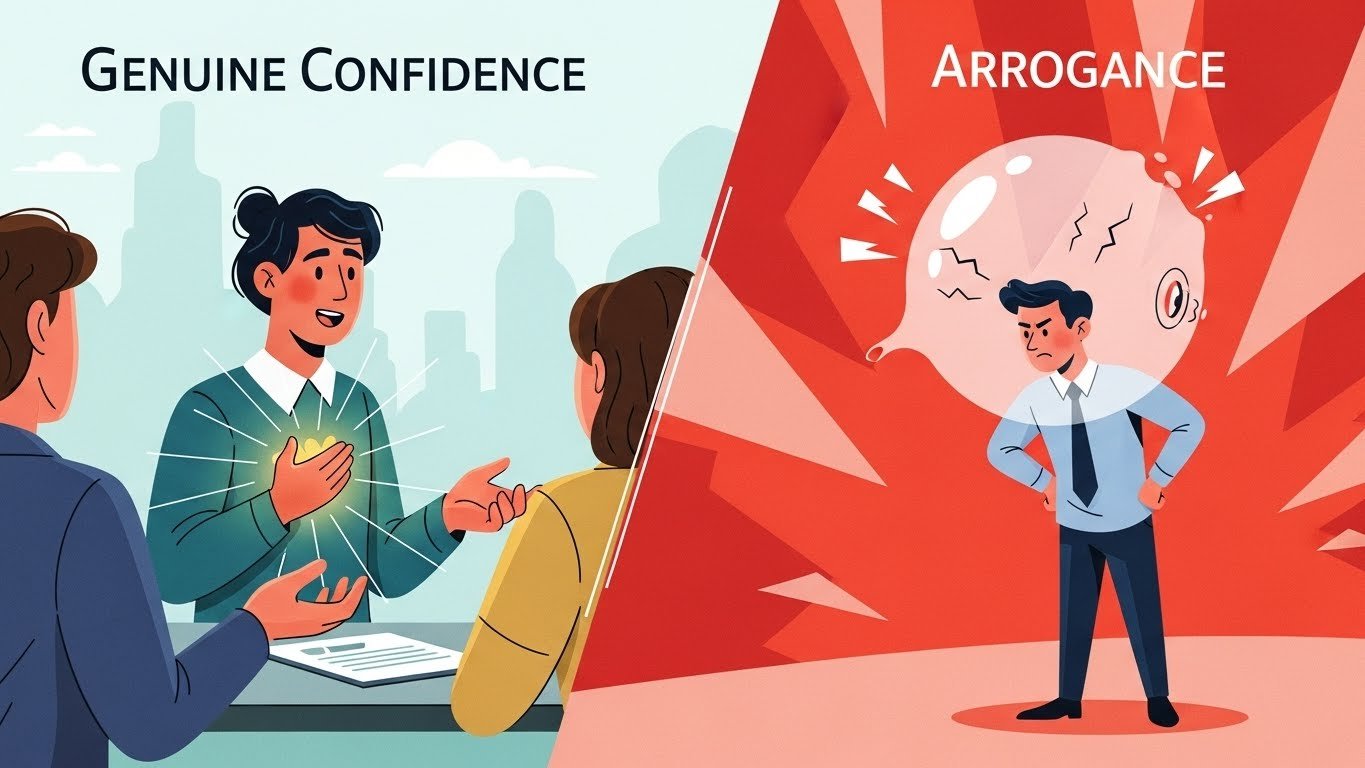
Sarah sat at the head of the conference table, watching her team shift uncomfortably as her colleague Mark dominated yet another meeting. Mark spoke with absolute certainty, cutting off others mid-sentence, dismissing ideas that weren’t his own, and taking credit for work he hadn’t done. His confidence was undeniable – but something felt off.
Then there was James, another team lead who approached things differently. He spoke with quiet certainty, actively listened to others, admitted when he didn’t know something, and somehow made everyone feel valued and heard. His team was more engaged, creative, and loyal. Same company, same roles, dramatically different results.
This is the profound difference between confidence vs. arrogance in leadership – a distinction that can transform not just your leadership effectiveness, but your entire career trajectory.
📋 Table of Contents
- Understanding Confidence vs. Arrogance: The Fundamental Difference
- The Psychology Behind Confident Leadership
- Why Arrogance Undermines Leadership Effectiveness
- Way #1: Cultivate Authentic Self-Awareness
- Way #2: Practice Humble Confidence
- Way #3: Develop Emotional Intelligence
- Way #4: Build Trust Through Vulnerability
- Way #5: Lead with Empathy and Compassion
- Way #6: Maintain Grace Under Pressure
- Way #7: Create Inclusive Environments
- The Complete Confidence vs. Arrogance Framework
- Real Leadership Transformation Stories
- Frequently Asked Questions
- Your Journey to Gracious Leadership Begins
🧠 Understanding Confidence vs. Arrogance: The Fundamental Difference
The distinction between confidence vs. arrogance represents one of the most crucial yet misunderstood aspects of leadership.
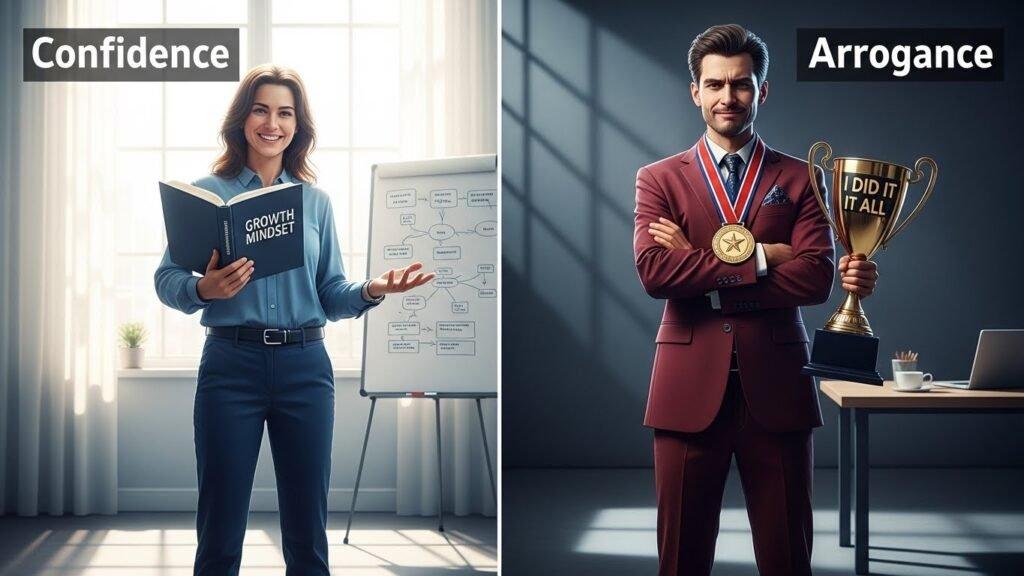
Confidence is authentic self-assurance rooted in genuine competence and self-awareness, while arrogance is inflated self-importance that masks insecurity and creates disconnection.
Research from Harvard Business School shows that confident leaders inspire 32% higher performance from their teams, while arrogant leaders create environments that stifle creativity and increase turnover by 47%.
Confidence operates from a place of inner security – it’s the quiet certainty that comes from knowing your strengths while acknowledging your limitations.
Confident leaders speak with authority but listen with humility, make decisions with conviction but remain open to feedback, and take credit for successes while sharing recognition generously.
This authentic self-assurance creates psychological safety that allows teams to thrive and take calculated risks.
Arrogance, conversely, stems from inner insecurity masked by an inflated ego.
It’s the loud certainty that dismisses others’ input, takes credit while deflecting blame, and needs constant validation to maintain its facade.
This false confidence creates toxic environments where people feel undervalued, ideas go unexpressed, and innovation dies.
Understanding this fundamental difference is crucial for developing leadership that inspires rather than alienates.
Key Points:
- Confidence is authentic self-assurance; arrogance is inflated self-importance
- Confident leaders inspire 32% higher performance; arrogant leaders increase turnover by 47%
- Confidence creates psychological safety; arrogance creates toxic environments
- Understanding the difference is crucial for developing inspiring leadership

🔬 The Psychology Behind Confident Leadership
The psychology behind confident leadership reveals why authentic confidence creates such powerful results while arrogance undermines effectiveness.
Research from neuroscience shows that confident leaders activate different neural pathways in both themselves and their team members compared to arrogant leaders.
When you operate from authentic confidence, your brain’s prefrontal cortex functions optimally, enabling clear decision-making, emotional regulation, and creative problem-solving.
Confident leadership also triggers what psychologists call “empowerment responses” in team members – increased motivation, creativity, and willingness to take calculated risks.
This occurs because confident leaders create psychological safety through their authentic self-assurance, allowing others to feel secure in expressing ideas, making mistakes, and growing professionally.
The brain’s reward centers activate when working with confident leaders, creating intrinsic motivation that drives exceptional performance.
Arrogant leadership, conversely, triggers “threat responses” in team members’ brains, activating the amygdala and creating stress that impairs cognitive function.
This stress response reduces creativity, increases errors, and creates defensive behaviors that undermine team effectiveness.
Understanding these neurological differences helps explain why confident leaders create thriving teams while arrogant leaders create toxic environments that drive talent away.
Key Points:
- Confident leaders activate optimal brain function in themselves and others
- Authentic confidence triggers empowerment responses in team members
- Psychological safety from confidence enables creativity and risk-taking
- Arrogant leadership triggers threat responses that impair performance
💥 Why Arrogance Undermines Leadership Effectiveness
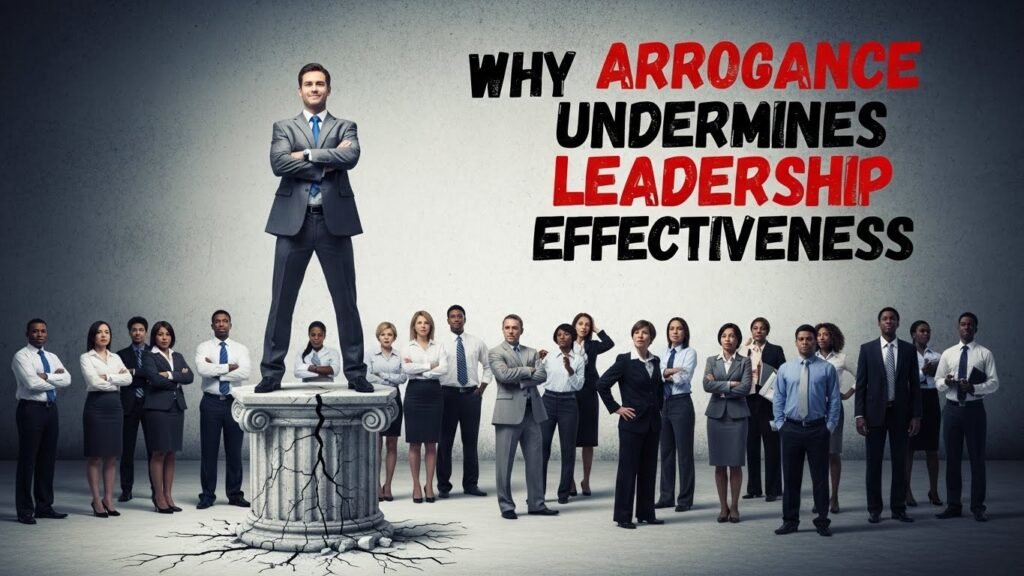
Arrogance undermines leadership effectiveness through multiple psychological and social mechanisms that create cascading negative effects throughout organizations.
Research from the University of California shows that arrogant leaders create what researchers term “toxic certainty” – an environment where questioning is discouraged, innovation is stifled, and learning stops.
This creates organizations that become increasingly rigid and unable to adapt to changing circumstances.
The social impact of arrogant leadership creates what psychologists call “psychological withdrawal” – team members mentally disengage from their work, stop contributing ideas, and focus primarily on avoiding criticism rather than driving results.
This withdrawal is often invisible to arrogant leaders who mistake compliance for engagement, leading to a false sense of security while their teams become increasingly disengaged and unproductive.
Arrogance also creates what researchers term “innovation suppression” because it discourages the very behaviors that drive progress – questioning, experimenting, and taking calculated risks.
When leaders need to appear infallible, they create environments where mistakes are punished rather than learned from, where new ideas are dismissed rather than explored, and where growth stagnates.
Understanding these dynamics helps explain why arrogant leaders often achieve short-term results while creating long-term organizational decline.
Key Points:
- Arrogance creates “toxic certainty” that stifles questioning and innovation
- Psychological withdrawal leads to disengagement and reduced productivity
- Innovation suppression occurs when mistakes are punished rather than learned from
- Arrogant leaders achieve short-term results while creating long-term decline

Way #1: Cultivate Authentic Self-Awareness
Authentic self-awareness is the foundation of leading with grace, requiring honest examination of your strengths, limitations, and impact on others.
This isn’t about harsh self-judgment but about developing accurate self-perception that allows you to lead from genuine confidence rather than defensive arrogance.
Research shows that leaders with high self-awareness create 79% more effective teams and make better decisions under pressure.
The practice involves regular self-reflection through tools like 360-degree feedback, journaling about your leadership impact, and seeking honest input from trusted colleagues about your blind spots.
This creates what psychologists call “accurate self-concept” – a realistic understanding of your capabilities that allows you to lead from genuine confidence rather than defensive posturing.
When you truly know yourself, you can lead from authentic strength rather than insecure overcompensation.
Developing authentic self-awareness also means recognizing your emotional patterns and triggers that might lead to arrogant behavior.
By understanding what situations make you feel defensive, what comments trigger insecurity, and what circumstances lead to overcompensation, you can choose conscious responses rather than reactive behaviors.
This self-knowledge becomes the foundation for all other aspects of leading with grace.
Key Points:
- Authentic self-awareness requires honest examination of strengths and limitations
- Self-aware leaders create 79% more effective teams and make better decisions
- Regular self-reflection through tools like 360-degree feedback builds accurate self-concept
- Understanding emotional patterns allows conscious rather than reactive responses

Way #2: Practice Humble Confidence
Humble confidence represents the sweet spot between insecure self-doubt and arrogant overconfidence, creating leadership that inspires trust and loyalty.
This involves expressing certainty about your vision and decisions while remaining open to feedback, admitting when you don’t know something, and actively seeking input from others.
Research shows that leaders who practice humble confidence build teams that are 31% more innovative and 47% more engaged.
The practice involves developing what researchers call “intellectual humility” – the ability to hold strong convictions while remaining open to being wrong.
This means expressing your views clearly while inviting alternative perspectives, making decisions confidently while acknowledging uncertainty, and taking responsibility for mistakes while learning from them openly.
This creates psychological safety that allows others to contribute their best thinking without fear of dismissal.
Humble confidence also means celebrating others’ contributions genuinely rather than taking credit for team successes. It involves sharing the spotlight generously, acknowledging when others have better ideas, and creating opportunities for team members to shine.
This collaborative approach builds loyalty and motivation while demonstrating that your confidence doesn’t depend on being the smartest person in the room.
Key Points:
- Humble confidence sits between insecure self-doubt and arrogant overconfidence
- Intellectually humble leaders build teams that are 31% more innovative and 47% more engaged
- Expressing certainty while remaining open to feedback creates psychological safety
- Celebrating others’ contributions builds loyalty and demonstrates secure leadership
Way #3: Develop Emotional Intelligence
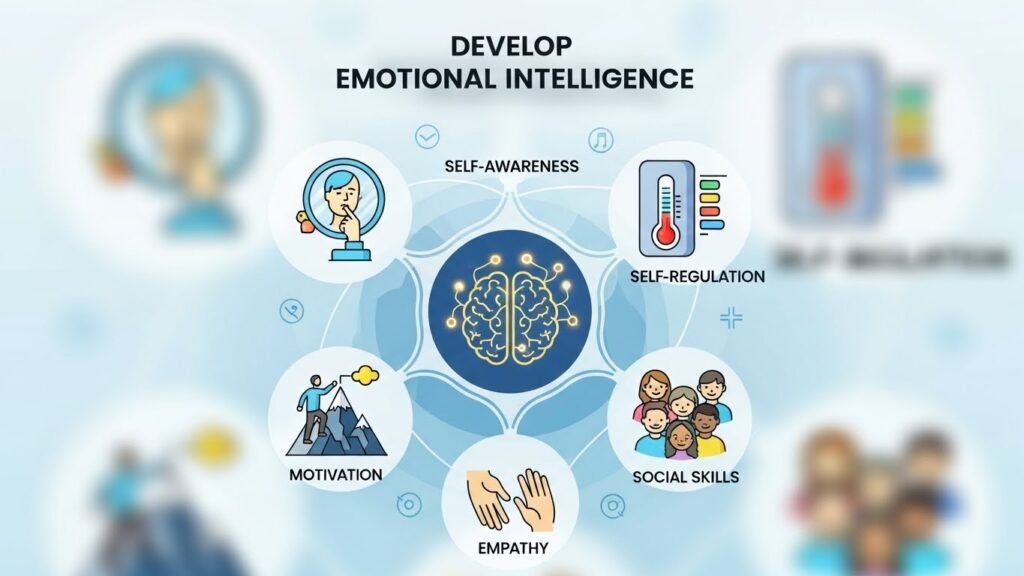
Emotional intelligence is crucial for leading with grace, involving the ability to recognize, understand, and manage both your own emotions and those of others.
This skill allows you to respond to challenging situations with wisdom rather than reacting from ego, creating leadership that people trust and respect even during difficult times.
Studies show that leaders with high emotional intelligence create teams that are 34% more effective and 50% more likely to stay with the organization.
The development involves practicing what researchers call “emotional granularity” – the ability to recognize and name specific emotions with precision.
This allows you to understand the root causes of emotional reactions, both yours and others’, and respond appropriately rather than reacting impulsively.
By developing this emotional awareness, you can lead with empathy and wisdom even when facing challenging situations that might trigger defensive or arrogant responses.
Emotional intelligence also involves developing what psychologists term “emotional regulation” – the ability to manage emotional responses constructively.
This doesn’t mean suppressing emotions but rather expressing them appropriately while maintaining your leadership presence.
When you can acknowledge frustration without lashing out, express disappointment without belittling, and show vulnerability without losing authority, you create leadership that people trust and follow willingly.
Key Points:
- Emotional intelligence involves recognizing and managing emotions in yourself and others
- Leaders with high emotional intelligence create teams that are 34% more effective
- Emotional granularity allows precise recognition of emotional root causes
- Emotional regulation enables constructive expression while maintaining authority

Way #4: Build Trust Through Vulnerability
Building trust through vulnerability involves the courage to show your authentic self, including uncertainties and mistakes, rather than maintaining a facade of perfection.
This counterintuitive approach to leadership creates deeper connections and loyalty because people trust leaders who are real more than those who appear infallible.
Research shows that leaders who practice appropriate vulnerability build teams that are 40% more innovative and 60% more engaged.
The practice involves strategic vulnerability – sharing appropriately about challenges you’re facing, admitting when you don’t have answers, and being honest about mistakes while maintaining your leadership presence.
This creates what psychologists call “psychological safety” – an environment where people feel safe to take risks, make mistakes, and contribute their best thinking without fear of judgment or retribution.
Vulnerability also means being open about your learning journey, sharing how you’ve grown from failures, and showing that you value growth over perfection.
When you can say “I was wrong about that” or “I’m still learning about this” without losing credibility, you create space for others to do the same.
This builds a culture of continuous improvement rather than one where people feel they must hide their imperfections behind false confidence.
Key Points:
- Vulnerability builds trust by showing authentic self including uncertainties
- Leaders who practice appropriate vulnerability build 40% more innovative teams
- Strategic vulnerability creates psychological safety for risk-taking
- Being open about learning journey builds culture of continuous improvement

Way #5: Lead with Empathy and Compassion
Leading with empathy and compassion involves understanding and responding to others’ experiences with genuine care and concern, creating leadership that people feel connected to and supported by.
This doesn’t mean being soft or avoiding difficult decisions – it means making those decisions while considering their impact on people and demonstrating genuine care for their wellbeing.
Studies show that empathetic leaders create teams that are 50% more productive and 75% more engaged.
The practice involves developing what researchers call “perspective-taking” – the ability to understand situations from others’ viewpoints while maintaining your own perspective.
This allows you to make decisions that consider multiple stakeholders’ needs while staying true to your leadership responsibilities.
By understanding how your decisions affect others, you can lead with both strength and sensitivity, creating outcomes that serve both organizational goals and human needs.
Compassionate leadership also involves responding to others’ challenges with genuine care rather than indifference or judgment.
When team members face difficulties, showing concern for their wellbeing while maintaining appropriate boundaries creates loyalty and trust.
This might involve offering support during personal challenges, providing flexibility when needed, or simply showing genuine interest in others’ experiences and perspectives.
Key Points:
- Empathetic leadership involves understanding and responding to others’ experiences with care
- Empathetic leaders create teams that are 50% more productive and 75% more engaged
- Perspective-taking allows understanding others’ viewpoints while maintaining your own
- Compassionate response to challenges creates loyalty and trust

Way #6: Maintain Grace Under Pressure
Maintaining grace under pressure involves responding to challenging situations with composure and wisdom rather than reacting from stress or ego.
This ability to remain centered and thoughtful during difficult moments creates leadership that people trust and admire, especially during organizational crises or high-stress situations.
Research shows that leaders who maintain grace under pressure create teams that are 55% more resilient and 40% better at problem-solving.
The development involves practicing what researchers call “emotional regulation” – the ability to manage your emotional responses constructively while maintaining your leadership presence.
This doesn’t mean suppressing emotions but rather responding thoughtfully rather than reactively, making decisions from wisdom rather than from stress or defensiveness.
By developing this skill, you can lead effectively even when facing intense pressure or challenging circumstances.
Grace under pressure also means maintaining your values and principles even when it’s difficult or unpopular to do so.
This might involve making unpopular decisions that serve the greater good, admitting mistakes even when it would be easier to deflect blame, or staying calm when others are panicking.
This consistency and composure during difficult times creates deep respect and loyalty from team members who know they can count on you to lead with integrity regardless of circumstances.
Key Points:
- Grace under pressure involves responding with composure rather than reacting from stress
- Leaders who maintain grace create teams that are 55% more resilient and 40% better at problem-solving
- Emotional regulation enables thoughtful rather than reactive responses
- Maintaining values during difficult times creates deep respect and loyalty

Way #7: Create Inclusive Environments
Creating inclusive environments involves actively ensuring that all team members feel valued, heard, and empowered to contribute their best work regardless of their background, perspective, or position.
This goes beyond diversity metrics to create cultures where different viewpoints are genuinely welcomed and people feel safe to express their authentic selves.
Research shows that inclusive teams are 35% more productive and 60% more innovative than non-inclusive teams.
The practice involves developing what researchers call “inclusive leadership behaviors” – specific actions that ensure all voices are heard, different perspectives are valued, and everyone has equal opportunities to contribute and advance.
This might involve actively soliciting input from quieter team members, ensuring credit is shared fairly, creating psychological safety for different viewpoints, and addressing any behaviors that make people feel excluded or undervalued.
Inclusive leadership also means recognizing and addressing your own unconscious biases while creating systems that ensure fairness and equity.
This might involve examining your hiring and promotion practices, being conscious of who gets opportunities for visibility and advancement, and actively working to include people who might otherwise be marginalized in your organization.
By creating truly inclusive environments, you demonstrate confidence in your leadership while showing grace in how you treat and value others.
Key Points:
- Inclusive environments ensure all team members feel valued and empowered
- Inclusive teams are 35% more productive and 60% more innovative
- Inclusive leadership behaviors ensure all voices are heard and valued
- Addressing unconscious biases while creating fair systems demonstrates grace
📊 The Complete Confidence vs. Arrogance Framework
| Aspect | Confident Leadership | Arrogant Leadership | Team Impact | Long-term Results | Trust Level |
|---|---|---|---|---|---|
| Source | Authentic self-knowledge | Inflated ego/insecurity | Inspires vs. alienates | Sustainable success | High trust |
| Communication | Clear, inclusive | Dominating, dismissive | Engages vs. silences | Higher retention | Builds confidence |
| Decision-making | Thoughtful, inclusive | Impulsive, dismissive | Collaborative vs. dictatorial | Better outcomes | Shared ownership |
| Error handling | Accountable, learning | Defensive, blaming | Growth vs. fear culture | Continuous improvement | Psychological safety |
| Recognition | Shares credit generously | Takes credit, blames | Team pride vs. resentment | Loyalty & retention | Mutual respect |
| Growth mindset | Open to feedback | Knows everything | Learning vs. stagnation | Innovation & adaptation | Continuous development |
| Emotional intelligence | High EQ, empathetic | Low EQ, dismissive | Understanding vs. invalidation | Emotional wellbeing | Deep connection |
| Pressure response | Graceful, composed | Defensive, reactive | Calm vs. chaos | Resilience building | Steady leadership |
💫 Real Leadership Transformation Stories
Michael’s Leadership Revolution: After 10 years as a hard-driving sales manager who believed in “my way or the highway,” Michael faced a team revolt that forced him to examine his leadership style. “I thought I was being confident and decisive,” he shares. “Learning the difference between confidence and arrogance was humbling. When I started practicing humble confidence and leading with empathy, my team’s performance increased 43% in one year. But more importantly, people actually wanted to work with me instead of just tolerating me.”
Jennifer’s Team Transformation: As a new team lead, Jennifer struggled with imposter syndrome that manifested as defensive arrogance. “I was so afraid of looking incompetent that I pretended to know everything,” she explains. “Learning to build trust through vulnerability changed everything. When I started admitting when I didn’t know something and asking for help, my team became more engaged and innovative. We went from mediocre performance to being the top-performing team in our division.”
David’s Cultural Shift: Leading a struggling department, David inherited a toxic culture marked by fear and blame. “The previous manager led through intimidation and arrogance,” he reflects. “Introducing confidence with grace completely transformed our culture. Within 18 months, our department went from the worst performing to the most innovative, with the lowest turnover in company history. People actually look forward to coming to work now.”
❓ Frequently Asked Questions About Confidence vs. Arrogance {#faqs}
Q1: How do I know if I’m being confident or arrogant in my leadership style?
A: Check your impact on others: confident leadership makes people feel valued and inspired, while arrogant leadership makes people feel dismissed and undervalued. Ask for honest feedback from trusted colleagues about how your leadership affects them.
Q2: Can confidence ever turn into arrogance over time?
A: Yes, without self-awareness and feedback, success can breed arrogance. Regular self-reflection, seeking honest feedback, and staying connected to your values helps maintain authentic confidence. Watch for signs like dismissing others’ ideas or needing constant validation.
Q3: What if people mistake my confidence for arrogance when I’m just being assertive?
A: Focus on your delivery and impact: assertive communication includes others’ perspectives, while arrogant communication dismisses them. Ensure you’re listening actively, acknowledging others’ contributions, and remaining open to different viewpoints.
Q4: How can I build confidence without becoming arrogant?
A: Build confidence through genuine competence development while practicing humility. Celebrate others’ successes, admit mistakes openly, seek feedback regularly, and focus on contribution rather than recognition. Authentic confidence grows from real achievement, not empty self-promotion.
Q5: Is it possible to be too humble as a leader?
A: Yes, excessive humility can become self-deprecation that undermines your authority. The key is humble confidence – acknowledging your capabilities while remaining open to learning. You can be confident about your abilities while admitting what you don’t know.
Q6: How do I lead with grace when dealing with difficult people or situations?
A: Grace under pressure involves maintaining your values while responding thoughtfully rather than reactively. Take time to process before responding, focus on solutions rather than blame, and maintain respect even when disagreeing. Grace doesn’t mean being soft – it means being strong without being harsh.
Q7: What if my team mistakes my grace for weakness?
A: Grace combined with clear boundaries and high expectations creates respect, not weakness. Set clear standards, hold people accountable, but do so with compassion and respect. True grace includes the courage to have difficult conversations when necessary.
Q8: How can I develop emotional intelligence for leading with grace?
A: Practice self-awareness through regular reflection, seek feedback about your impact on others, and work on recognizing emotional patterns in yourself and others. Practice responding thoughtfully rather than reacting impulsively, especially in challenging situations.
Q9: How do I maintain grace under extreme pressure or crisis situations?
A: Grace under pressure comes from preparation and practice. Develop stress-management techniques, practice emotional regulation, and create space between stimulus and response. Remember that your team takes cues from your behavior – maintaining composure helps everyone navigate challenges better.
Q10: Can arrogant leaders change their approach to become more gracious?
A: Yes, but it requires genuine self-reflection and commitment to change. Start by seeking honest feedback, admitting past mistakes, and practicing new behaviors consistently. The transformation may be challenging but is absolutely possible with dedication and support.
🌟 Your Journey to Gracious Leadership Begins Now {#conclusion}
You’ve just discovered the profound differences between confidence vs. arrogance and learned 7 transformative ways to lead with grace. These aren’t just leadership techniques – they’re pathways to authentic influence that creates lasting positive impact on everyone around you.
The beautiful truth about gracious leadership: You don’t need to choose between being confident and being kind – you can be both. True confidence includes the humility to recognize others’ contributions, the wisdom to admit when you’re wrong, and the grace to lead with compassion while maintaining your authority and vision.
Your transformation timeline begins today:
- This week: Notice one area where you could lead with more grace and less arrogance
- This month: Practice one new gracious leadership technique consistently
- This year: Experience how leading with grace transforms your relationships, results, and personal fulfillment
The path forward requires courage, not perfection:
- Start honest: Begin with authentic self-assessment about your current leadership style
- Stay humble: Remember that confidence without humility becomes arrogance
- Practice consistently: Graceful leadership develops through daily conscious choices
- Trust the process: Your natural leadership abilities will shine through authentic expression
Remember: The most powerful leaders aren’t those who dominate rooms with their presence – they’re those who elevate everyone around them through authentic confidence, genuine care, and unshakeable grace. When you master the art of leading with grace, you don’t just become a better leader – you become a catalyst for positive transformation in everyone you lead.
Take the first humble step. Make the first gracious choice. Begin leading with authentic confidence and genuine care.
Your journey from arrogant authority to gracious leadership begins with that first conscious choice to lead with authentic confidence and genuine grace. 🌟
Ready to transform your leadership style? Choose one gracious leadership technique from this guide and practice it today. Share this article with someone who confuses confidence with arrogance. The courage to lead with grace will transform not just your leadership effectiveness but your entire professional relationships and personal fulfillment.
Happy leading – with authentic confidence and genuine grace! ✨