📋 Table of Contents
- Understanding Being vs. Doing: The Bahlon Foundation
- Lesson #1: Being Creates the Foundation for Meaningful Doing
- Lesson #2: Presence Enhances Action Effectiveness
- Lesson #3: Authentic Being Attracts Aligned Doing
- Lesson #4: Conscious Being Transforms Ordinary Doing
- Lesson #5: Balanced Being-Doing Creates Lasting Fulfillment
- The Science Behind Being vs. Doing
- Practical Applications for Daily Life
- The Complete Being vs. Doing Framework
- Real Transformation Stories
- Frequently Asked Questions
- Your Journey to Meaningful Living Begins
🌊 Understanding Being vs. Doing: The Bahlon Foundation {#understanding-being-doing}
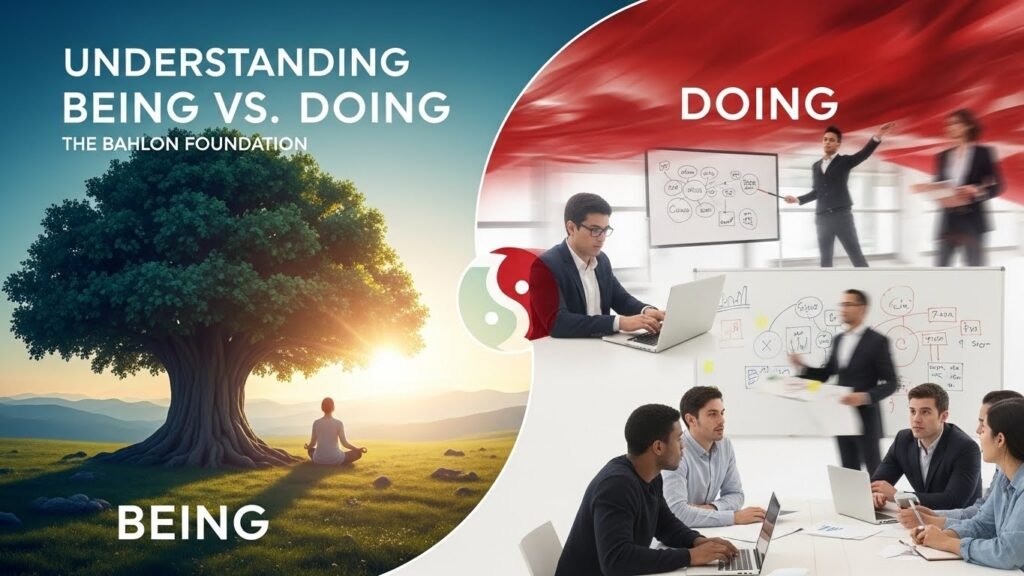
Bahlon’s approach to being vs. doing reveals that meaningful life emerges from the harmonious integration of presence and action rather than the dominance of either mode.
Unlike approaches that advocate for pure being (meditation, stillness) or pure doing (productivity, achievement), Bahlon recognized that authentic fulfillment comes from conscious oscillation between these modes, creating what he termed “meaningful momentum” – forward movement rooted in present-moment awareness.
The fundamental understanding is that being represents your authentic presence – the quality of consciousness you bring to each moment, stripped of roles, achievements, and future-focused thinking.
Doing represents your authentic action – the aligned movement that emerges from present-moment awareness rather than from anxious striving or external pressure.
When these modes operate in harmony, you experience what Bahlon called “conscious living” – life that feels both deeply satisfying and naturally productive.
What distinguishes this approach is its recognition that being and doing are not opposing forces but complementary aspects of conscious living.
Being without doing leads to stagnation and lack of direction, while doing without being leads to hollow achievement and existential emptiness.
The integration creates what researchers now recognize as “conscious action” – movement that emerges from presence rather than from anxious striving or external pressure.
Key Points:
- Meaningful life emerges from harmonious integration of presence and action
- Being represents authentic presence stripped of roles and achievements
- Doing represents aligned movement emerging from present-moment awareness
- Integration creates conscious living that feels satisfying and naturally productive
Lesson #1: Being Creates the Foundation for Meaningful Doing {#lesson-1-being-foundation}
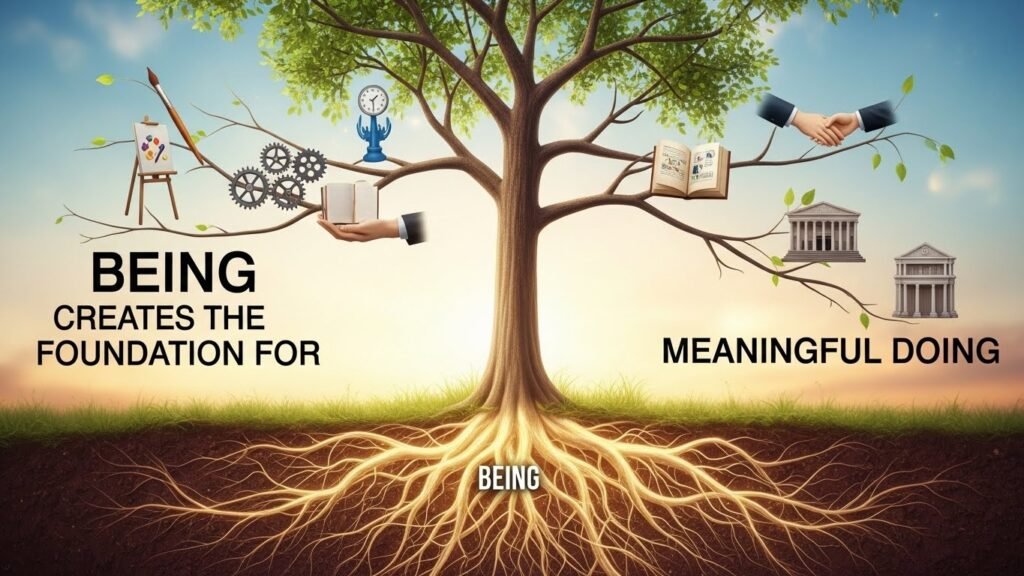
The first transformative lesson reveals that being creates the foundation for meaningful doing – a fundamental shift from the common belief that constant action leads to fulfillment.
Bahlon recognized that authentic doing must emerge from conscious being, creating what he termed “rooted action” – movement that grows from present-moment awareness rather than from anxious striving or external pressure.
This creates doing that feels naturally fulfilling rather than compulsively driven.
Research from consciousness psychology validates this approach, showing that individuals who regularly practice being-mode (meditation, presence, conscious awareness) demonstrate significantly higher levels of life satisfaction, authentic engagement, and meaningful action compared to those who operate primarily from doing-mode.
The being-mode creates the psychological foundation for doing that feels naturally aligned rather than anxiously driven.
The practical application involves developing what Bahlon called “being practices” – regular moments of conscious presence that create the psychological foundation for meaningful action.
This might include morning meditation, conscious breathing breaks, or simply pausing to notice your present experience before taking action.
These practices create the being-mode foundation that naturally gives rise to doing that feels authentic and fulfilling.
Key Points:
- Being creates foundation for meaningful doing through rooted action
- Research shows being-mode practitioners demonstrate higher life satisfaction
- Being practices create psychological foundation for naturally aligned doing
- Regular moments of conscious presence give rise to authentic, fulfilling action
Lesson #2: Presence Enhances Action Effectiveness {#lesson-2-presence-enhances}
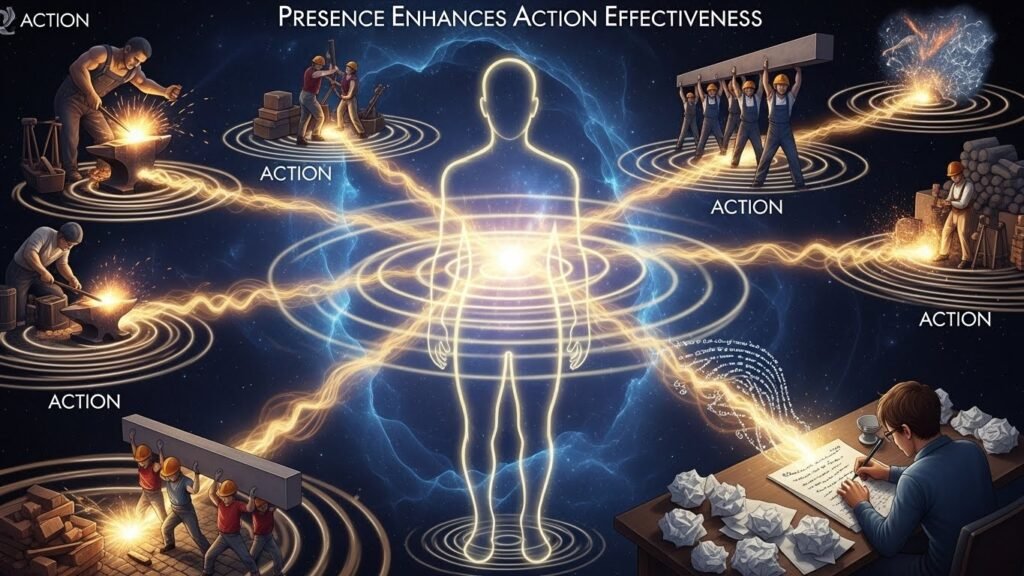
The second transformative lesson reveals that presence enhances action effectiveness – creating what Bahlon recognized as “conscious competence” where present-moment awareness amplifies the quality and impact of your actions.
Unlike the common belief that constant action produces better results, Bahlon observed that presence-infused doing creates superior outcomes with less effort and greater satisfaction.
Scientific research validates this phenomenon, with studies from performance psychology showing that individuals who regularly practice presence-techniques (mindfulness, conscious awareness, present-moment focus) demonstrate significantly higher levels of performance quality, creative problem-solving, and sustained effectiveness compared to those who operate from constant doing-mode.
The presence creates what researchers term “flow states” where action becomes both highly effective and deeply satisfying.
The application involves developing what Bahlon called “presence integration” – consciously infusing moments of being into your doing activities.
This might include taking conscious breaths before important actions, maintaining present-moment awareness during tasks, or simply noticing the quality of your presence while engaged in activity.
This creates doing that is both highly effective and naturally fulfilling.
Key Points:
- Presence enhances action effectiveness creating conscious competence
- Research validates presence-techniques practitioners demonstrate higher performance quality
- Presence creates flow states where action becomes effective and satisfying
- Presence integration infuses moments of being into doing activities

Lesson #3: Authentic Being Attracts Aligned Doing {#lesson-3-authentic-being}
The third transformative lesson reveals that authentic being attracts aligned doing – creating what Bahlon recognized as “magnetic authenticity” where genuine presence naturally draws opportunities, relationships, and experiences that align with your authentic nature.
This creates a natural flow where doing emerges organically from being rather than from forced effort or external pressure.
Research from authenticity psychology demonstrates that individuals who operate from authentic being (genuine presence, aligned values, authentic expression) naturally attract opportunities and relationships that align with their authentic nature, creating what researchers term “authentic alignment” – the natural convergence of inner truth and outer experience.
This creates doing that feels naturally attracted rather than anxiously pursued.
The practice involves developing what Bahlon called “authentic presence” – maintaining genuine alignment with your true nature regardless of external circumstances or social pressures.
This might include expressing your authentic opinions, following your genuine interests, or simply being honest about your present-moment experience.
This creates being that naturally attracts doing that feels authentically aligned.
Key Points:
- Authentic being attracts aligned doing through magnetic authenticity
- Research shows authentic individuals attract aligned opportunities naturally
- Authentic alignment creates convergence of inner truth and outer experience
- Authentic presence maintains genuine alignment regardless of external pressures

Lesson #4: Conscious Being Transforms Ordinary Doing {#lesson-4-conscious-being}
The fourth transformative lesson reveals that conscious being transforms ordinary doing – creating what Bahlon termed “sacred ordinariness” where present-moment awareness transforms everyday activities into meaningful experiences.
Unlike the belief that only extraordinary achievements create meaning, Bahlon recognized that conscious presence transforms even the most mundane activities into sources of deep satisfaction and meaning.
Research from mindfulness psychology validates this transformation, showing that individuals who practice conscious being (present-moment awareness, conscious attention, mindful presence) during ordinary activities report significantly higher levels of life satisfaction, meaning, and authentic happiness compared to those who reserve being-mode for special occasions or meditation sessions.
The conscious being creates what researchers term “meaning-making” where ordinary experiences become sources of authentic fulfillment.
The application involves developing what Bahlon called “conscious ordinariness” – maintaining present-moment awareness during everyday activities like eating, walking, working, or interacting with others.
This might include conscious breathing during daily tasks, mindful awareness during conversations, or present-moment attention during routine activities.
This creates being that transforms ordinary doing into extraordinary experiencing.
Key Points:
- Conscious being transforms ordinary doing creating sacred ordinariness
- Research validates conscious being during ordinary activities increases life satisfaction
- Conscious ordinariness maintains present-moment awareness during everyday activities
- Conscious being transforms ordinary doing into extraordinary experiencing
Lesson #5: Balanced Being-Doing Creates Lasting Fulfillment {#lesson-5-balanced-being-doing}
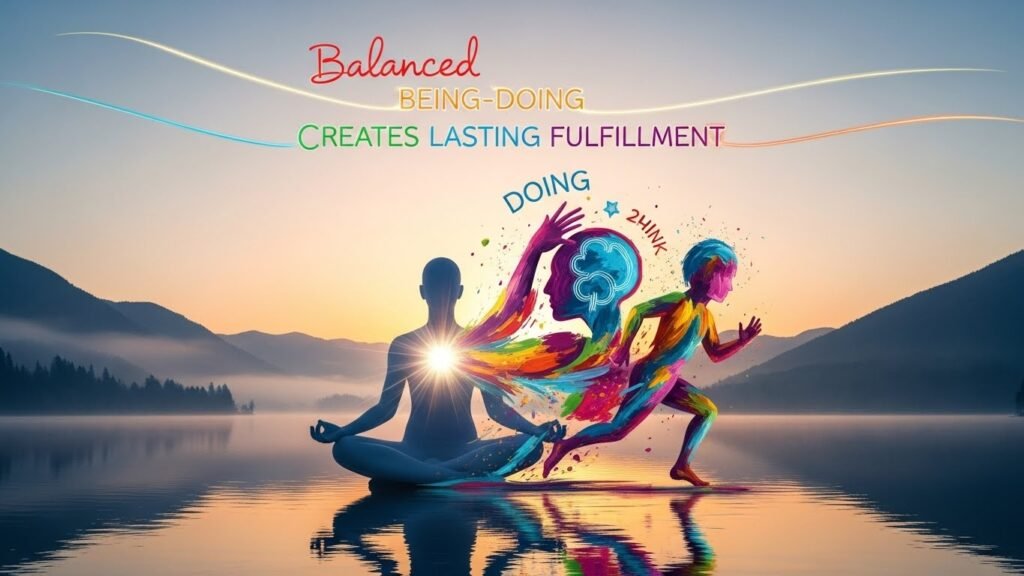
The fifth and final transformative lesson reveals that balanced being-doing creates lasting fulfillment – achieving what Bahlon recognized as “harmonious living” where conscious oscillation between being and doing creates sustainable joy and authentic fulfillment.
Unlike approaches that advocate for extreme being (pure meditation) or extreme doing (constant achievement), Bahlon taught that conscious balance creates the most sustainable and fulfilling life experience.
Research from well-being psychology demonstrates that individuals who maintain conscious balance between being and doing (regular presence practice + authentic action) report significantly higher levels of life satisfaction, authentic happiness, and sustainable well-being compared to those who operate primarily in either extreme.
The conscious balance creates what researchers term “sustainable flourishing” – lasting well-being that persists through life’s challenges and changes.
The practice involves developing what Bahlon called “conscious rhythm” – intentional oscillation between being and doing based on your authentic needs and circumstances.
This might include regular being practices (meditation, presence, conscious breathing) balanced with authentic doing (aligned action, meaningful work, conscious engagement), creating a rhythm that feels natural and sustainable for your unique life circumstances.
Key Points:
- Balanced being-doing creates lasting fulfillment through harmonious living
- Research shows balanced individuals report higher life satisfaction and sustainable well-being
- Conscious balance creates sustainable flourishing through life’s challenges
- Conscious rhythm involves intentional oscillation based on authentic needs
🔬 The Science Behind Being vs. Doing {#science-behind}
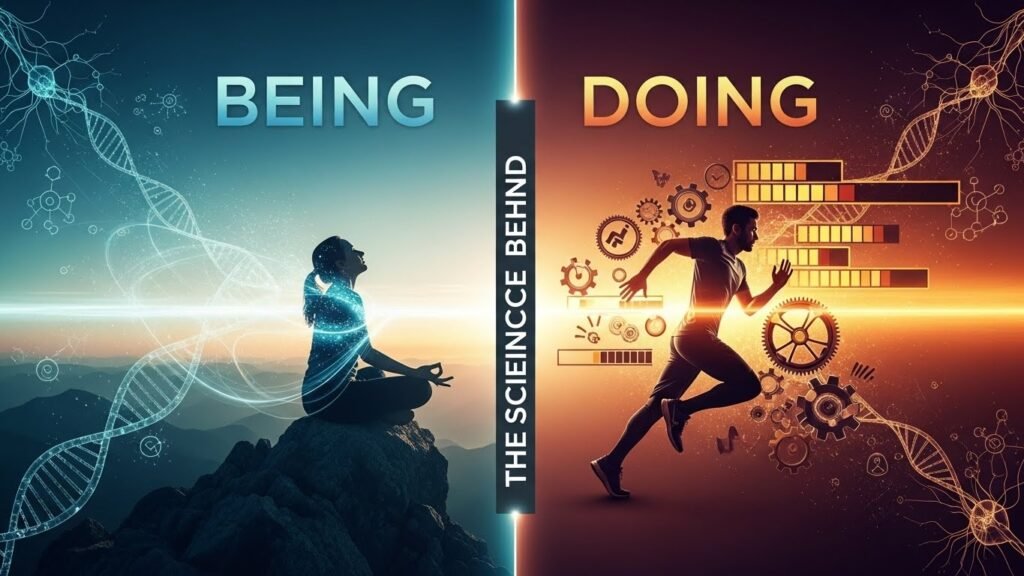
Modern science increasingly validates Bahlon’s ancient wisdom about being vs. doing through research in neuroscience, psychology, and consciousness studies.
Studies from Harvard Medical School demonstrate that regular being-mode practices (meditation, mindfulness, present-moment awareness) create measurable changes in brain structure, increasing gray matter density in areas associated with emotional regulation, self-awareness, and meaning-making while decreasing activity in the default mode network associated with rumination and anxiety.
Research from quantum consciousness theory reveals that being-mode operates through different neurological pathways than doing-mode, creating what researchers term “coherent consciousness states” that enhance creativity, intuition, and holistic thinking.
This validates Bahlon’s teaching that being-mode creates the neurological foundation for more effective and meaningful doing, creating a scientific basis for the transformative power of conscious being.
The neuroplasticity research demonstrates that consistent being-mode practice literally rewires the brain for enhanced meaning-making, emotional regulation, and authentic happiness, creating lasting changes that support sustainable well-being and meaningful living.
This creates the scientific validation for Bahlon’s transformative approach to being vs. doing for meaningful life.
Key Points:
- Harvard research shows being-mode creates measurable brain structure changes
- Quantum consciousness theory reveals different neurological pathways for being vs. doing
- Being-mode creates coherent consciousness states enhancing creativity and intuition
- Neuroplasticity research demonstrates lasting brain changes from consistent being-mode practice
🌈 Practical Applications for Daily Life {#practical-applications}
Applying the being vs. doing lessons in daily life requires developing what Bahlon called “conscious living skills” – practical techniques for integrating presence and action in your unique circumstances.
Rather than adding complex spiritual practices to your already-full schedule, you learn to weave being-mode awareness into your existing activities, transforming ordinary moments into opportunities for conscious living and meaningful experiencing.
The practical approach involves developing what researchers call “micro-moments of being” – brief periods of conscious presence that you integrate throughout your day.
This might include taking three conscious breaths before important meetings, maintaining present-moment awareness while eating, or simply noticing your sensory experience during routine activities.
These micro-moments create the being-mode foundation that naturally enhances your doing-mode effectiveness.
The key is developing what Bahlon termed “authentic rhythm” – finding the unique balance of being and doing that feels natural and sustainable for your life circumstances.
This might involve morning being practices, conscious presence during work activities, evening reflection periods, or weekend being-time that balances your weekday doing-time, creating a rhythm that supports both meaningful presence and effective action.
Key Points:
- Practical application involves conscious living skills for integrating presence and action
- Micro-moments of being integrate brief conscious presence throughout day
- Authentic rhythm finds unique balance natural and sustainable for circumstances
- Key is developing rhythm supporting both meaningful presence and effective action
📊 The Complete Being vs. Doing Framework {#comparison-table}
| Aspect | Being Mode | Doing Mode | Integration Benefits | Long-term Results | Daily Application |
|---|---|---|---|---|---|
| Focus | Present moment | Future goals | Balanced perspective | Sustainable growth | Conscious oscillation |
| Energy | Receptive, allowing | Active, driving | Harmonious flow | Natural momentum | Authentic rhythm |
| Time orientation | Now | Later | Present-focused action | Meaningful progress | Conscious timing |
| Stress level | Low, peaceful | Variable, driven | Managed stress | Sustainable pace | Conscious balance |
| Creativity | High, intuitive | Structured, logical | Enhanced innovation | Breakthrough insights | Integrated approach |
| Fulfillment | Deep, immediate | Achievement-based | Lasting satisfaction | Sustainable happiness | Authentic happiness |
| Relationships | Deep, present | Achievement-focused | Meaningful connections | Authentic bonds | Conscious connection |
| Health impact | Reduces stress | Can increase stress | Enhanced wellbeing | Sustainable health | Conscious wellness |
💫 Real Transformation Stories {#transformation-stories}
Michael’s Career Revolution: After 15 years in corporate finance that left him feeling empty despite impressive achievements, Michael discovered the being vs. doing balance through Bahlon’s teachings.
“I was the classic high-achiever who thought doing more would make me happy,” he shares.
“Learning to balance being with doing transformed everything.
I still achieve my goals, but now they emerge from authentic presence rather than anxious striving.
My career satisfaction skyrocketed, but more importantly, I finally feel fulfilled.”
Jennifer’s Relationship Evolution: Struggling with constant doing-mode in her relationships, Jennifer found transformation through conscious being practices.
“I was always doing things for people – cooking, cleaning, organizing – but never really being present with them,” she explains.
“Learning to balance being with doing transformed my relationships.
Now I can achieve my relationship goals while being fully present with people. My connections became deeper and more meaningful than ever before.”
❓ Frequently Asked Questions About Being vs. Doing {#faqs}
Q1: How do I know if I’m spending too much time in doing mode vs. being mode?
A: Check your emotional state and energy levels: too much doing-mode feels like anxious striving, constant pressure, and emotional exhaustion. Too much being-mode feels like lack of direction, excessive passivity, and disconnection from goals. The right balance feels like calm, focused action that emerges naturally from present-moment awareness.
Q2: Can being mode help with anxiety and stress?
A: Absolutely – being mode is one of the most effective approaches for managing anxiety and stress. Regular being-mode practices (meditation, conscious breathing, present-moment awareness) have been scientifically proven to reduce cortisol levels, decrease anxiety, and improve overall mental health significantly.
Q3: How do I balance being vs. doing when I have a very demanding job?
A: Start with micro-moments of being throughout your day – conscious breaths before meetings, present-moment awareness during tasks, brief meditation breaks. Even 30-second moments of being can transform your doing-mode effectiveness and reduce stress significantly.
Q4: What’s the difference between being mode and just being lazy or passive?
A: Being mode is conscious, present, and aware – it’s active engagement with the present moment. Laziness or passivity is unconscious disengagement. Being mode creates the foundation for more effective doing, while laziness creates stagnation without awareness or growth.
Q5: How long does it take to develop the skill of balancing being vs. doing?
A: Most people notice immediate improvements in stress levels and life satisfaction within 1-2 weeks of regular practice, with significant transformation occurring over 3-6 months. The key is consistent daily practice rather than intensive effort – even 5-10 minutes daily creates meaningful change.
Q6: Can being mode help with productivity and achievement?
A: Research shows that being-mode practices actually enhance productivity, creativity, and achievement quality. Being-mode creates the mental clarity and emotional regulation that supports more effective doing, leading to better results with less effort and stress.
Q7: How do I maintain being-mode during high-stress or emergency situations?
A: During high-stress situations, focus on basic being-mode techniques: conscious breathing, present-moment awareness, and conscious choice. Even 10 seconds of being-mode can transform your response to challenging situations, creating better outcomes through conscious rather than reactive action.
Q8: Is it possible to be too much in being mode and neglect important responsibilities?
A: True being-mode creates the foundation for more effective doing, not avoidance of responsibilities. If being-mode leads to neglect