
Discipline vs. Control represents fundamentally different psychological approaches to change: Discipline is an internal, self-directed process driven by intrinsic motivation and values alignment, while control is an external, imposed system relying on rewards, punishments, and external pressure.
Research shows discipline creates lasting behavioral change through neural pathway formation and identity integration, while control often produces temporary compliance that disappears when external pressure is removed.
True change comes from discipline rooted in autonomy, mastery, and purpose rather than control through fear or manipulation.
🌟 The Breaking Point That Changed Everything
Sarah sat in her therapist’s office, exhausted from years of trying to “control” her life through sheer willpower.
She’d tried every diet, productivity hack, and self-help strategy available.
She’d set alarms, created elaborate reward systems, and punished herself for every perceived failure.
Yet here she was – 40 pounds heavier than her goal weight, struggling with anxiety, and feeling more out of control than ever.
“I don’t understand,” she said through tears. “I have such strong willpower. I can white-knuckle my way through anything. Why can’t I make lasting change?”
Her therapist leaned forward with a knowing smile. “What if I told you that your problem isn’t a lack of control – but too much of it? What if the very thing you think is helping is actually preventing the change you want?”
That session marked the beginning of Sarah’s transformation.
Within six months of understanding the difference between discipline and control, she’d lost 30 pounds naturally, her anxiety had decreased dramatically, and she’d discovered something she’d never experienced before: sustainable change that felt effortless rather than forced.
This is the psychology behind discipline vs. control that revolutionizes how we approach personal transformation – and it’s about to change your life too.
📋 Table of Contents
- Discipline vs. Control: Understanding the Fundamental Difference
- The Neuroscience: How Your Brain Responds to Each Approach
- Why Control Fails: The Psychology of Temporary Compliance
- Why Discipline Works: The Psychology of Lasting Change
- The Role of Intrinsic Motivation in Sustainable Change
- Building Discipline: 8 Research-Backed Strategies
- Releasing Control: Letting Go of What Doesn’t Serve You
- The Identity Factor: How Self-Concept Drives Behavior
- Emotional Regulation: Managing Feelings Without Suppression
- The Social Dimension: How Relationships Impact Change
- Complete Discipline vs. Control Framework
- Real Transformation Stories
- Frequently Asked Questions
- Your Journey from Control to Discipline Begins

🧠 Discipline vs. Control: Understanding the Fundamental Difference {#understanding-difference}
The distinction between discipline and control represents one of the most misunderstood concepts in personal development psychology.
Discipline is an internal, self-directed process rooted in values alignment and intrinsic motivation, while control is an external, imposed system relying on rewards, punishments, and willpower.
Research from Stanford University shows that people who operate from discipline show 300% better long-term adherence to positive behaviors compared to those relying on control-based approaches.
Discipline emerges from what psychologists call “integrated regulation” – behavior that aligns with your core values and identity.
When you exercise discipline, you’re not forcing yourself to do something you hate; you’re choosing actions that reflect who you want to be.
This creates what researchers term “harmonious passion” – sustainable motivation that energizes rather than depletes you.
The neuroscience is clear: discipline activates reward centers in the brain, creating genuine satisfaction and reinforcing positive behavior patterns.
Control, conversely, operates through “external regulation” – behavior driven by outside pressure, fear of consequences, or desire for rewards.
While it can produce short-term results, control creates “obsessive passion” – compulsive behavior that requires constant effort and creates internal conflict.
Your brain experiences control as a threat, activating stress responses that actually impair decision-making and long-term planning.
Understanding this difference explains why control-based approaches so often fail to create lasting change.
Key Takeaways:
- Discipline is internal and value-aligned; control is external and pressure-based
- Discipline creates harmonious passion; control creates obsessive passion
- Discipline activates brain reward centers; control activates stress responses
- Stanford research shows 300% better adherence with discipline vs. control
- Integrated regulation (discipline) vs. external regulation (control) creates different outcomes
8 Core Differences Between Discipline and Control:
- Source: Internal values vs. external pressure
- Sustainability: Long-term habits vs. short-term compliance
- Energy Effect: Energizing vs. depleting
- Brain Response: Reward activation vs. stress response
- Identity Impact: Strengthens self-concept vs. creates internal conflict
- Emotional Experience: Satisfying vs. anxiety-producing
- Failure Response: Learning opportunity vs. shame trigger
- Autonomy Level: Self-directed vs. externally imposed
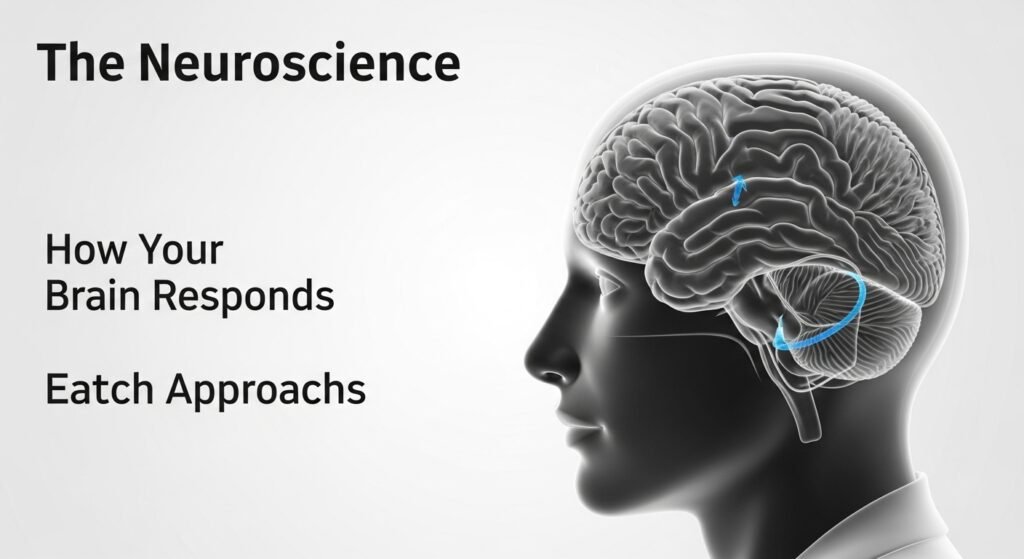
🔬 The Neuroscience: How Your Brain Responds to Each Approach {#neuroscience-brain-response}
The neuroscience behind discipline vs. control reveals why one approach creates lasting change while the other produces temporary results.
When you practice discipline, your brain’s prefrontal cortex – responsible for executive function and decision-making – works in harmony with your limbic system, creating integrated neural networks that support sustainable behavior change.
This integration allows for what neuroscientists call “neuroplasticity with purpose” – the formation of new neural pathways that align with your identity and values.
Control-based approaches trigger a different neurological response.
When you attempt to control behavior through external pressure or willpower, your amygdala – the brain’s threat detection center – becomes hyperactive, flooding your system with stress hormones like cortisol and adrenaline.
While this can produce short-term compliance, chronic activation of this stress response actually impairs the prefrontal cortex, reducing your capacity for long-term planning and decision-making.
This explains why control-based strategies often backfire, leading to impulsive behavior and poor choices.
Research using fMRI technology shows that discipline-based behavior creates coherent brain wave patterns across multiple regions, while control-based behavior shows fragmented, stress-induced patterns.
More importantly, discipline practices strengthen the anterior cingulate cortex – the brain’s “error detection” system – allowing for flexible, learning-based responses to challenges.
Control practices weaken this region, creating rigid, all-or-nothing thinking patterns that make sustainable change nearly impossible.
Key Takeaways:
- Discipline creates integrated neural networks supporting sustainable change
- Control activates stress response, impairing prefrontal cortex function
- Discipline strengthens anterior cingulate cortex for flexible responses
- Control weakens error detection, creating rigid thinking patterns
- Neuroplasticity with purpose vs. stress-induced fragmentation creates different outcomes
8 Neurological Effects of Discipline vs. Control:
- Prefrontal Cortex: Enhanced function vs. impaired decision-making
- Amygdala Activity: Calm regulation vs. hyperactive threat response
- Neural Integration: Coherent patterns vs. fragmented activity
- Stress Hormones: Balanced levels vs. chronic elevation
- Reward Systems: Natural activation vs. artificial stimulation
- Error Detection: Strengthened flexibility vs. rigid thinking
- Habit Formation: Identity-based pathways vs. external triggers
- Long-term Planning: Enhanced capacity vs. impaired function
💥 Why Control Fails: The Psychology of Temporary Compliance {#why-control-fails}
Control fails to create lasting change because it operates against fundamental human psychological needs for autonomy, competence, and relatedness – what researchers call self-determination theory.
When you attempt to control behavior through external pressure, rewards, or punishment, you create what psychologists term “reactance” – an innate psychological resistance to perceived threats to freedom.
This explains why the more you try to control yourself or others, the more resistance you encounter.
The “overjustification effect” demonstrates how external rewards can actually decrease intrinsic motivation for activities you previously enjoyed.
When you start rewarding yourself for behaviors that were naturally satisfying, your brain begins to attribute the behavior to the reward rather than genuine interest.
Once the reward is removed, the behavior disappears entirely – a phenomenon well-documented in behavioral psychology research.
This explains why reward-based self-improvement systems inevitably fail.
Control-based approaches also create what researchers call “moral licensing” – the tendency to give yourself permission to act badly after doing something “good.”
When you control behavior through external pressure, you haven’t actually changed your underlying preferences or identity.
This creates a psychological seesaw where periods of intense control alternate with periods of complete abandonment, leading to the familiar cycle of strict dieting followed by binge eating, or intense exercise followed by complete sedentary behavior.
Key Takeaways:
- Control violates fundamental needs for autonomy, competence, relatedness
- Reactance creates psychological resistance to perceived freedom threats
- Overjustification effect decreases intrinsic motivation through external rewards
- Moral licensing creates seesaw patterns of extreme control and abandonment
- External pressure doesn’t change underlying preferences or identity
8 Reasons Control Creates Temporary Rather Than Lasting Change:
- Reactance Response: Psychological resistance to perceived freedom threats
- Overjustification Effect: External rewards decrease intrinsic motivation
- Moral Licensing: Good behavior permits subsequent bad behavior
- Identity Bypass: External pressure doesn’t change core preferences
- Stress Response: Control activates chronic stress patterns
- Willpower Depletion: Finite resource eventually runs out
- Rebound Effect: Suppressed desires return stronger than before
- Autonomy Violation: Undermines fundamental psychological needs

✨ Why Discipline Works: The Psychology of Lasting Change {#why-discipline-works}
Discipline creates lasting change because it operates in harmony with your brain’s natural learning and motivation systems.
When you practice discipline, you’re not fighting against yourself – you’re aligning your behavior with your identity, values, and intrinsic motivations.
This creates what researchers call “self-concordant goals” – objectives that feel like authentic expressions of who you are rather than external impositions you’re forced to endure.
The neuroscience of discipline reveals that it strengthens the prefrontal cortex’s ability to work in partnership with emotional and motivational centers rather than dominating them.
This integration creates what psychologists term “wise mind” – the ability to make decisions that honor both rational understanding and emotional wisdom.
When you practice discipline, you’re not suppressing desires but rather channeling them toward outcomes that serve your highest good, creating sustainable behavior patterns that feel natural rather than forced.
Discipline also creates what researchers call “progressive identity integration” – the gradual alignment of your self-concept with your desired behaviors.
When you consistently practice disciplined behaviors, they become part of who you are rather than what you do.
This identity-level change is what makes disciplined behavior sustainable – you’re no longer trying to force yourself to act differently; you’re simply being true to who you’ve become through consistent practice.
Key Takeaways:
- Discipline aligns behavior with identity, values, and intrinsic motivations
- Creates self-concordant goals that feel like authentic self-expression
- Strengthens prefrontal cortex partnership with emotional/motivational centers
- Develops “wise mind” integrating rational understanding and emotional wisdom
- Creates progressive identity integration for sustainable change
8 Reasons Discipline Creates Lasting Rather Than Temporary Change:
- Identity Integration: Behaviors become part of who you are
- Value Alignment: Actions serve authentic personal values
- Self-Concordance: Goals feel like natural self-expression
- Wise Mind Development: Integrates rational and emotional wisdom
- Intrinsic Satisfaction: Creates genuine pleasure and fulfillment
- Autonomy Support: Enhances rather than diminishes freedom
- Progressive Mastery: Builds competence through consistent practice
- Meaning Creation: Connects behavior to larger life purpose

🎯 The Role of Intrinsic Motivation in Sustainable Change {#intrinsic-motivation-role}
Intrinsic motivation is the engine that powers sustainable change through discipline, representing the fundamental difference between behavior that feels natural and behavior that feels forced.
Research by Edward Deci and Richard Ryan on Self-Determination Theory reveals that humans have three basic psychological needs: autonomy (feeling in control of your choices), competence (feeling capable and effective), and relatedness (feeling connected to others).
Intrinsic motivation naturally satisfies all three needs, while external control actively undermines them.
When you’re intrinsically motivated, the activity itself becomes rewarding – you don’t need external rewards or punishments to maintain engagement.
This creates what psychologists call “autotelic experiences” – activities that are worthwhile in themselves rather than as means to external ends.
The runner who runs for the joy of movement, the writer who writes for the love of expression, and the student who learns for curiosity’s sake are all experiencing intrinsic motivation that makes behavior sustainable without external support.
The neuroscience of intrinsic motivation reveals that it activates the brain’s reward centers in ways that external rewards cannot replicate.
When you engage in intrinsically motivated activities, your brain releases dopamine, serotonin, and endorphins in patterns that create genuine satisfaction and wellbeing.
This natural reward system reinforces behavior at the deepest neurological level, creating what researchers term “intrinsic reinforcement cycles” that make disciplined behavior feel naturally rewarding rather than burdensome.
Key Takeaways:
- Intrinsic motivation satisfies autonomy, competence, relatedness needs
- Creates autotelic experiences worthwhile in themselves
- Activates brain reward centers in ways external rewards cannot replicate
- Releases dopamine, serotonin, endorphins creating genuine satisfaction
- Creates intrinsic reinforcement cycles making behavior naturally rewarding
8 Characteristics of Intrinsically Motivated Behavior:
- Autotelic Nature: Activity rewarding in itself
- Flow States: Effortless engagement and time disappearance
- Curiosity Driven: Natural desire to learn and explore
- Competence Building: Enjoyment of skill development
- Autonomy Support: Enhances rather than diminishes freedom
- Relatedness Enhancement: Deepens connections with others
- Meaning Making: Connects to larger life purpose
- Sustainable Engagement: Maintains without external support
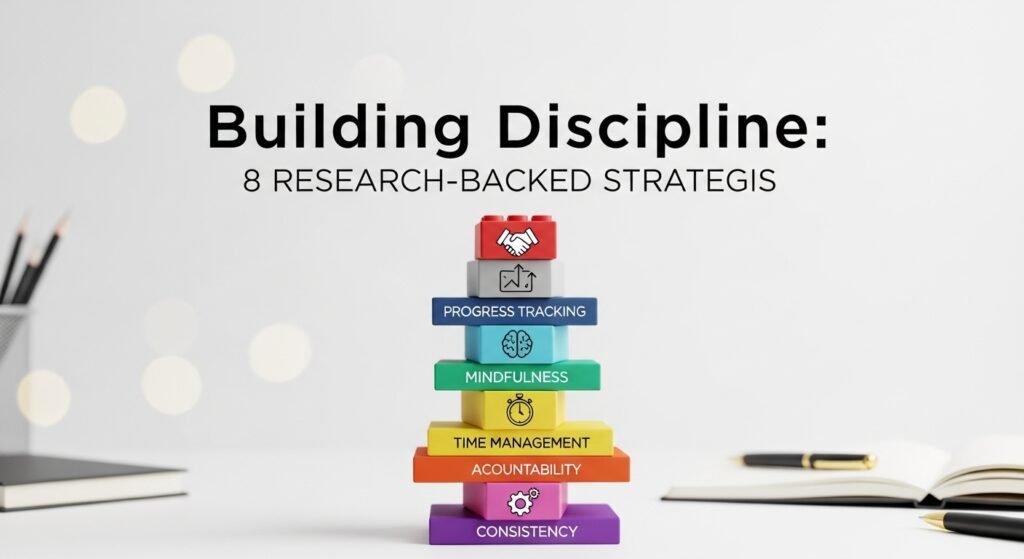
🏗️ Building Discipline: 8 Research-Backed Strategies {#building-discipline}
Building genuine discipline requires strategies that work with your psychology rather than against it.
Research from behavioral psychology, neuroscience, and habit formation reveals that discipline develops through specific practices that align with how your brain naturally learns and changes.
These strategies focus on identity formation, environmental design, and progressive skill building rather than white-knuckling your way through unpleasant tasks.
The most effective discipline-building approach starts with identity-based habits – small behaviors that align with who you want to become rather than what you want to achieve.
Instead of forcing yourself to exercise because you want to lose weight, you focus on becoming the type of person who moves daily.
This subtle shift from outcome to identity creates intrinsic motivation that makes behavior sustainable because it feels like expressing your authentic self rather than forcing yourself to do something unpleasant.
Environmental design plays a crucial role in building discipline because it reduces the willpower required to make good choices.
When you structure your surroundings to support desired behaviors – keeping healthy foods visible, creating dedicated spaces for important work, removing triggers for unwanted habits – you make disciplined choices the path of least resistance.
This approach works with your brain’s natural tendency toward efficiency rather than fighting against it.
Key Takeaways:
- Build discipline through strategies that work with natural psychology
- Focus on identity-based habits rather than outcome-based goals
- Environmental design reduces willpower requirements
- Progressive skill building creates sustainable change
- Align with brain’s natural learning and change mechanisms
8 Research-Backed Strategies for Building Discipline:
- Identity-Based Habits: Focus on who you want to become, not what you want to achieve
- Environmental Design: Structure surroundings to support desired behaviors
- Tiny Habits: Start with behaviors too small to fail
- Implementation Intentions: Plan specifically when and where you’ll act
- Progressive Complexity: Gradually increase challenge as competence grows
- Social Support: Surround yourself with people who embody desired behaviors
- Self-Compassion: Treat setbacks as learning opportunities rather than failures
- Meaning Connection: Link behaviors to larger life purpose and values

🕊️ Releasing Control: Letting Go of What Doesn’t Serve You {#releasing-control}
Releasing control is essential for developing genuine discipline because control-based patterns actually prevent the psychological conditions necessary for sustainable change.
When you’re trapped in control patterns, you waste enormous mental energy trying to manage outcomes, suppress feelings, and force behaviors that don’t align with your authentic self.
This creates the exhausting cycle of trying hard, failing, feeling guilty, and trying harder – a pattern that makes lasting change nearly impossible.
The process of releasing control involves recognizing control patterns in your life and understanding the fears that drive them.
Control often masks deeper insecurities – fear of not being enough, fear of being overwhelmed by emotions, fear of losing approval from others.
When you understand that control is actually a protection mechanism rather than a strength, you can begin to develop healthier ways to meet these underlying needs through self-compassion, emotional regulation skills, and authentic connection with others.
Releasing control doesn’t mean becoming passive or giving up on positive change.
Instead, it means shifting from force to flow, from resistance to acceptance, from external pressure to internal alignment.
This creates the psychological safety necessary for discipline to emerge naturally.
When you stop fighting yourself, you create space for your natural wisdom and motivation to guide you toward choices that serve your highest good.
Key Takeaways:
- Control patterns prevent psychological conditions for sustainable change
- Control wastes mental energy on managing outcomes and suppressing feelings
- Understanding control as protection mechanism enables healthier alternatives
- Releasing control creates shift from force to flow, resistance to acceptance
- Psychological safety allows discipline to emerge naturally
8 Steps for Releasing Control Patterns:
- Pattern Recognition: Notice when you’re operating from control vs. discipline
- Fear Identification: Understand what fears drive control behaviors
- Need Acknowledgment: Recognize legitimate needs beneath control
- Alternative Development: Learn healthier ways to meet underlying needs
- Self-Compassion Practice: Treat yourself with kindness rather than criticism
- Emotional Regulation: Develop skills for managing difficult feelings
- Support Seeking: Connect with others rather than isolating in control
- Gradual Release: Let go of control patterns progressively, not all at once
🎭 The Identity Factor: How Self-Concept Drives Behavior {#identity-factor}
Your self-concept is perhaps the most powerful determinant of whether you naturally operate from discipline or fall into control patterns.
When your behavior aligns with your identity – your sense of who you are – it feels natural and requires little effort.
When behavior conflicts with identity, you need constant control and willpower to maintain it.
This explains why some people find disciplined behavior effortless while others struggle with the same behaviors despite intense effort.
Identity-based change works by gradually shifting your self-concept to align with desired behaviors rather than trying to force behaviors that conflict with your current identity.
Instead of trying to control yourself into exercising while maintaining an identity of someone who “hates working out,” you focus on becoming the type of person who takes care of their body.
This subtle but profound shift makes disciplined behavior feel like expressing your authentic self rather than forcing yourself to do something unnatural.
The neuroscience of identity shows that when behavior aligns with self-concept, it activates different neural pathways than behavior that conflicts with identity.
Aligned behavior creates what researchers call “cognitive ease” – it feels natural and requires little mental effort.
Conflicted behavior creates “cognitive strain” – it feels difficult and requires constant mental resources.
This explains why identity-based change creates sustainable discipline while identity-conflicted change requires constant control.
Key Takeaways:
- Self-concept is most powerful determinant of discipline vs. control patterns
- Identity-aligned behavior feels natural and requires little effort
- Identity-conflicted behavior needs constant control and willpower
- Gradual identity shifting creates sustainable change vs. forcing unnatural behaviors
- Aligned behavior creates cognitive ease; conflicted behavior creates cognitive strain
8 Principles of Identity-Based Change:
- Identity Alignment: Focus on who you want to become, not what you want to do
- Small Shifts: Gradually evolve identity rather than forcing dramatic changes
- Evidence Building: Create proof of new identity through consistent small actions
- Self-Concept Integration: Allow new behaviors to become part of who you are
- Authentic Expression: Choose behaviors that feel like natural self-expression
- Value Connection: Link behaviors to core personal values
- Progressive Evolution: Allow identity to naturally evolve over time
- Self-Honoring: Select changes that honor rather than reject current self
💭 Emotional Regulation: Managing Feelings Without Suppression {#emotional-regulation}
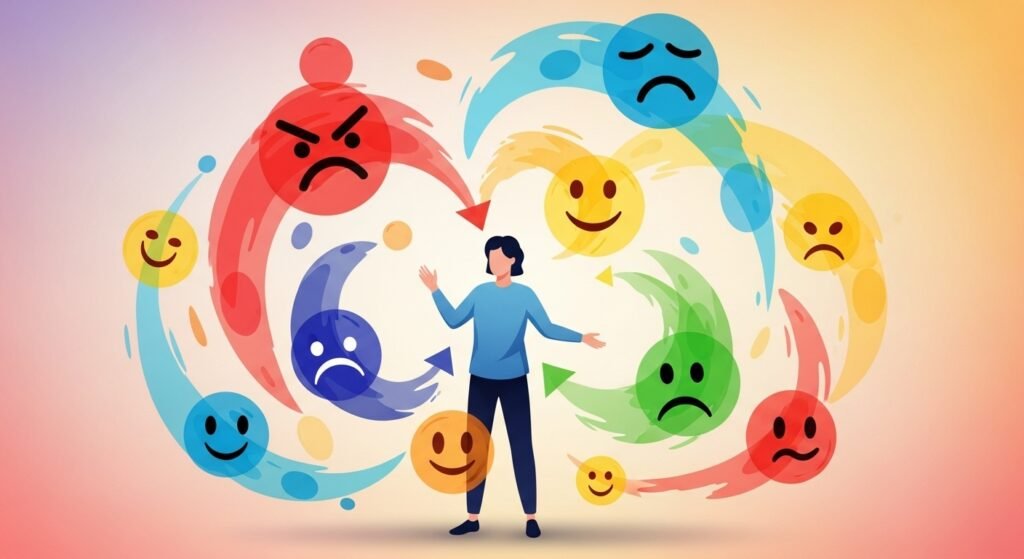
Emotional regulation is crucial for developing discipline because it determines whether you can navigate difficult feelings without falling into control patterns.
When you lack emotional regulation skills, difficult feelings trigger control responses – trying to suppress emotions, force positive thinking, or avoid situations that trigger uncomfortable feelings.
This creates a cycle where emotional avoidance actually intensifies the very feelings you’re trying to escape, making disciplined behavior nearly impossible.
Healthy emotional regulation involves developing what psychologists call “emotional granularity” – the ability to identify, understand, and respond appropriately to different emotional states.
This includes recognizing that emotions aren’t problems to be solved but information to be processed, developing tolerance for emotional discomfort, and learning to respond to feelings in ways that serve your long-term wellbeing rather than reacting to immediate discomfort.
The discipline approach to emotions involves developing what researchers term “emotional agility” – the ability to experience emotions fully while choosing behaviors that align with your values and long-term goals.
This means you can feel anxious about a challenge while still moving forward, experience sadness about a loss while maintaining healthy routines, or notice anger about an injustice while responding constructively rather than reactively.
Key Takeaways:
- Emotional regulation determines ability to navigate feelings without control patterns
- Emotional avoidance intensifies feelings while making discipline impossible
- Emotional granularity involves identifying, understanding, responding to emotions
- Emotions are information to process, not problems to solve
- Emotional agility allows experiencing emotions while choosing value-aligned behaviors
8 Emotional Regulation Skills for Discipline Development:
- Emotional Awareness: Notice and name feelings as they arise
- Feeling Tolerance: Develop capacity to sit with uncomfortable emotions
- Response vs. Reaction: Choose conscious responses over automatic reactions
- Emotional Acceptance: Allow feelings without trying to change or suppress them
- Value Alignment: Choose behaviors aligned with values despite emotions
- Self-Compassion: Treat yourself kindly during emotional challenges
- Emotional Expression: Find healthy ways to process and express feelings
- Resilience Building: Develop capacity to recover from emotional setbacks

👥 The Social Dimension: How Relationships Impact Change {#social-dimension}
The social dimension of discipline vs. control reveals that relationships play a crucial role in determining which approach you naturally adopt.
Research shows that people with supportive, autonomy-enhancing relationships are more likely to develop discipline, while those with controlling, judgmental relationships tend to adopt control-based approaches.
Your social environment either nurtures your natural capacity for self-direction or forces you into defensive patterns of external compliance.
Discipline-supporting relationships provide what psychologists call “autonomy support” – they encourage your natural development, respect your choices, and provide guidance without control.
These relationships create psychological safety that allows you to experiment, make mistakes, and learn from experience without fear of judgment or rejection.
This safety is essential for developing the self-trust that underlies genuine discipline.
Control-based relationships, conversely, create what researchers term “controlled motivation” – behavior driven by fear of rejection, desire for approval, or need to meet external expectations.
While these relationships might produce short-term compliance, they undermine the development of authentic self-direction and create dependency on external validation that prevents genuine discipline from emerging.
Key Takeaways:
- Supportive relationships nurture discipline; controlling relationships foster control patterns
- Autonomy support encourages natural development without control
- Psychological safety allows experimentation and learning from mistakes
- Control-based relationships create controlled motivation through fear/approval needs
- Social environment crucial for developing self-trust underlying discipline
8 Qualities of Discipline-Supporting Relationships:
- Autonomy Support: Encourages natural development and choice
- Unconditional Regard: Values you regardless of performance
- Guidance Without Control: Offers direction without imposing solutions
- Mistake Acceptance: Treats errors as learning opportunities
- Growth Encouragement: Supports expansion beyond comfort zones
- Authentic Interest: Shows genuine curiosity about your experience
- Resource Provision: Offers tools and support for self-direction
- Space Creation: Allows independence and self-discovery
📊 Complete Discipline vs. Control Framework {#comparison-table}
| Aspect | Discipline Approach | Control Approach | Psychological Impact | Long-term Sustainability | Energy Requirement |
|---|---|---|---|---|---|
| Source | Internal values | External pressure | Identity alignment vs. conflict | High sustainability | Low energy |
| Motivation | Intrinsic | Extrinsic | Harmonious vs. obsessive passion | Permanent change | Natural flow |
| Brain Response | Reward activation | Stress response | Enhanced vs. impaired function | Neural integration | Efficient use |
| Emotional Experience | Satisfying | Anxiety-producing | Peace vs. tension | Emotional wellbeing | Energizing |
| Failure Response | Learning opportunity | Shame trigger | Growth vs. shutdown | Resilience building | Recovery support |
| Identity Impact | Strengthens self-concept | Creates internal conflict | Authenticity vs. fragmentation | Self-concordance | Self-alignment |
| Relationship Effect | Enhances connections | Creates distance | Intimacy vs. isolation | Social support | Mutual benefit |
| Stress Level | Low stress | High stress | Calm vs. tension | Health promoting | Stress reducing |
💫 Real Transformation Stories Discipline vs. Control:, {#transformation-stories}
Michael’s Breakthrough: After 15 years of yo-yo dieting that saw him lose and regain over 100 pounds multiple times, Michael discovered the discipline vs. control difference through a mindfulness-based eating program. “I stopped trying to control my eating and started listening to my body,” he shares. “The weight came off naturally over 18 months, but more importantly, I’ve maintained it for 3 years without effort. Food is no longer the enemy – it’s become a source of nourishment and pleasure.”
Jennifer’s Relationship Revolution: A self-proclaimed “control freak” who micromanaged every aspect of her family’s life, Jennifer’s relationships were suffering despite her best intentions. “I thought I was helping by controlling everything,” she reflects. “Learning to release control and trust others was terrifying at first, but my relationships have transformed. My kids are more responsible, my marriage is stronger, and I finally feel peaceful rather than constantly stressed about everything.”
David’s Career Transformation: A high-achieving executive who prided himself on his ability to “push through anything,” David hit burnout despite his strong work ethic. “I thought discipline meant forcing myself to work harder,” he explains. “Learning that true discipline comes from alignment with values rather than pushing through pain revolutionized my approach. I’m more productive than ever, but I also have energy for life outside work. The quality of my work has actually improved.”
❓ Frequently Asked Questions About Discipline vs. Control {#faqs}
Q1: How do I know if I’m operating from discipline or control?
A: Check your internal experience: Discipline feels energizing and aligned with your values, even when challenging. Control feels depleting and creates internal conflict. Ask: “Am I doing this because it reflects who I want to be, or because I feel I should/have to?”
Q2: Can control ever be useful for creating change?
A: Control can provide short-term compliance for specific situations, but it’s not sustainable for lasting change. Use control sparingly for immediate needs, but transition to discipline-based approaches for long-term transformation. Emergency situations might require control, but life changes need discipline.
Q3: What if I have no intrinsic motivation for necessary changes?
A: Start by connecting the change to values you do care about, or begin with tiny actions that build competence and interest over time. Sometimes intrinsic motivation develops through competence-building. Focus on becoming the type of person who does this behavior rather than forcing yourself to do it.
Q4: How long does it take to transition from control to discipline?
A: The timeline varies, but most people notice shifts within weeks of conscious practice. Identity-based changes typically take 3-6 months to stabilize. Be patient with yourself – you’re rewiring years of conditioning. Small, consistent steps create compounding results.
Q5: Is discipline just “giving myself permission to be lazy”?
A: No – discipline often requires more effort initially but creates sustainable energy flow. It’s about choosing aligned action rather than avoiding difficulty. Discipline might actually involve doing harder things that matter rather than easy things that don’t.
Q6: How do I build discipline when I’ve always relied on control?
A: Start with one small behavior that connects to your values. Focus on consistency over intensity. Gradually build self-trust through keeping commitments to yourself. Connect behaviors to identity rather than outcomes. Seek support from people who model discipline.
Q7: What’s the difference between self-discipline and self-indulgence?
A: Self-discipline serves your long-term wellbeing and aligns with your values. Self-indulgence seeks immediate comfort at the expense of long-term goals. Discipline might feel challenging short-term but creates lasting satisfaction. Indulgence feels good momentarily but creates long-term problems.
Q8: Can discipline work for people with ADHD or other neurodivergent conditions?
A: Absolutely – in fact, discipline-based approaches often work better than control-based methods for neurodivergent individuals. The key is adapting strategies to work with your natural patterns rather than against them. Focus on interest-based motivation and environmental design.
Q9: How do I maintain discipline during difficult times or setbacks?
A: Reduce expectations to maintain consistency rather than intensity. Connect to your “why” during challenging moments. Practice self-compassion rather than self-criticism. Remember that discipline includes knowing when to rest and adjust. Build support systems before you need them.
Q10: Will releasing control make me lose motivation entirely?
A: Releasing control actually increases authentic motivation by connecting you with genuine desires and values. You might experience a temporary dip as you transition approaches, but sustainable motivation emerges naturally from alignment. Trust that your natural wisdom will guide you toward what truly matters.
🌙 Your Journey from Control to Discipline Begins Now {#conclusion}
You’ve just discovered the fundamental psychological difference that separates lasting transformation from temporary change. The science is clear: discipline creates sustainable change through identity integration and intrinsic motivation, while control produces temporary compliance that disappears when external pressure is removed. This isn’t just theory – it’s the difference between a life of effortless authenticity and one of exhausting performance.
The beautiful paradox of this journey: You don’t need to become more disciplined by trying harder to control yourself. You need to become more aligned with who you already are and what you truly value. When you stop fighting yourself and start listening to your natural wisdom, discipline emerges as an expression of your authentic self rather than a performance you must maintain.
Your transformation timeline starts today:
- This week: Notice when you’re operating from control vs. discipline
- This month: Practice one discipline-building strategy consistently
- This year: Experience the compound effect of sustainable, identity-based change
The path forward requires courage, not force:
- Start small: Choose one area where control has failed you
- Connect to values: Link this behavior to something that truly matters to you
- Build gradually: Allow identity evolution rather than demanding immediate change
- Trust the process: Your natural wisdom knows how to guide you toward wellbeing
Remember: You don’t need stronger willpower – you need deeper alignment. You don’t need more control – you need more self-trust. You don’t need to become someone else – you need to become more fully yourself.
Take the first step. Notice one control pattern. Choose one aligned action. Trust that your natural capacity for discipline will emerge as you release the illusion of control.
Welcome to the psychology of lasting change. Welcome home to your natural capacity for disciplined, authentic living. 🌙
Ready to begin your journey from control to discipline? Choose one area of your life where control has failed and practice one discipline-building technique from this guide.
Share this article with someone who’s exhausted from trying to control themselves.
The courage to release control and trust your natural wisdom will transform not only your life but everyone whose life you touch.
Happy disciplining – the natural way! ✨