
Dreams are gateways to the subconscious, rich with symbols and hidden messages that can guide self-discovery and personal transformation. Through dreamwork & symbolic creation, individuals tap into the creative wisdom of their inner world, uncover repressed emotions, and gain clarity on life’s challenges. This SEO optimized blog explores potent techniques in dream interpretation and symbolic art to foster deep self-awareness, healing, and creative empowerment.
Table of Contents
- Introduction to Dreamwork and Symbolic Creation
- The Role of Symbols in Dreams and Self-Discovery
- Techniques for Effective Dream Recall and Journaling
- Jungian and Freudian Approaches to Dream Analysis
- Using Active Imagination and Visualization for Insight
- Creating Symbolic Art as a Path to Unconscious Wisdom
- Dreamwork for Emotional Healing and Resolution
- Integrating Dream Insights into Daily Life
- Tools and Practices to Enhance Dreamwork
- Frequently Asked Questions (FAQs)

Introduction to Dreamwork & Symbolic Creation
Dreamwork is the practice of engaging consciously with dreams to extract insight and foster personal growth. Symbolic creation involves using art, writing, or movement to express and explore unconscious content revealed through dreams.
Together, these modalities unlock subconscious wisdom, promote healing, and activate creative potential. Dreams communicate through archetypes, metaphors, and emotional tones, providing a rich texture for self-exploration.
Working with dreams invites a dialogue between conscious intentions and unconscious guidance, revealing hidden fears, desires, and aspects of the self in need of attention or integration.
The blend of dream interpretation and symbolic creation bridges the abstract world of images with concrete creative expression, making inner transformation tangible.
Whether through journaling, visual art, or guided therapy, dreamwork opens a door to deeper self-understanding and spiritual awakening.
Key points:
- Dreams are symbolic messages from the subconscious.
- Symbolic creation translates unconscious material into tangible forms.
- Both practices nurture emotional healing and insight.
- Dream imagery provides access to archetypes and universal themes.
- Integration of dreamwork fosters holistic growth of mind and spirit.

The Role of Symbols in Dreams and Self-Discovery
Symbols in dreams act as vessels of deeper meaning, often representing complex emotions, conflicts, and unconscious wisdom that the waking mind might overlook.
They function like metaphors, condensing multiple layers of meaning into simple images or events. Understanding symbols involves recognizing their personal relevance alongside universal archetypes often studied in Jungian psychology.
For instance, water might symbolize emotions, while a house might represent the self or psyche. Working with symbols can reveal hidden attitudes towards life, unresolved issues, or emerging truths about the self.
The process of interpreting symbols is subjective and intuitive, inviting individuals to trust their feelings and insights. By engaging with dream symbols, people embark on a journey of self-discovery that transcends rational analysis, opening access to intuition and creativity.
Key points:
- Dream symbols condense complex unconscious messages.
- Symbols combine personal meaning and universal archetypes.
- Understanding symbols deepens self-awareness.
- Symbols act as bridges to intuition and imagination.
- Symbol interpretation nurtures integration of inner conflicts.

Techniques for Effective Dream Recall and Journaling
Recording dreams effectively lays the foundation for meaningful dreamwork. Practice recalling dreams immediately after waking by staying still and focused on remembering before moving or engaging with distractions.
Keep a dedicated dream journal beside your bed to capture details, feelings, and impressions as soon as possible. Use free association writing to explore each dream element without judgment.
Drawing or creative expression can supplement verbal description to capture elusive qualities. Consistency in journaling cultivates stronger recall over time and deepens engagement with recurring themes or symbols.
Reflect periodically on dream patterns or shifts in narrative tone as markers of personal change and insight.
Key points:
- Dream recall improves with intention and practice.
- Use a dedicated dream journal for recording dreams.
- Write freely to explore emotions and symbols.
- Include creative expression beyond words.
- Review journals to identify patterns and insights.
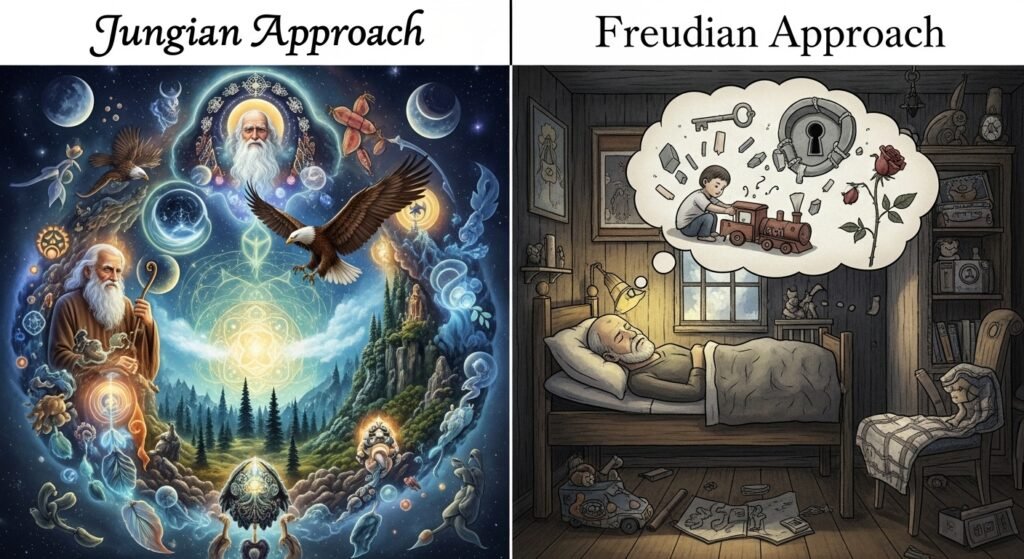
Jungian and Freudian Approaches to Dream Analysis
Jungian dream analysis emphasizes archetypes, collective unconscious, and active imagination to explore dreams as expressions of the whole self.
Jung encouraged dialogue with dream figures as symbolic parts of the psyche, helping integrate shadow aspects.
Freudian dreamwork focuses on uncovering latent content related to repressed desires, conflicts, and childhood experiences, often using free association to link manifest images to unconscious wishes.
Both approaches offer valuable frameworks for dream interpretation, with Jung’s perspective highlighting empowerment and wholeness and Freud’s addressing unconscious motivations.
Individual preferences often shape which approach resonates most in personal dreamwork practice.
Key points:
- Jungian analysis highlights archetypes and personal integration.
- Freudian analysis reveals unconscious desires and conflicts.
- Active imagination facilitates creative engagement with dreams.
- Both provide frameworks to understand dream meaning.
- Choose approach based on personal resonance and goals.

Using Active Imagination and Visualization for Insight
Active imagination involves consciously engaging with dream imagery through dialogue, visualization, or artistic expression to deepen understanding.
By “entering” the dream scene or conversing with dream figures, individuals awaken creative insight and emotional release.
It moves beyond passive interpretation to interactive exploration, allowing new meanings to emerge spontaneously.
Visualization techniques combined with journaling or art can clarify symbolic messages and internal conflicts.
This practice nurtures self-reflection and healing by fostering connection with unconscious wisdom. It can be especially powerful in bridging dream states and waking awareness for sustained growth.
Key points:
- Active imagination invites dialogue with dream images.
- Visualization enhances emotional and symbolic insight.
- Combining art and journaling enriches understanding.
- Encourages creativity and emotional release.
- Bridges dream and waking consciousness for integration.

Creating Symbolic Art as a Path to Unconscious Wisdom
Symbolic creation in art—whether drawing, painting, collage, or sculpture—externalizes dream imagery and unconscious themes, making them accessible for exploration.
Artistic expression bypasses limiting rational thought, tapping into intuitive and emotional knowledge.
The process typically involves allowing spontaneous marks or shapes to arise, then reflecting on their symbolic significance.
This creative workflow nurtures vulnerability and insight, leading to personal breakthroughs and fresh perspectives.
Symbolic art becomes a mirror of inner psychic states, offering healing and guidance. Sharing these creations with others can invite dialogue and deepen transformative experience.
Key points:
- Art externalizes and clarifies unconscious imagery.
- Intuitive expression bypasses rational barriers.
- Symbolic reflection fosters insight and healing.
- Creative process nurtures emotional vulnerability.
- Sharing artwork enhances relational and spiritual growth.

Dreamwork for Emotional Healing and Resolution
Dreams often reveal unresolved emotional conflicts, fears, or trauma stored in the subconscious. Dreamwork therapy or self-guided techniques help identify and work through these emotions safely.
Techniques include journaling, role-play, dream re-scripting, and symbolic art, which facilitate catharsis and emotional integration.
Addressing these hidden feelings reduces waking stress and improves psychological resilience.
Dream analysis supports self-compassion and acceptance by reframing painful themes with curiosity and care.
Repeated engagement with healing dream themes can transform old wounds into sources of strength and wisdom.
Key points:
- Dreams reveal hidden emotional conflicts and pain.
- Dreamwork facilitates catharsis and emotional processing.
- Therapeutic techniques include re-scripting and role-play.
- Supports self-compassion and resilience.
- Healing dreamwork transforms trauma into wisdom.

Integrating Dream Insights into Daily Life
Applying lessons from dreams to waking decisions enhances self-awareness and intentional living.
Insights gained through dreamwork may inform creative projects, relationship choices, or personal goals.
Journaling reflections link dream symbols with daily experiences, prompting mindfulness and behavioral change.
Rituals that honor dreams, such as meditation on dream themes or symbolic art practice, strengthen integration.
Dream insights can guide problem-solving and enhance emotional regulation, enriching overall well-being. Consistent integration bridges unconscious wisdom with conscious action for holistic growth.
Key points:
- Dream insights inform waking creativity and choices.
- Journaling connects dream symbolism with daily life.
- Rituals support ongoing dream integration.
- Enhances emotional regulation and mindfulness.
- Bridges unconscious knowledge and conscious behavior.

Tools and Practices to Enhance Dreamwork & Symbolic Creation
Several tools foster deeper dream exploration, including dream journals, guided meditation audio, tarot and oracle cards for symbolic clarification, and creative art supplies for symbolic expression.
Mindfulness practices and yoga improve dream recall and increase openness to insight.
Group dream sharing or working with trained therapists can offer supportive environments for new perspectives.
Digital apps provide reminders for dream journaling and access to dream dictionary references.
Ultimately, consistent practice tailored to personal preferences maximizes transformative potential.
Key points:
- Dream journal is fundamental for recording and reflection.
- Tarot/oracle cards add symbolic depth to interpretations.
- Creative art materials enrich expressive dreamwork.
- Mindfulness and yoga improve recall and insight.
- Supportive community or therapy enhances growth.
Frequently Asked Questions (FAQs)
- What is dreamwork?
Dreamwork is the conscious practice of exploring and interpreting dreams for personal insight and transformation. - How do symbols function in dreams?
Symbols condense complex subconscious messages, offering metaphors for emotions, conflicts, and guidance. - How can I improve dream recall?
Practice immediately recording dreams upon waking, minimizing distractions, and keeping a dream journal. - What is the difference between Jungian and Freudian dream analysis?
Jungian focuses on archetypes and wholeness; Freudian emphasizes unconscious desires and conflicts. - What is active imagination in dreamwork?
A technique of dialoguing or visualizing dream images to deepen understanding and emotional release. - How does symbolic art support dreamwork?
It externalizes unconscious themes for creative exploration and healing insight. - Can dreamwork aid in emotional healing?
Yes, by processing unconscious emotions and reframing trauma through symbols. - How do I apply dream insights in daily life?
Through journaling, mindful reflection, rituals, and informed decision-making. - What tools aid dreamwork practice?
Dream journals, tarot cards, meditation, art supplies, and supportive communities. - Is dreamwork effective without a therapist?
Yes, many self-guided methods foster deep insight, though therapy can provide additional guidance.

Table: Dreamwork Techniques and Their Benefits
| Technique | Description | Benefit |
|---|---|---|
| Dream Journaling | Writing down dreams immediately upon waking | Enhances recall and pattern recognition |
| Free Association | Expressing thoughts from dream elements | Uncovers hidden emotions and meanings |
| Active Imagination | Dialogue with dream figures or scenes | Emotional release and deep insight |
| Symbolic Art | Creating visual or tactile art from dreams | Tangible expression of unconscious |
| Dream Re-scripting | Altering dream narratives to promote healing | Reduces nightmare impact and trauma |
| Meditation on Dreams | Reflective meditation on dream symbols | Mindful awareness and integration |
| Tarot/Oracle Cards | Using cards for symbolic amplification | Clarifies dream messages |
| Group Dream Sharing | Discussing dreams in supportive groups | Diverse perspectives and validation |
| Mindfulness Practices | Yoga, breathwork to enhance dream openness | Improves recall and insight |
| Therapy-guided Dreamwork | Professional help interpreting complex dreams | Facilitates safe emotional processing |
Conclusion
In conclusion, dreamwork and symbolic creation offer profound pathways for self-discovery and personal growth. By engaging with the rich language of dreams and translating symbolic imagery into creative expression, individuals unlock hidden layers of their subconscious mind. These practices foster emotional healing, enhance intuition, and deepen self-awareness, enriching both the creative process and everyday life. Dreamwork invites a continuous dialogue between the conscious and unconscious, facilitating transformation and authentic living. Embracing these techniques cultivates a unique connection to inner wisdom, empowering individuals to navigate their life journey with clarity and creativity. Ultimately, the integration of dreams and symbols nurtures a holistic understanding of the self, opening doors to greater insight and fulfillment.