
Success has traditionally been linked to intelligence quotient (IQ), seen as the primary measure of intellectual potential. However, emotional wisdom—also known as emotional intelligence (EQ)—has emerged as a far more influential factor in determining long-term success and fulfillment. Emotional wisdom refers to the ability to understand, manage, and harness emotions constructively, both internally and in interactions with others. This comprehensive blog explores why emotional wisdom is more critical than IQ in shaping success, highlights its core components, presents scientific insights, and provides practical guides to developing this life-changing skill.
Table of Content
- What Is Emotional Wisdom? Defining the Concept
- Rethinking What Shapes Success
- Components of Emotional Wisdom Driving Success
- Emotional Wisdom vs. IQ: The Research
- Comparison Table: Emotional Wisdom (EQ) vs IQ
- How Emotional Wisdom Enhances Leadership
- Emotional Wisdom’s Role in Building Relationships
- Impact of Emotional Wisdom on Decision-Making
- Emotional Wisdom and Resilience in Challenges
- Benefits of Emotional Wisdom for Career Growth
- Practices to Develop Emotional Wisdom
- Overcoming Barriers to Emotional Wisdom
- Frequently Asked Questions (FAQs)
- Conclusion: Embracing Emotional Wisdom for True Success

What Is Emotional Wisdom? Defining the Concept
Emotional wisdom is the nuanced ability to perceive, understand, and effectively regulate one’s own emotions while empathizing with the feelings of others.
It blends intellectual comprehension and deep self-awareness with emotional sensitivity, creating a holistic framework for navigating complex human experiences.
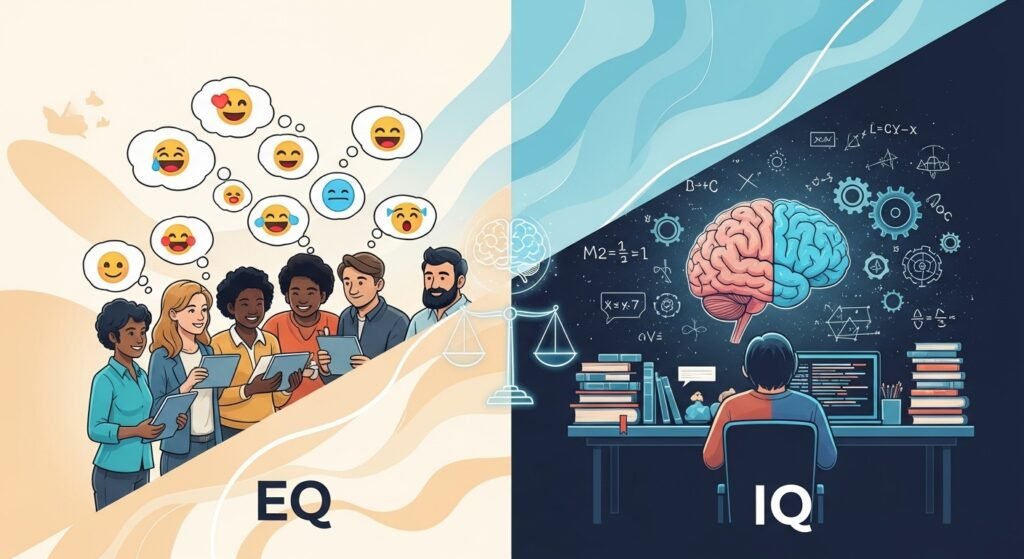
Unlike IQ, which measures cognitive abilities like logic and reasoning, emotional wisdom measures skills such as empathy, self-control, motivation, and interpersonal communication.
These qualities empower individuals to connect authentically and lead with compassion.
- Encompasses self-awareness, empathy, emotional regulation, motivation, and social skills.
- Combines intellectual insight with emotional understanding.
- Enhances capacity for authentic relationships and purposeful decisions.
- Is dynamic and learnable, not a fixe Rethinking What Shapes Success

Rethinking What Shapes Success
For years, IQ was regarded as the gold standard of intelligence—a reliable predictor of academic performance and career potential.
However, many high-IQ individuals struggle with interpersonal conflicts, emotional stress, and decision paralysis, revealing that intellectual capacity alone is insufficient.
Enter emotional wisdom: the ability to recognize, understand, and manage our emotions and the emotions of others.
In today’s complex and rapidly evolving world, emotional skills influence how we collaborate, innovate, and lead, often outweighing cognitive prowess.
Understanding this paradigm shift helps redefine success not merely as achievement but as holistic flourishing.
Components of Emotional Wisdom Driving Success
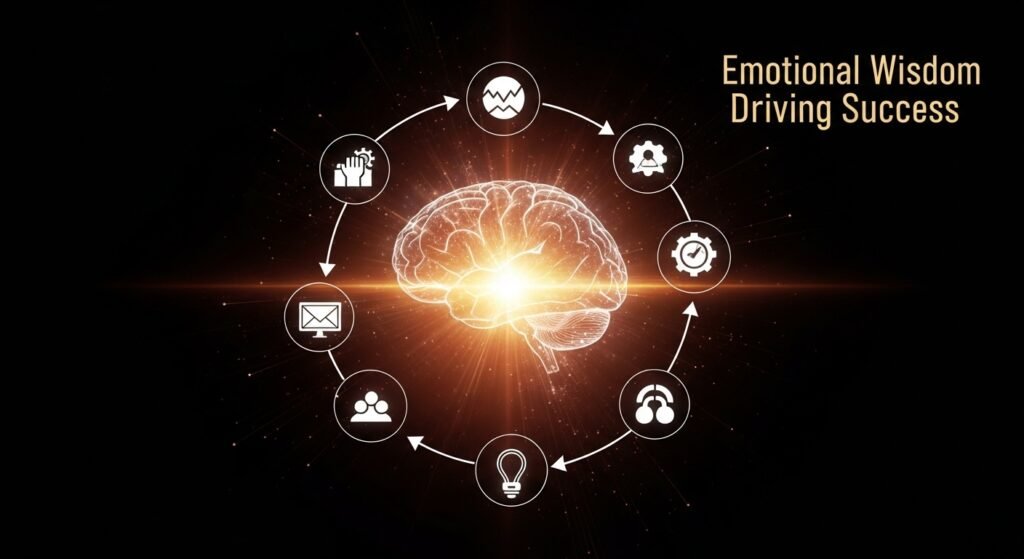
Components of emotional wisdom are fundamental building blocks that foster success in various aspects of life, including personal growth, relationships, and career achievements.
Emotional wisdom comprises a set of interrelated skills that enable individuals to perceive, understand, regulate, and effectively use emotions to navigate complex social environments.
Self-awareness is the foundation, allowing people to recognize their emotions, strengths, and weaknesses, which informs better decision-making.
Self-regulation follows by helping manage impulses and maintain composure in challenging situations.
Social awareness enhances empathy and the ability to read others’ emotions, promoting deeper connections.
Lastly, relationship management involves using emotional understanding to build trust, resolve conflicts, and inspire collaboration, all of which are key drivers of lasting success.
- Self-Awareness: Recognizing personal emotions and their impact on thoughts and behaviors.
- Self-Regulation: Managing emotional responses to stay calm and act thoughtfully.
- Motivation: Harnessing emotional energy to pursue goals persistently and enthusiastically.
- Empathy: Understanding and sharing the feelings of others accurately.
- Social Skills: Communicating and interacting effectively to build and maintain strong relationships.
Each component works synergistically to enhance leadership, teamwork, resilience, and overall well-being, making emotional wisdom a powerful determinant of success.
Emotional Wisdom vs. IQ: The Research
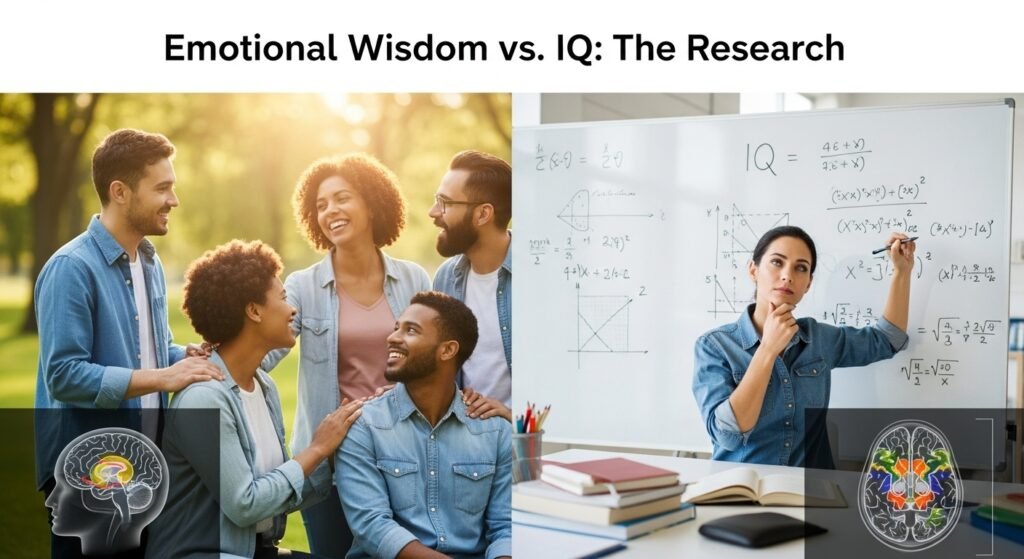
Research highlights that emotional wisdom often outweighs IQ in predicting real-world success.
While IQ is associated primarily with technical skills and academic achievement, emotional wisdom influences how well individuals cope with stress, relate to others, and manage challenges.
Psychologist Daniel Goleman’s groundbreaking work shows that emotional wisdom accounts for approximately 80% of success in leadership roles, dwarfing the role of IQ.
The ability to connect emotionally, adapt flexibly, and communicate effectively is what truly propels individuals forward.
Here are key research-based points for the section “Emotional Wisdom vs. IQ: The Research”:
- Studies show a strong positive correlation between emotional wisdom (emotional intelligence) and prosocial behaviors such as cooperation, empathy, and helping others, while IQ has little to no correlation with these social behaviors.
- Research involving young adults found that individuals with high emotional intelligence scored significantly higher on prosocial behavior than individuals with high IQ.
- Regression analyses suggest emotional intelligence accounts for most of the changes in prosocial behaviors, indicating its greater influence on how people interact socially and contribute to group harmony.
- Emotional intelligence predicts leadership success more reliably than IQ, explaining up to 80% of performance differences in workplace and management roles.
- While IQ is linked to academic and technical skills, EQ enables better stress management, conflict resolution, and emotional regulation, which are crucial in real-world success.
- Studies also reveal that individuals high in both IQ and EQ experience the greatest overall success, as cognitive abilities complement emotional skills to enhance problem-solving and interpersonal functioning.
These findings highlight that while IQ measures intellectual capacity, emotional wisdom plays a more critical role in predicting social effectiveness, leadership, and holistic success.
Comparison Table: Emotional Wisdom (EQ) vs IQ
| Factor | Emotional Wisdom (EQ) | Intelligence Quotient (IQ) |
|---|---|---|
| Definition | Ability to understand, regulate, and use emotions | Measure of cognitive abilities and reasoning |
| Focus | Emotional awareness, social skills, empathy | Logic, problem-solving, memory, verbal skills |
| Learnable | Yes, develops through practice and reflection | Largely innate, with minor improvements possible |
| Role in Success | Strongly predicts leadership, relationships, resilience | Predicts academic and technical task performance |
| Emotional Regulation | Central for managing stress and conflicts | Not measured |
| Influence on Social Interactions | Directly impacts effective communication and collaboration | Limited impact |
| Decision-Making | Considers emotional and social cues | Based on logic and analysis |

How Emotional Wisdom Enhances Leadership
Emotional wisdom profoundly enhances leadership by equipping leaders with the ability to regulate their own emotions and understand the emotions of others, fostering a productive and positive workplace environment.
Emotionally wise leaders remain composed during high-pressure situations, allowing them to make balanced decisions without being overwhelmed by stress or negativity.
Their empathy enables them to connect authentically with employees, anticipating how decisions impact morale and well-being, which leads to more inclusive and thoughtful choices.
This emotional awareness builds trust and improves communication, encouraging collaboration and innovation within teams.
Research shows that leaders who display high emotional wisdom create supportive cultures where employees feel valued, motivated, and less stressed, directly contributing to higher engagement and productivity.
Additionally, emotionally intelligent leaders excel in conflict resolution by recognizing underlying issues and guiding teams towards constructive solutions, ultimately enhancing organizational effectiveness and employee retention.
In essence, emotional wisdom transforms leadership from merely managing tasks to inspiring people and cultivating environments that allow both individuals and organizations to thrive.
- Builds trust through authentic communication.
- Encourages collaboration and innovation by valuing team input.
- Manages stress constructively during crises.
- Inspires commitment with empathy and emotional support.

Emotional Wisdom’s Role in Building Relationships
Strong, meaningful relationships are founded on emotional wisdom.
Awareness of your own emotional landscape helps regulate reactions, while empathy allows deeper understanding of others’ feelings.
This combination leads to emotionally intelligent responses that strengthen bonds and minimize conflict.
Social skills developed through emotional wisdom lead to better negotiation, cooperation, and mutual respect.
Emotional wisdom plays a critical role in building and sustaining healthy relationships.
It enhances communication by allowing individuals to express their feelings clearly and listen with genuine empathy, reducing misunderstandings and fostering deeper connections.
This wisdom also helps manage conflicts constructively, as emotionally intelligent people approach disagreements calmly and seek solutions that satisfy all parties.
Trust is strengthened because emotional wisdom encourages authenticity, patience, and respect, creating a safe space where people feel valued and understood.
Additionally, it promotes personal growth and resilience within relationships, enabling partners, friends, and colleagues to adapt, learn, and thrive together.
- Enhances listening and understanding.
- Promotes patience and compassion.
- Resolves conflicts peacefully.
- Builds supportive personal and professional networks.

Impact of Emotional Wisdom on Decision-Making
Emotional wisdom significantly influences decision-making by integrating emotional insights with rational thought to produce balanced and effective choices.
Individuals with high emotional wisdom are better at recognizing how their feelings shape judgments, enabling them to manage impulsive reactions and avoid decisions driven solely by unchecked emotions.
This capacity promotes intuitive decision-making, which goes beyond raw data to incorporate a holistic understanding of the situation and its human elements.
Emotional wisdom also enhances empathy, allowing decision-makers to consider the impact of their choices on others, thereby fostering socially responsible and ethical outcomes.
Furthermore, this emotional insight improves stress management during high-pressure decisions, maintaining clarity and composure.
Ultimately, emotional wisdom leads to wiser, more adaptive decisions that contribute to personal and organizational success.
- Avoids rash decisions driven by unchecked emotions.
- Balances facts with feelings for holistic evaluation.
- Anticipates social and emotional consequences.
- Maintains composure for clear thinking.

Emotional Wisdom and Resilience in Challenges
Life’s challenges demand resilience—a hallmark of emotional wisdom.
Managing stress, adapting to change, and bouncing back from failure are possible because emotionally wise individuals regulate their emotional responses.
This resilience fosters optimism, flexibility, and persistence—key factors in achieving lasting success.
It empowers individuals with self-awareness to recognize their emotional responses, enabling better management of stress and adversity.
Through self-regulation, emotionally wise people can maintain composure and make thoughtful decisions instead of reacting impulsively under pressure.
Motivation, fueled by emotional wisdom, drives persistence, helping individuals bounce back from setbacks with renewed energy and optimism.
Empathy and social skills foster strong support networks, providing emotional resources essential to overcoming difficulties.
Together, these emotional capacities create a foundation for resilience, promoting mental well-being, sustained growth, and success despite hardships.
- Cultivates positive coping strategies.
- Maintains motivation in adversity.
- Encourages learning from setbacks.
- Strengthens mental well-being.

Benefits of Emotional Wisdom for Career Growth
Emotional wisdom profoundly benefits career growth by enhancing interpersonal skills essential for professional success.
It fosters stronger relationships with colleagues, clients, and supervisors through heightened empathy and effective communication.
Individuals with high emotional wisdom tend to perform better in interviews by building rapport and expressing confidence authentically.
This skill also supports successful negotiation, whether for salary, deadlines, or project scope, by understanding and addressing emotional dynamics.
Moreover, emotional wisdom helps emerging leaders manage teams effectively by anticipating needs and providing constructive feedback.
Ultimately, cultivating emotional wisdom leads to higher job satisfaction, better stress management, and increased chances of promotion and long-term career fulfillment.
Here are the 6-line benefits of emotional wisdom for career growth in paragraph form:
- Boosts communication and collaboration.
- Enhances leadership and influence.
- Improves conflict resolution.
- Supports work-life balance and reduces stress.

Practices to Develop Emotional Wisdom
Developing emotional wisdom requires intentional effort and consistent practice to strengthen the essential skills that enable better emotional understanding and regulation.
One effective practice is mindfulness meditation, which helps increase awareness of emotions as they arise and creates space for thoughtful responses instead of impulsive reactions.
Keeping an emotional journal allows individuals to track patterns and triggers, deepening self-awareness.
Seeking honest feedback from trusted friends or colleagues uncovers blind spots in emotional behavior and social interactions.
Enhancing active listening skills fosters empathy by encouraging full presence and genuine understanding during conversations.
Additionally, cognitive reframing—looking for alternative perspectives on challenging situations—builds emotional resilience and flexibility, helping individuals navigate life’s ups and downs with greater calm and clarity.
- Mindfulness meditation to increase present-moment awareness.
- Reflective journaling for emotional processing.
- Seeking honest feedback to uncover blind spots.
- Practicing empathy through active listening.
- Learning stress management and conflict resolution techniques.
These practices cultivate deeper emotional understanding and social competence.
Overcoming Barriers to Emotional Wisdom
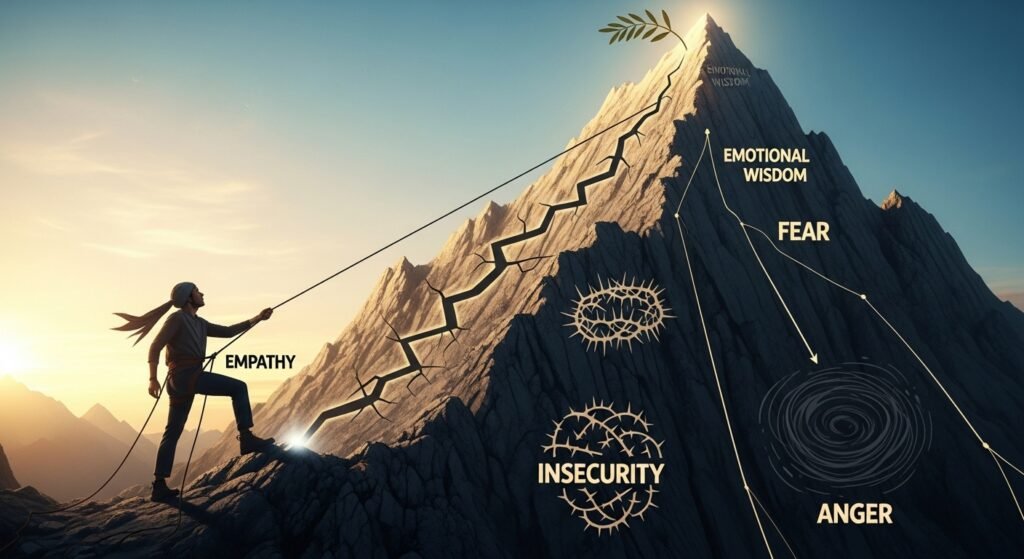
Overcoming barriers to developing emotional wisdom often requires conscious effort and openness to change.
Many people resist developing emotional skills due to societal conditioning that values IQ-based achievements over emotional awareness.
The brain’s habitual focus on memorization and logic can make shifting to emotional introspection feel uncomfortable and unfamiliar.
Cultural norms sometimes stigmatize emotional expression, associating vulnerability with weakness, which discourages authentic emotional growth.
Additionally, fear of uncertainty and losing control prevents many from embracing the fluid and nuanced nature of emotions.
To break through these barriers, it is essential to cultivate curiosity, seek honest feedback, practice self-compassion, and create environments that value emotional learning as much as intellectual achievement.
- Cultivate curiosity and self-compassion.
- Engage in continuous learning and self-reflection.
- Build supportive relationships encouraging emotional expression.
- Accept imperfection and growth as natural.
Frequently Asked Questions (FAQs)
- What exactly is emotional wisdom, and how is it different from IQ?
Emotional wisdom, often called emotional intelligence, is the ability to understand, manage, and use emotions effectively in yourself and others. IQ measures cognitive abilities like logic, memory, and problem-solving. Emotional wisdom focuses on empathy, emotional regulation, and social skills, which shape how well you relate and adapt in life. - Can emotional wisdom be learned or is it something you’re born with?
Emotional wisdom is largely a learnable skill. While some people may have a natural inclination, anyone can develop it through intentional practice, self-reflection, and real-life experience at any age. - Why is emotional wisdom considered more important than IQ in real-world success?
Research shows that while IQ predicts academic and technical performance, emotional wisdom better predicts leadership, teamwork, decision-making, and life satisfaction. It helps navigate relationships and stress, which are essential for long-term success. - How does emotional wisdom improve leadership abilities?
Emotionally wise leaders regulate their emotions, empathize with others, communicate clearly, and create supportive environments. These qualities foster trust, inspire teams, and enable effective conflict resolution, making them more successful than leaders relying solely on IQ. - Is it possible for someone with a high IQ to have low emotional wisdom?
Yes, IQ and emotional wisdom are independent faculties. Some individuals excel in analytical thinking but struggle with emotional regulation and social interactions. Developing emotional wisdom complements cognitive strengths for holistic success. - How does emotional wisdom affect personal relationships?
Emotional wisdom enhances relationships through empathy, active listening, and emotional regulation. It helps manage conflicts constructively, build intimacy, and strengthen communication, which leads to healthier and more fulfilling connections. - In what ways does emotional wisdom influence decision-making?
Emotional wisdom allows you to recognize how feelings may bias choices, regulate impulses, consider others’ perspectives, and maintain clarity under pressure—all leading to wiser, more balanced decisions. - Can emotional wisdom help me become more resilient in stressful situations?
Absolutely. Emotional wisdom fosters resilience by helping you process difficult emotions, maintain a positive outlook, adapt to change, and learn from setbacks, which are crucial for overcoming challenges. - What are some practical ways to develop emotional wisdom?
You can cultivate emotional wisdom through mindfulness meditation, journaling emotions and reflections, seeking honest feedback, practicing empathy, and learning stress management and communication skills. - Is emotional wisdom equally valuable across all career fields?
Yes, emotional wisdom is critical in virtually all fields, especially those involving teamwork, leadership, or client relations. Even technical roles benefit from emotional skills that improve collaboration, adaptability, and workplace harmony.
Conclusion: Embracing Emotional Wisdom for True Success
In a world that values intelligence, technology, and complexity, emotional wisdom remains the foundational force behind authentic success. High IQ enables us to solve problems; emotional wisdom enables us to connect, inspire, and adapt with heart-centered insight. Leaders, teams, and individuals who cultivate emotional wisdom unlock resilience, creativity, and meaningful relationships essential to thriving amid uncertainty. By embracing and intentionally developing emotional wisdom, anyone can experience richer, more sustained success in all areas of life.