
Personal development is often sold as a series of “hacks”—a 5:00 AM cold plunge, a specific journaling template, or a miraculous supplement. But true growth isn’t a collection of disparate habits; it is a deliberate, lifelong architectural project. It is the process of consciously evolving your mental models, emotional intelligence, and physical vitality to meet the demands of the life you want to lead.
In this deep dive, we will explore the four pillars of a high-leverage personal development strategy: Mindset Mastery, Systems over Goals, Emotional Alchemy, and The Compound Effect of Health.
Table of Content
1. Mindset Mastery: Rewiring the Internal Narrative
2. Systems Over Goals: The Strategy of Consistency
3. Emotional Alchemy: Turning Stress into Strength
4. The Biological Foundation: Health as Leverage
5. The Paradox of Choice and Essentialism
6. Implementation: Your 30-Day Evolution Plan
Conclusion: The Infinite Game
1. Mindset Mastery: Rewiring the Internal Narrative
Your reality is filtered through your beliefs. If the filter is clogged with self-doubt or rigid thinking, even the best opportunities will look like threats.
From Fixed to Growth
The cornerstone of modern development is Carol Dweck’s concept of the Growth Mindset. A fixed mindset assumes that our character, intelligence, and creative ability are static givens. A growth mindset, however, thrives on challenge and sees failure not as evidence of un-intelligence but as a heartening springboard for growth and for stretching our existing abilities.
The Power of Reframing
Reframing is a cognitive behavioral technique that involves changing the way we look at a situation.
- Old frame: “I failed this presentation; I’m terrible at public speaking.”
- New frame: “I felt nervous during this presentation, which shows me exactly where I need to practice my transitions.”
By changing the narrative, you move from a state of paralysis to a state of agency.
2. Systems Over Goals: The Strategy of Consistency
We are often told to “dream big.” While vision is necessary, goals can actually be counterproductive if they aren’t backed by systems. As James Clear famously noted, “You do not rise to the level of your goals. You fall to the level of your systems.”
Why Goals Can Fail
Goals have an “end-point” bias. Once you reach the goal, the motivation often disappears (the “yo-yo” effect). Furthermore, goals rely heavily on willpower, which is a finite resource.
Building Bulletproof Systems
A system is a repeatable process that makes progress inevitable. If your goal is to write a book, your system is writing 500 words every morning at 8:00 AM.
- Environment Design: Make the good habits easy and the bad habits difficult. If you want to read more, put a book on your pillow. If you want to scroll less, put your phone in another room.
- Atomic Habits: Focus on changes that are so small they are “too small to fail.” A 2-minute meditation is better than a 30-minute meditation that never happens.

3. Emotional Alchemy: Turning Stress into Strength
Personal development isn’t just about productivity; it’s about Resilience. Emotional intelligence (EQ) is the ability to identify, understand, and manage your own emotions while influencing the emotions of others.
The Art of Self-Regulation
High-performers aren’t people who don’t feel stress; they are people who have a short “refractory period.” This is the time it takes to return to a baseline state after a triggering event.
- Labeling: Simply naming an emotion (“I am feeling clinical anxiety right now”) de-escalates the amygdala.
- Physiological Sighs: Using breathwork to manually override the nervous system.
- Radical Candor with Self: Being honest about your shadows—jealousy, ego, and fear—so they don’t drive your decisions from the subconscious.
4. The Biological Foundation: Health as Leverage
You cannot build a high-performance life on a low-performance body. Physical health is the “force multiplier” of personal development.
| Pillar | Focus Area | Impact |
| Sleep | 7–9 hours of quality rest | Cognitive function and emotional regulation. |
| Nutrition | Whole foods, blood sugar stability | Consistent energy levels without the “crash.” |
| Movement | Resistance training and zone 2 cardio | Longevity and stress hormone metabolism. |
| Stillness | Meditation or disconnected time | Enhanced focus and “deep work” capacity. |
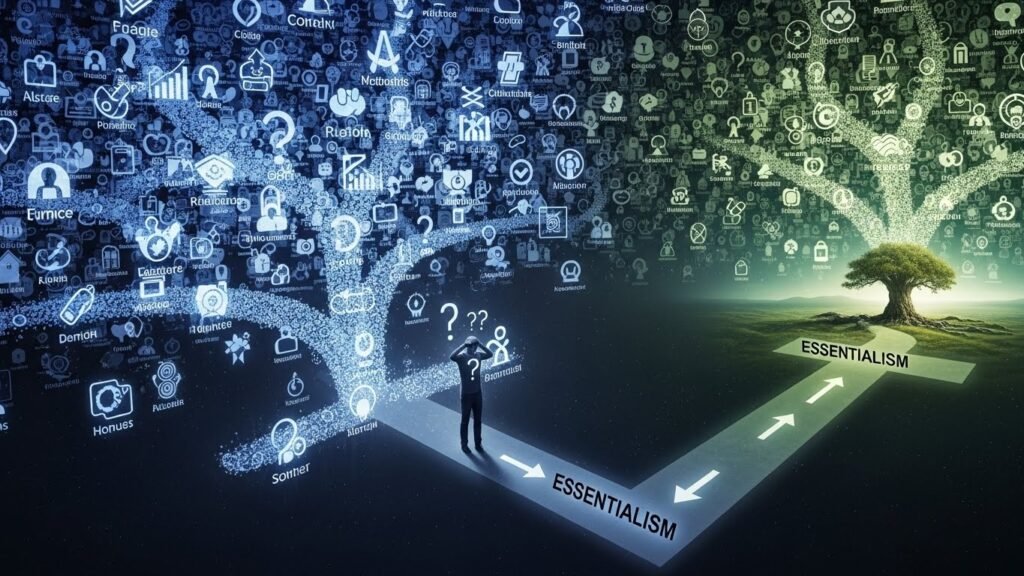
5. The Paradox of Choice and Essentialism
In the digital age, we suffer from “optimization fatigue.” We try to improve everything at once and end up improving nothing.
Essentialism is the disciplined pursuit of less. It’s about pausing to ask, “Is this the very most important thing I should be doing with my time and resources right now?” Personal development isn’t about adding more to your plate; it’s often about stripping away the non-essentials to let your core strengths shine.
The 80/20 Rule of Growth
Identify the 20% of your habits that contribute to 80% of your happiness and success. Double down on those. For most, this includes:
- Consistent sleep.
- Deep work sessions.
- Meaningful social connection.
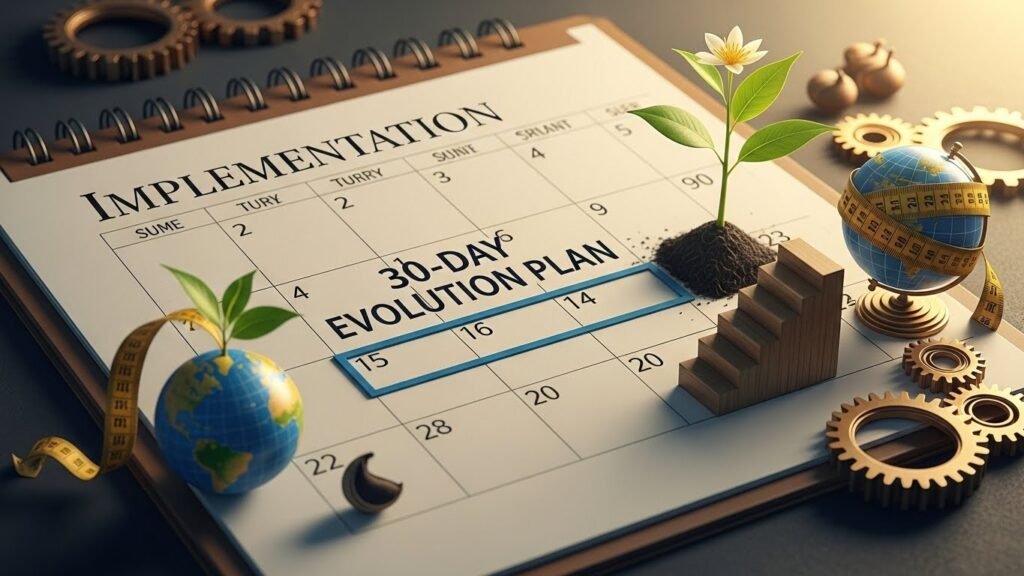
6. Implementation: Your 30-Day Evolution Plan
To move from theory to practice, don’t try to overhaul your life in a weekend. Follow this staggered approach:
- Week 1: Audit. Track your time and your internal monologue. Where are you leaking energy?
- Week 2: Elimination. Cut out one “low-value” habit (e.g., mindless social media scrolling or late-night snacking).
- Week 3: Insertion. Introduce one “keystone habit” (e.g., a 15-minute morning walk).
- Week 4: Reflection. Review your progress. Adjust the system, don’t judge the person.
Conclusion: The Infinite Game
Personal development is an “infinite game.” The goal is not to “win” or reach a final destination where you are “perfect.” The goal is to keep playing—to continue refining, learning, and expanding your capacity to experience life.
True growth is quiet. It’s the decision to stay calm when you’d usually yell. It’s the choice to sit down and work when you’d rather procrastinate. It’s the compounding interest of a thousand tiny, correct decisions.
“The man who moves a mountain begins by carrying away small stones.” — Confucius
Frequently Asked Questions (FAQ)
1. How long does it actually take to see results from personal development?
While “pop psychology” often suggests 21 days to form a habit, research from University College London suggests it takes an average of 66 days for a new behavior to become automatic. You may feel a “placebo” boost of motivation in the first week, but tangible life changes usually become visible between the 3-to-6-month mark of consistent practice.
2. Can I focus on too many areas of growth at once?
Yes, this is known as “Optimization Fatigue.” When you try to overhaul your diet, career, sleep, and social skills simultaneously, your cognitive load becomes too heavy, leading to burnout. It is more effective to master one “keystone habit” (like exercise) which naturally spills over into other areas of discipline.
3. What is the difference between personal development and therapy?
While they overlap, they serve different primary functions. Therapy often focuses on healing and processing the past to resolve clinical issues or trauma. Personal development typically focuses on strategy and the future—taking a functional individual and optimizing their performance, mindset, and habits.
4. How do I stay motivated when the initial excitement wears off?
Motivation is a feeling; discipline is a system. The key is to reduce the friction of the task. If you don’t feel like going to the gym, tell yourself you will only go for five minutes. Often, the hardest part is the transition. Rely on your schedule, not your mood.
5. Why do I feel guilty when I take a break from “self-improvement”?
This is often a byproduct of “hustle culture.” True personal development includes strategic recovery. If you are constantly “on,” you aren’t growing; you’re just busy. Think of your growth like muscle hypertrophy: the stress happens during the workout, but the actual growth happens during the rest.
6. Is personal development expensive?
Not necessarily. The highest-leverage tools—meditation, walking, journaling, and reading library books—are free or very low-cost. While coaching and seminars can accelerate growth, the foundation of self-mastery requires only time and intentionality.
7. How do I handle friends or family who don’t support my growth?
As you change, you may disrupt the “social ecosystem” of your current relationships. This is known as Crab Mentality. Communicate your goals clearly, but realize that some people may feel threatened by your progress. You don’t need to cut everyone off, but you should seek out a “mastermind” or community of people who share your new trajectory.
8. What is the “Shadow Side” of personal development?
The shadow side is Procrastilearning—the act of reading endless books and listening to podcasts as a way to avoid actually doing the work. If your consumption of information far outweighs your implementation of it, you aren’t developing; you’re just collecting trivia.
9. How do I know if I’m actually growing?
The best metric is your reaction to old triggers. If a situation that used to make you angry now only makes you curious, or if a task that used to terrify you is now a routine part of your day, you have achieved internal growth. Tracking these “wins” in a journal is essential for long-term perspective.
10. Can mindset really change my physical reality?
The Growth Mindset doesn’t magically change the world, but it changes your interaction with it. By believing you can improve, you are more likely to take risks, persist through failure, and spot opportunities that a fixed mindset would ignore. This increased “surface area for luck” eventually manifests as a different physical reality.