
Success is not about luck or fleeting motivation; it’s rooted in the powerful combination of self-discipline and consistency. These two qualities forge habits that transform dreams into achievable goals and ensure sustained progress even when motivation fades. Discover 9 proven habits that cultivate self-discipline and consistency, unlocking the door to lasting success in every aspect of your life.
Table of Contents
- Clarify Your Vision and Purpose
- Break Goals Into Manageable Tasks
- Prioritize and Plan Your Day
- Develop a Morning Routine
- Set Boundaries to Minimize Distractions
- Use Accountability Systems
- Cultivate Patience and Accept Delayed Gratification
- Track Progress and Adjust Strategies
- Reward Yourself to Reinforce Positive Habits
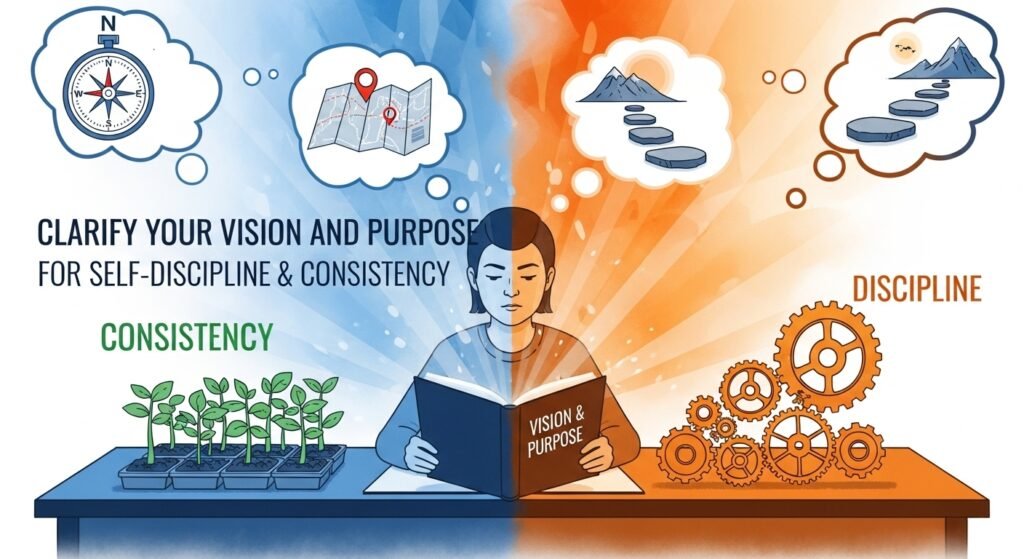
Clarify Your Vision and Purpose for Self-Discipline & Consistency
Self-discipline and consistency begin with a clear vision and strong sense of purpose.
When you understand what drives you and why your goal matters, it becomes easier to stay committed and resist temptations that derail progress.
A well-defined purpose fuels intrinsic motivation, giving a deeper ‘why’ behind each effort.
This clarity shapes focus and energizes your actions over the long haul.
Steps to Clarify Vision and Purpose
- Reflect on your values and passions
- Write a detailed vision statement
- Define the long-term impact you want
- Break your vision into meaningful milestones
- Visualize daily how success looks and feels
- Share your vision with supportive peers
- Review and refine your vision regularly
- Use vision to stay anchored through challenges
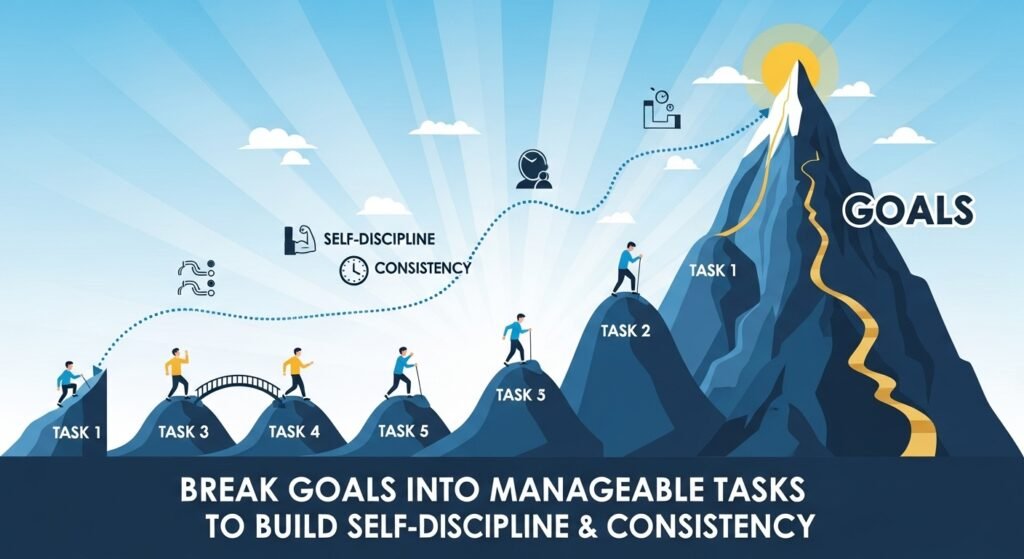
Break Goals Into Manageable Tasks to Build Self-Discipline & Consistency
Large goals can feel overwhelming, sabotaging discipline and consistency.
Breaking them into small, manageable tasks creates actionable steps that build momentum and make progress tangible.
This approach reduces procrastination, boosts confidence through frequent wins, and promotes a steady rhythm of achievement.
Effective Task Breakdown Tips
- Divide big goals into weekly or daily tasks
- Prioritize tasks based on impact
- Focus on one task at a time
- Use task management tools or planners
- Set specific deadlines for each task
- Track task completion visually
- Adjust tasks based on progress
- Celebrate small wins regularly
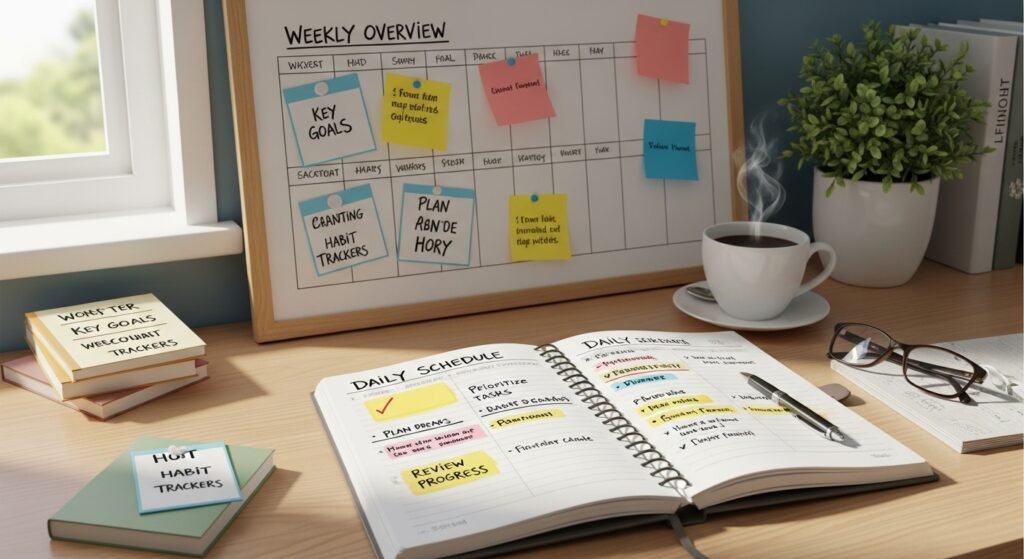
Prioritize and Plan Your Day to Enhance Self-Discipline & Consistency
Daily prioritization and planning create structure and intention, minimizing decision fatigue and optimizing energy.
Consistently planning your day aligns actions with goals and strengthens your discipline muscle.
By focusing on high-priority tasks first, you build productivity habits that compound into lasting success.
Daily Planning Habits
- Use a planner, app, or journal
- Set 3 important priorities each day
- Allocate specific time blocks for tasks
- Limit multitasking to increase focus
- Break work into focused intervals (e.g., Pomodoro)
- Review accomplishments at day’s end
- Adjust plans flexibly when needed
- Reflect weekly on planning effectiveness

Develop a Morning Routine to Foster Self-Discipline & Consistency
A consistent morning routine primes your mindset and body for discipline throughout the day.
It creates momentum, reduces reactive behavior, and establishes positive habits from the start.
Morning rituals like meditation, exercise, and goal review help instill control and resilience needed for ongoing consistency.
Key Elements of a Morning Routine
- Wake up at a consistent time
- Hydrate immediately after waking
- Engage in physical movement
- Practice mindfulness or meditation
- Review daily goals and intentions
- Eat a nourishing breakfast
- Avoid screens for first 30 minutes
- Plan the day’s top priorities

Set Boundaries to Minimize Distractions for Lasting Self-Discipline & Consistency
Distractions are the common enemy of discipline.
Setting clear boundaries around time, technology, and interactions preserves focus and energy for your priorities.
By controlling your environment and commitments, you reduce temptation and cultivate deeper concentration, supporting lasting success.
Practical Boundary-Setting Strategies
- Designate distraction-free work zones
- Use apps or tools to limit social media
- Communicate availability and limits clearly
- Schedule breaks deliberately
- Say no to non-essential demands
- Limit multitasking and interruptions
- Manage notifications effectively
- Protect time for rest and recovery

Use Accountability Systems to Strengthen Self-Discipline & Consistency
Accountability provides external motivation that supplements inner discipline.
It keeps you honest, motivated, and committed when intrinsic drive wanes.
Accountability partners, groups, or tracking tools serve as reminders and support systems for sustained consistency.
Ways to Implement Accountability
- Partner with a friend or colleague
- Join or form accountability groups
- Use apps that track and report progress
- Share goals publicly
- Schedule regular check-ins
- Celebrate shared successes
- Address setbacks openly
- Adjust goals collaboratively
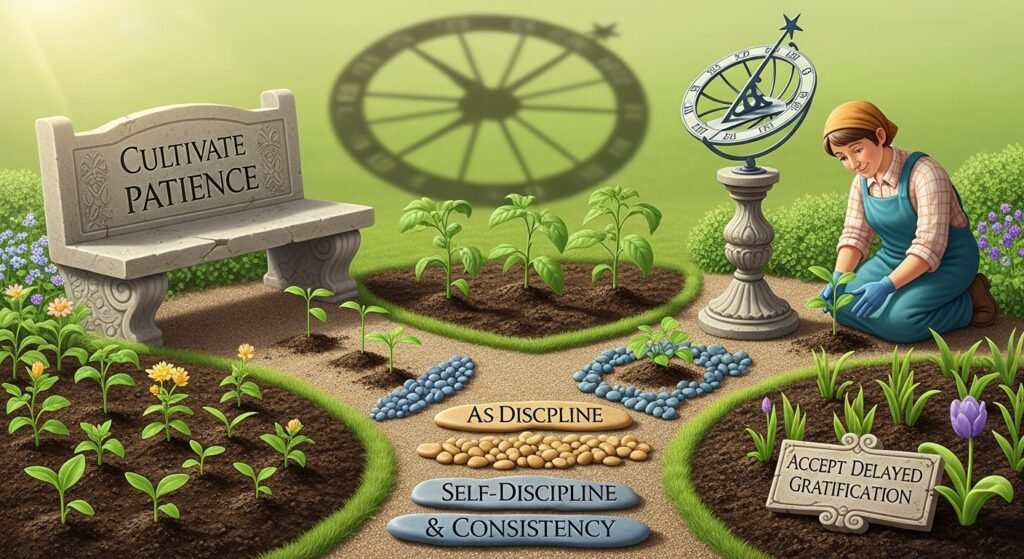
Cultivate Patience and Accept Delayed Gratification for Self-Discipline & Consistency
Lasting success rarely comes overnight.
Cultivating patience and learning to delay gratification strengthens self-discipline by helping you resist short-term temptations in favor of long-term gains.
Understanding that effort compounds over time motivates you to persist even when results seem slow.
Tips to Build Patience and Delay Gratification
- Practice mindfulness to manage impulses
- Visualize long-term benefits regularly
- Set micro-goals with frequent rewards
- Reflect on past successes achieved over time
- Reframe setbacks as learning moments
- Limit exposure to instant gratification triggers
- Use affirmations to reinforce patience
- Celebrate persistence, not just outcomes

Track Progress and Adjust Strategies for Consistent Self-Discipline
Tracking progress holds you accountable and reveals patterns that either support or hinder discipline.
It enables you to celebrate wins, identify areas needing improvement, and adjust strategies dynamically.
Consistent tracking reinforces momentum and prevents burnout by keeping goals achievable and aligned.
Effective Progress Tracking Methods
- Use journals or digital trackers
- Record key metrics or milestones
- Review progress daily and weekly
- Analyze obstacles honestly
- Adjust plans based on insights
- Share progress with accountability partners
- Set periodic review meetings with yourself
- Reflect on emotional and physical energy levels

Reward Yourself to Reinforce Positive Habits for Self-Discipline & Consistency
Rewarding progress creates positive reinforcement that solidifies habits.
Whether small treats or meaningful celebrations, rewards motivate continued discipline and consistency.
Balanced rewards prevent burnout, renew enthusiasm, and mark the value of your efforts.
Ideas for Rewarding Yourself
- Take breaks to relax or enjoy hobbies
- Buy a small meaningful gift
- Spend quality time with loved ones
- Celebrate milestones with social events
- Indulge in favorite meals occasionally
- Plan mini-vacations or retreats
- Engage in creative outlets
- Reflect on growth and express gratitude
Detailed Table: Comparison of Proven Habits for Self-Discipline & Consistency
| Habit | Focus Area | Benefits | Time Commitment | Tools/Resources | Ideal Frequency | Accessibility | Impact on Success |
|---|---|---|---|---|---|---|---|
| Clarify Vision & Purpose | Motivation & focus | Clear goals, sustained motivation | 1-2 hours initial | Journals, vision boards | Monthly review | Highly accessible | Very High |
| Break Goals into Tasks | Manageability | Reduces overwhelm, boosts momentum | 15-30 minutes | Task managers, planners | Weekly/Daily | Highly accessible | High |
| Prioritize & Plan Daily | Structure & focus | Increased productivity and clarity | 15-30 minutes | Planners, apps | Daily | Very accessible | Very High |
| Develop Morning Routine | Mindset & energy | Momentum, positive habits formation | 1 hour | None or minimal tools | Daily | Highly accessible | High |
| Set Boundaries | Distraction control | Focused work, energy preservation | Ongoing | Apps, communication tools | Daily awareness | Very accessible | High |
| Use Accountability Systems | Motivation & support | Consistency, goal adherence | Variable | Accountability partners/apps | Ongoing | Highly accessible | Very High |
| Cultivate Patience & Delay Gratification | Impulse control & persistence | Resilience, sustained effort | Ongoing | Mindfulness practices | Daily application | Highly accessible | Moderate to High |
| Track Progress & Adjust | Feedback & strategy | Motivation, course correction | 15-20 minutes | Journals, tracking software | Daily/Weekly | Highly accessible | High |
| Reward Yourself | Positive reinforcement | Habit strengthening, motivation | Variable | Personal rewards | As milestones hit | Highly accessible | Moderate to High |
Inspirational Quotes on Self-Discipline & Consistency
- “Discipline is the bridge between goals and accomplishment.” — Jim Rohn
- “Success doesn’t come from what you do occasionally. It comes from what you do consistently.” — Marie Forleo
- “We are what we repeatedly do. Excellence, then, is not an act, but a habit.” — Aristotle
- “Self-discipline begins with the mastery of your thoughts.” — Napoleon Hill
- “Consistency is what transforms average into excellence.” — Tony Robbins
- “The pain of discipline is far less than the pain of regret.” — Sarah Bombell
- “Small daily improvements lead to stunning results.” — Robin Sharma
- “Motivation gets you going, but discipline keeps you growing.” — John C. Maxwell
Frequently Asked Questions on Self-Discipline & Consistency
- What is the difference between self-discipline and motivation?
Motivation is the initial desire to do something, while self-discipline is the ability to keep going regardless of motivation. - Can self-discipline be developed through habits?
Yes, consistent habits strengthen self-control and discipline over time. - How important is consistency for success?
Consistency compounds effort, turning small actions into significant long-term results. - What if I struggle with distractions?
Setting clear boundaries and managing your environment reduces distractions effectively. - How to stay motivated when progress is slow?
Clarifying your vision and celebrating small wins help sustain motivation. - Are rewards necessary for discipline?
Rewards reinforce habits by creating positive associations with effort. - Is it better to plan in detail or be flexible?
Balanced planning with room for adjustment is most effective. - How do accountability systems work?
They provide external support, reminders, and motivation to maintain commitments. - How long to build lasting habits?
Typically 21 to 66 days for consistent habit formation, depending on complexity. - Can anyone improve their self-discipline?
Yes, with intentional practice and supportive strategies, anyone can develop stronger discipline.
Conclusion
Self-discipline and consistency are the twin engines driving lasting success.
By clarifying your vision, breaking goals into manageable tasks, planning purposefully, and cultivating strong routines, you build unwavering focus and momentum.
Setting boundaries, using accountability, practicing patience, tracking progress, and rewarding achievements enhance your ability to sustain disciplined actions through life’s ups and downs.
These 9 proven habits create a robust framework for growth that withstands distractions and setbacks.
Begin integrating them today, one step at a time, and watch how your commitment transforms your dreams into enduring success.