
12 game-changing self-leadership skills for unstoppable confidence form the foundation to transform your mindset, drive decisive action, and build unshakeable self-belief. These powerful skills enable you to take charge of your inner world and external environment, unlocking your full potential. Whether in your career, relationships, or personal growth journey, mastering these skills cultivates resilience, focus, and authenticity. Discover the essential self-leadership skills that elevate your confidence and propel you towards unstoppable success.
Table of Contents
- Self-Awareness: The Root of Self-Leadership
- Emotional Regulation for Inner Stability
- Goal Setting and Vision Alignment
- Time Management and Prioritization
- Resilience and Adaptability
- Effective Decision-Making
- Self-Motivation and Discipline
- Communication and Assertiveness
- Accountability and Ownership
- Continuous Learning and Growth Mindset
- Stress Management and Self-Care
- Cultivating a Positive Inner Dialogue
Self-Awareness: The Root of Self-Leadership for Unstoppable Confidence
Self-awareness is the cornerstone of self-leadership and unstoppable confidence.
Understanding your strengths, weaknesses, emotions, values, and triggers allows you to lead yourself with clarity and authenticity.
It empowers you to recognize limiting beliefs that undermine confidence and replace them with empowering narratives.
Self-awareness creates a strong internal compass, guiding your actions in alignment with your true self and vision.
Developing this skill requires honest reflection and feedback, supporting personal and professional growth.
Tips to Cultivate Self-Awareness
- Keep a daily journal of thoughts and emotions
- Seek constructive feedback from trusted sources
- Practice mindfulness to observe your mental patterns
- Reflect on past successes and challenges
- Identify core values and beliefs
- Explore personality assessments (e.g., MBTI, DISC)
- Notice emotional triggers and responses
- Set aside quiet time for introspection
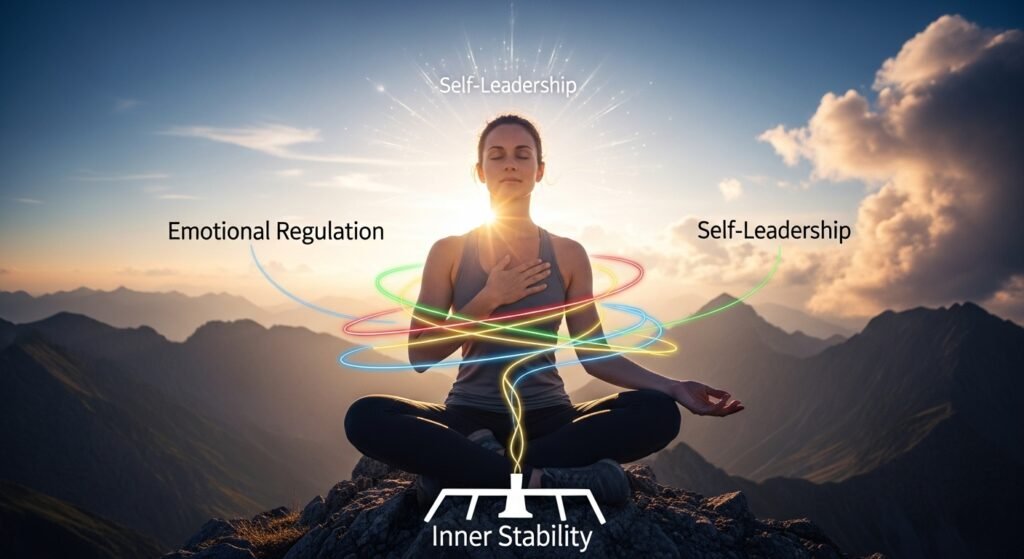
Emotional Regulation for Inner Stability in Self-Leadership
Mastering emotional regulation enables you to maintain composure and clarity under pressure—essential for confident leadership of self and others.
This skill involves recognizing emotional states and implementing strategies to manage them productively.
It reduces impulsivity and negative self-talk that erode confidence.
Emotional regulation nurtures resilience by transforming stress and setbacks into growth opportunities.
Regular practice fosters emotional intelligence, critical for strong decision-making and interpersonal effectiveness.
Emotional Regulation Strategies
- Practice deep breathing or progressive muscle relaxation
- Use cognitive reframing to shift perspectives
- Develop grounding techniques (e.g., mindful walking)
- Maintain regular physical exercise
- Engage in mindfulness meditation
- Utilize expressive outlets like journaling
- Set healthy boundaries to reduce emotional overload
- Seek support when overwhelmed

Goal Setting and Vision Alignment for Unstoppable Confidence
Setting clear goals aligned with your personal vision provides direction and motivation.
It turns aspirations into tangible milestones, fostering confidence through consistent achievement.
Vision alignment ensures goals resonate deeply with your core purpose, enhancing intrinsic drive.
Regular review and adjustment keep goals relevant and attainable, minimizing overwhelm and boosting empowerment.
Effective Goal Setting Tips
- Define SMART goals (Specific, Measurable, Achievable, Relevant, Time-bound)
- Break big goals into smaller steps
- Connect goals explicitly with your vision
- Visualize successful goal attainment
- Use planners or apps to track progress
- Celebrate milestones and effort
- Adjust goals based on feedback and reflection
- Create accountability through partners or mentors

Time Management and Prioritization
Effective time management is a game-changing self-leadership skill that maximizes productivity and reduces stress.
Prioritizing tasks according to impact enables focus on what truly moves you forward with confidence.
Blocking time for priority work and minimizing distractions cultivates flow and accomplishment.
Prioritization Techniques
- Use Eisenhower’s matrix to categorize tasks
- Identify “top 3” daily priorities
- Batch similar tasks to increase efficiency
- Schedule focused time blocks without interruptions
- Limit multitasking to maintain quality
- Set boundaries for work-life balance
- Use digital tools like calendars and reminders
- Review and adjust daily plans as needed
Resilience and Adaptability
Resilience empowers you to bounce back from setbacks and maintain unstoppable confidence.
Developing adaptability prepares you for uncertainty, enabling flexible responses rather than resistance.
It breeds a mindset that views challenges as growth opportunities instead of barriers.
Building Resilience
- Cultivate optimistic self-talk
- Maintain strong social support networks
- Develop problem-solving skills
- Practice acceptance of change
- Maintain physical and mental well-being
- Engage in stress reduction practices
- Set realistic expectations
- Learn from failures and pivot quickly

Effective Decision-Making
Confident self-leadership depends on the ability to make timely, informed decisions.
This involves gathering relevant information, evaluating options, and trusting your intuition.
Overcoming indecision prevents stagnation and builds momentum toward goals.
Decision-Making Tips
- Clarify your objectives before deciding
- Weigh pros and cons carefully
- Use intuition and gut instincts
- Set deadlines for decisions
- Accept imperfection and learn from mistakes
- Consult trusted advisors if needed
- Evaluate decisions after outcomes
- Avoid overanalyzing or procrastinating

Self-Motivation and Discipline
Self-motivation and discipline are essential drivers of personal and professional success.
Self-motivation ignites the internal desire to take action toward goals, sustaining effort even when faced with challenges or a lack of external encouragement.
Discipline, on the other hand, is the consistent practice of staying focused, resisting distractions, and following through on commitments.
Together, they enable you to overcome procrastination, build productive habits, and maintain momentum toward your aspirations.
Cultivating these qualities fosters resilience, enhances decision-making, and ultimately boosts your confidence as you realize your potential through deliberate, sustained actions.
Enhancing Motivation and Discipline
- Define meaningful “why” behind goals
- Break tasks into manageable chunks
- Use rewards to reinforce progress
- Eliminate distractions proactively
- Create supportive routines
- Visualize success regularly
- Maintain a growth mindset
- Stay accountable by sharing goals

Communication and Assertiveness
Communication and assertiveness are vital self-leadership skills that foster clear expression of thoughts, needs, and boundaries while respecting others.
Effective communication enhances trust and understanding, reducing conflicts and building stronger relationships.
Assertiveness empowers you to voice your opinions confidently without passivity or aggression, protecting your integrity and promoting mutual respect.
Developing these skills enables you to navigate challenging conversations with clarity and calm, boosting your self-confidence and leadership presence.
Consistent practice of communication and assertiveness nurtures healthy interactions, personal empowerment, and professional growth.
Developing Assertiveness
- Practice “I” statements to express feelings
- Maintain confident body language and tone
- Listen actively and empathetically
- Set clear boundaries with others
- Say no without guilt
- Request feedback openly
- Handle criticism constructively
- Role-play scenarios to build skills
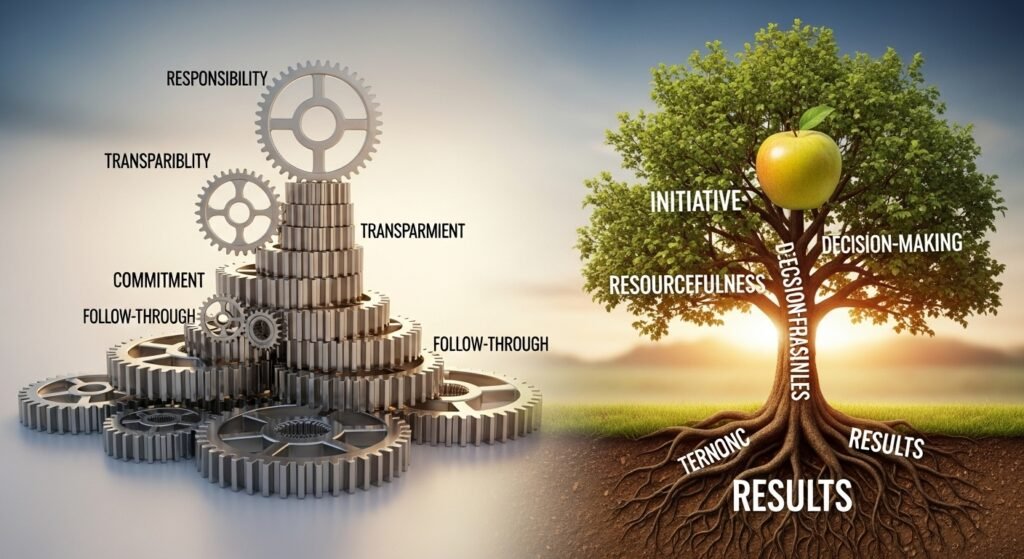
Accountability and Ownership
Accountability and ownership are foundational self-leadership skills that cultivate responsibility and empower you to take full control of your outcomes.
Accountability involves setting clear goals, tracking progress, and being answerable for your actions, fostering consistency and integrity.
Ownership requires embracing both successes and failures without blaming external circumstances, which deepens learning and resilience.
Together, these skills enhance your confidence by reinforcing that you are the primary driver of your growth and achievements.
Regularly practicing accountability and ownership builds trust with yourself and others, fueling sustained motivation and goal attainment.
Ways to Foster Accountability
- Set clear goals with deadlines
- Track your progress regularly
- Share goals with trusted partners
- Reflect on lessons from failures
- Celebrate small wins
- Develop problem-solving mindset
- Avoid blaming external factors
- Adjust plans proactively
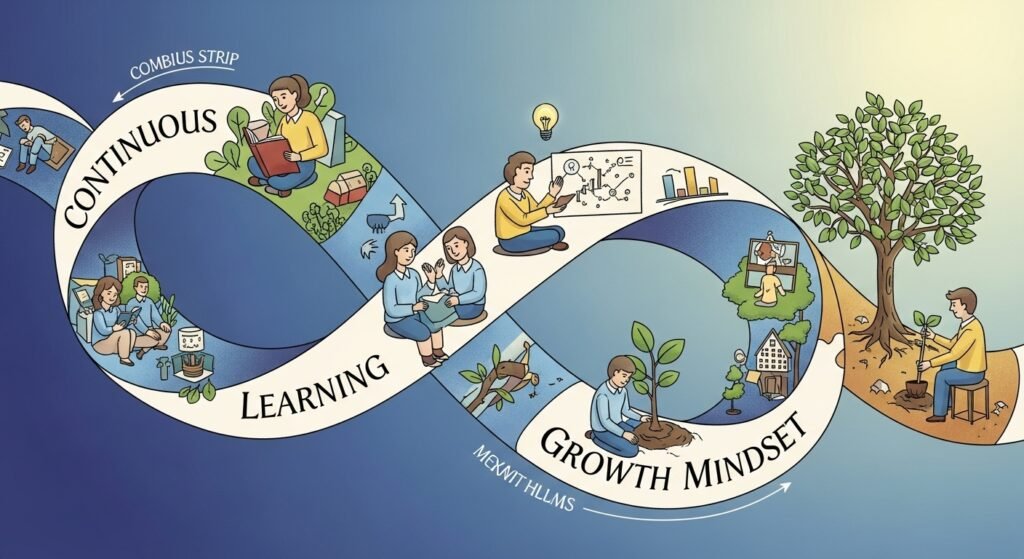
Continuous Learning and Growth Mindset
Continuous learning and a growth mindset are transformative self-leadership qualities that drive ongoing personal and professional development.
Embracing continuous learning fuels curiosity, adaptability, and innovation, helping you stay relevant and resilient in changing environments.
A growth mindset encourages viewing challenges and failures as opportunities for growth rather than obstacles, fostering perseverance and creativity.
Together, they create a powerful feedback loop where learning from experiences reinforces confidence and capability.
Cultivating these skills involves seeking new knowledge, welcoming feedback, reflecting on lessons, and consistently pushing beyond comfort zones to unlock your fullest potential.
Cultivating Growth Mindset
- View challenges as opportunities
- Learn from constructive feedback
- Set regular learning goals
- Practice self-reflection
- Explore new skills periodically
- Surround yourself with inspiring people
- Read widely on personal development
- Celebrate effort over outcome

Stress Management and Self-Care
Stress management and self-care are essential self-leadership skills that sustain mental, emotional, and physical well-being.
Effective stress management techniques, such as mindfulness, relaxation exercises, and physical activity, help regulate the body’s response to pressure, preventing burnout and enhancing focus.
Self-care involves intentionally nurturing yourself through adequate sleep, balanced nutrition, setting boundaries, and engaging in activities that recharge your energy.
Prioritizing these practices ensures that you maintain resilience, clarity, and emotional balance, enabling you to lead yourself with confidence under all circumstances.
Consistent stress management and self-care foster long-term productivity, creativity, and overall life satisfaction.
Self-Care Strategies
- Prioritize quality sleep
- Maintain balanced nutrition
- Engage in regular physical activity
- Practice mindfulness or relaxation techniques
- Take breaks and time off regularly
- Engage in hobbies and social activities
- Limit exposure to negativity
- Seek professional support when needed

Cultivating a Positive Inner Dialogue
Cultivating a positive inner dialogue is a powerful self-leadership skill that shapes your mindset and confidence.
The way you talk to yourself directly influences your beliefs, motivation, and emotional well-being.
Shifting from negative, self-critical thoughts to supportive, encouraging language helps build resilience and fosters a growth mindset.
Positive inner dialogue reinforces your capabilities and encourages healthy risk-taking, reducing self-doubt and fear of failure.
Practicing affirmations, visualization, and mindful self-awareness are effective ways to nurture and sustain empowering inner conversations.
Improving Inner Dialogue
- Identify and challenge negative self-talk
- Practice affirmations and self-compassion
- Visualize success and resilience
- Replace doubts with empowering questions
- Journal positive reflections
- Surround yourself with positivity
- Limit comparison to others
- Seek evidence that supports self-worth
Detailed Table: Comparison of Self-Leadership Skills for Unstoppable Confidence
| Skill | Focus | Benefits | Practice Time | Tools/Resources | Frequency | Accessibility | Impact Level |
|---|---|---|---|---|---|---|---|
| Self-Awareness | Personal insight | Clarity, authenticity | 10-15 min daily | Journals, assessments | Daily | Highly accessible | Very High |
| Emotional Regulation | Stability | Composure, resilience | 5-20 min as needed | Breathwork, relaxation | Daily/when needed | Highly accessible | High |
| Goal Setting & Vision Alignment | Direction | Focus, motivation | 30-60 min initial | Planners, vision boards | Weekly/monthly | Highly accessible | Very High |
| Time Management | Productivity | Efficiency, reduced overwhelm | 10-30 min daily | Calendars, apps | Daily | Highly accessible | High |
| Resilience & Adaptability | Mental toughness | Persistence, flexibility | Ongoing | Support networks | Daily awareness | Moderate | High |
| Decision-Making | Action | Confidence, momentum | Variable | Frameworks, mentors | As needed | Highly accessible | High |
| Self-Motivation & Discipline | Consistency | Persistence, goal attainment | Ongoing | Rewards, routines | Daily | Highly accessible | Very High |
| Communication & Assertiveness | Expression | Healthy relations, respect | Ongoing | Training, coaching | Daily practice | Highly accessible | High |
| Accountability & Ownership | Responsibility | Empowerment, learning | Ongoing | Partners, tracking tools | Daily review | Highly accessible | High |
| Continuous Learning & Growth Mindset | Curiosity | Adaptability, confidence | Ongoing | Books, courses | Monthly/Daily | Highly accessible | Very High |
| Stress Management & Self-Care | Well-being | Energy, clarity | Daily | Meditation, exercise | Daily | Highly accessible | High |
| Positive Inner Dialogue | Self-esteem | Optimism, resilience | Daily | Affirmations, journaling | Daily | Highly accessible | Very High |
Inspirational Quotes on Self-Leadership and Confidence
- “Leadership is not about a title or a designation. It’s about impact, influence and inspiration.” — Robin S. Sharma
- “Confidence comes from discipline and training.” — Robert Kiyosaki
- “The best way to gain self-confidence is to do what you are afraid to do.” — Swati Sharma
- “You can’t lead others until you lead yourself.” — Unknown
- “Self-leadership is the foundation on which all other leadership skills are built.” — Brian Tracy
- “Confidence is preparation. Everything else is beyond your control.” — Richard Kline
- “Discipline is the bridge between goals and accomplishment.” — Jim Rohn
- “Believe in yourself as much as you can believe in something.” — Unknown
Frequently Asked Questions about Self-Leadership Skills for Unstoppable Confidence
- What is self-leadership?
Self-leadership is the ability to influence and direct your own thoughts, emotions, and behaviors toward achieving goals. - How does self-leadership build confidence?
It promotes autonomy, resilience, and clarity, enabling you to trust your capabilities. - Can self-leadership be learned?
Yes, it can be developed through intentional practices and reflection. - What’s the most important self-leadership skill?
Self-awareness is foundational; it supports all other skills. - How can I improve emotional regulation?
Practice mindfulness, breathwork, and cognitive reframing daily. - Why is accountability important?
It boosts motivation and responsibility for outcomes. - How do I develop a positive inner dialogue?
Identify negative self-talk and replace it with affirmations and evidence-based reframing. - What role does continuous learning play?
It keeps you adaptable and growing, essential for leadership. - How to stay motivated with long-term goals?
Break goals into parts, celebrate progress, and maintain a growth mindset. - Is self-leadership different from leadership?
Self-leadership focuses on leading yourself; it’s essential for leading others effectively.
Conclusion
Mastering these 12 game-changing self-leadership skills builds unstoppable confidence by empowering you to navigate life’s challenges with clarity, resilience, and purpose. Cultivating self-awareness, emotional regulation, effective decision-making, and a growth mindset forms the foundation of your self-leadership journey. Complementary skills such as time management, accountability, and positive inner dialogue enhance your capacity to achieve goals aligned with your authentic self. Embrace these skills with consistent practice, and unlock a confident, empowered life where you lead yourself and others with unwavering conviction.