
💝 The Mirror Moment That Changed Everything
Sarah stood before her bathroom mirror, tears streaming down her face, repeating the affirmation “I love myself” for the hundredth time that month. Yet somehow, she felt emptier than ever. Her self-help books were stacked high, her gratitude journal lay forgotten, and her “self-love” had become another item on her endless to-do list.
Then came the dinner party that shattered everything. As she dominated conversation with her accomplishments, desperate for validation, she watched her friends’ faces grow distant. In that moment of uncomfortable silence, Sarah saw herself clearly – not practicing self-love, but performing self-centeredness born from deep insecurity.
Within six months of discovering the difference, Sarah’s transformation was remarkable. Her relationships deepened, her confidence soared, and for the first time, she experienced genuine self-worth that needed no external validation. “I stopped trying to love myself,” she reflects, “and started being someone I could naturally love.”
This is the journey from self-centeredness to authentic self-love – and it changes everything.
📋 Table of Contents
- Self-Love vs. Self-Centeredness: Understanding the Critical Difference
- The Psychology Behind Healthy Self-Worth
- Way #1: Practice Self-Compassion Over Self-Judgment
- Way #2: Set Healthy Boundaries Without Walls
- Way #3: Celebrate Others’ Success Genuinely
- Way #4: Embrace Vulnerability as Strength
- Way #5: Cultivate Gratitude Beyond Yourself
- Way #6: Serve Others Authentically
- Way #7: Accept Imperfections Without Excuses
- Way #8: Develop Inner Validation Systems
- Way #9: Practice Mindful Self-Care
- Way #10: Build Genuine Connections
- The Complete Self-Worth Building Framework
- Real Transformation Stories
- Frequently Asked Questions
- Your Journey to Authentic Self-Worth Begins

Self-Love vs. Self-Centeredness: Understanding the Critical Difference
The distinction between self-love and self-centeredness represents one of the most misunderstood concepts in personal development.
Self-love is the genuine appreciation and acceptance of yourself that naturally extends to others, while self-centeredness is an ego-driven defense mechanism that seeks constant validation and superiority.
Research from Stanford University shows that authentic self-love correlates with increased empathy and better relationships, while self-centeredness predicts social isolation and decreased life satisfaction.
Self-love builds from the inside out – it develops through self-compassion, healthy boundaries, and inner validation.
Self-centeredness, conversely, operates from the outside in – it requires external praise, constant comparison, and others’ attention to maintain itself.
The self-loving person celebrates others’ success without feeling diminished, while the self-centered individual views others’ achievements as threats to their own worth.
This fundamental difference creates dramatically different life experiences and relationship qualities.
The confusion between these concepts often stems from cultural narratives that equate self-care with selfishness.
However, psychological research reveals that people with genuine self-love are more generous, better partners, and more effective leaders.
They don’t need to diminish others to feel good about themselves because their worth comes from an internal source that doesn’t depend on comparison or competition.
Understanding this difference is the first step toward building authentic self-worth that enhances rather than diminishes your connections with others.
Key Takeaways:
- Self-love comes from internal acceptance; self-centeredness from external validation
- Self-love enhances relationships; self-centeredness damages them
- Self-loving people celebrate others; self-centered people compete with others
- Research shows self-love correlates with empathy and life satisfaction
- Understanding the difference is crucial for authentic personal growth
8 Core Differences Between Self-Love and Self-Centeredness:
- Source of Worth: Internal acceptance vs. external validation
- Response to Others’ Success: Celebration vs. threat perception
- Relationship Impact: Enhances connections vs. creates isolation
- Emotional Regulation: Stable self-compassion vs. reactive defensiveness
- Boundary Setting: Healthy limits vs. controlling walls
- Vulnerability: Embraced as authentic vs. avoided as weakness
- Service to Others: Natural extension vs. strategic manipulation
- Imperfection Response: Acceptance with growth vs. denial with excuses

The Psychology Behind Healthy Self-Worth
Understanding the psychological foundations of healthy self-worth illuminates why self-love builds lasting confidence while self-centeredness creates fragile egos.
Research in developmental psychology shows that self-worth forms through two primary pathways: conditional worth based on achievement and approval, or unconditional worth based on inherent value and self-acceptance.
The first pathway creates what psychologists call “contingent self-esteem” – a fragile sense of value that rises and falls with external circumstances.
The second pathway develops through experiences of being valued for who you are rather than what you achieve.
This creates “true self-esteem” – a stable sense of worth that persists through life’s inevitable challenges.
Studies from Harvard’s Human Development Lab demonstrate that people with unconditional self-worth show greater resilience, better stress management, and more authentic relationships.
They don’t need to constantly prove their value because they recognize it as inherent to their being.
Neuroscience research reveals that self-love practices activate different brain circuits than self-centered behaviors.
Self-compassion activates the caregiving system, releasing oxytocin and creating feelings of safety and connection.
Self-centered thinking activates the threat-detection system, releasing cortisol and creating chronic stress.
This biological difference explains why self-love creates genuine well-being while self-centeredness often feels exhausting and unsatisfying despite external accomplishments.
Key Takeaways:
- Self-worth forms through conditional or unconditional pathways
- Conditional worth creates fragile, achievement-dependent self-esteem
- Unconditional worth develops through being valued for inherent being
- Neuroscience shows different brain activation for self-love vs. self-centeredness
- Understanding psychology helps build authentic self-worth
8 Psychological Principles for Building Self-Worth:
- Unconditional Positive Regard: Accept yourself without conditions
- Internal Locus of Control: Source worth from within rather than without
- Growth Mindset: View challenges as opportunities rather than threats
- Self-Determination Theory: Meet needs for autonomy, competence, and connection
- Attachment Security: Build internal secure base for emotional regulation
- Cognitive Flexibility: Challenge rigid self-concepts and perfectionism
- Emotional Intelligence: Understand and regulate your emotional experiences
- Authentic Self-Expression: Align actions with core values and true self
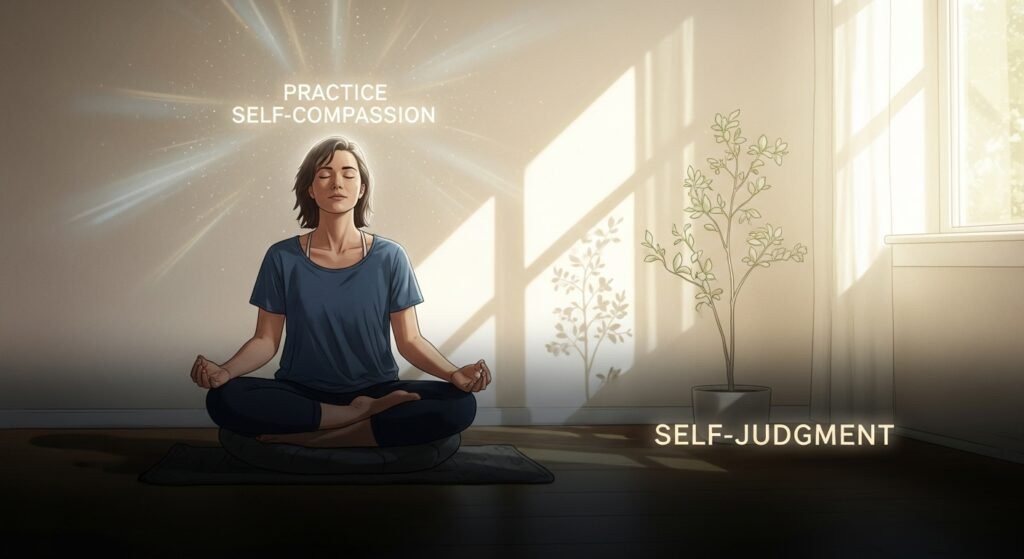
Way #1: Practice Self-Compassion Over Self-Judgment
Self-compassion is the cornerstone of authentic self-love, yet many people confuse it with self-pity or making excuses for bad behavior.
Research by Dr. Kristin Neff shows that self-compassion actually increases motivation and accountability while reducing anxiety and depression.
Unlike self-judgment, which creates shame spirals and defensive behaviors, self-compassion provides the emotional safety needed for genuine growth and change.
It involves treating yourself with the same kindness and understanding you would offer a good friend facing similar challenges.
The practice of self-compassion involves three key components: self-kindness versus self-judgment, common humanity versus isolation, and mindfulness versus over-identification.
When you make a mistake, instead of harsh self-criticism, you acknowledge the difficulty while recognizing that imperfection is part of the human experience.
This approach creates emotional resilience and fosters genuine self-improvement rather than defensive ego-protection that characterizes self-centeredness.
Building self-compassion requires consistent practice, especially if you’ve internalized critical inner voices from childhood or cultural conditioning.
Start by noticing your self-talk patterns and gently shifting from judgment to understanding.
When you catch yourself in harsh self-criticism, pause and ask: “What would I say to a friend in this situation?”
This simple question often reveals the stark difference between how you treat others versus yourself, opening the door for more compassionate self-relating.
Key Takeaways:
- Self-compassion increases motivation while reducing anxiety and depression
- Three components: self-kindness, common humanity, and mindfulness
- Unlike self-judgment, compassion creates emotional safety for growth
- Practice involves shifting from harsh criticism to understanding
- Self-compassion questions reveal treatment disparities
8 Self-Compassion Practices for Daily Life:
- Self-Kindness Language: Replace “I’m such an idiot” with “I’m learning and growing”
- Common Humanity Recognition: Acknowledge that struggle is universal, not personal
- Mindful Awareness: Notice difficult emotions without exaggerating or suppressing them
- Supportive Touch: Place hand on heart during stress to activate caregiving system
- Compassionate Letter Writing: Write to yourself from a friend’s perspective
- Forgiveness Practice: Release past mistakes through understanding rather than judgment
- Strength Acknowledgment: Recognize efforts and progress, not just outcomes
- Gentle Transitions: Allow yourself adjustment periods instead of demanding instant change

Way #2: Set Healthy Boundaries Without Walls
Healthy boundaries are essential for self-love, but they differ dramatically from the walls that self-centered people build to protect their fragile egos.
True boundaries come from self-respect and clarity about your values and needs, while walls arise from fear and the need to control others’ perceptions.
Research shows that people with healthy boundaries have better relationships, reduced stress, and higher life satisfaction, while those with rigid walls experience loneliness and disconnection.
Healthy boundaries involve knowing where you end and others begin – a concept psychologists call “differentiation.”
This means you can maintain your sense of self while remaining emotionally connected to others.
You can say no without guilt, ask for what you need without apology, and accept others’ boundaries without taking it personally.
This creates relationships based on mutual respect rather than manipulation or people-pleasing that often masks self-centeredness.
Building healthy boundaries starts with identifying your core values and needs.
What behaviors feel acceptable and unacceptable to you? What do you need to feel respected and cared for?
Once you’re clear about these, you can communicate them calmly and consistently without blaming others or making demands.
The key is maintaining boundaries for your own wellbeing rather than trying to control others’ behavior, which distinguishes self-love from self-centeredness.
Key Takeaways:
- Healthy boundaries differ from protective walls
- Boundaries come from self-respect and values clarity
- Walls arise from fear and control needs
- Differentiation allows connection while maintaining self
- Boundaries are communicated calmly without blame
8 Steps for Setting Healthy Boundaries:
- Values Clarification: Identify your core values and needs
- Behavior Assessment: Determine what feels acceptable/unacceptable
- Clear Communication: Express boundaries directly and calmly
- Consistent Maintenance: Reinforce boundaries without apology
- Self-Responsibility: Own your reactions without blaming others
- Flexibility Balance: Adjust boundaries based on context and relationships
- Guilt Release: Let go of guilt for maintaining healthy limits
- Reciprocity Respect: Honor others’ boundaries as you want yours honored

Way #3: Celebrate Others’ Success Genuinely
The ability to celebrate others’ success genuinely is perhaps the clearest indicator of healthy self-worth versus fragile ego.
Self-centered individuals feel threatened by others’ achievements because they view life as a zero-sum competition where someone else’s gain is their loss.
Those with authentic self-love feel genuinely happy for others because they recognize that success isn’t limited and others’ achievements don’t diminish their own worth.
This practice activates different neural pathways than competitive comparison, releasing oxytocin and creating feelings of connection rather than the cortisol-driven stress response that accompanies envy and competition.
Genuinely celebrating others becomes a source of joy rather than a threat to ego.
Building this capacity requires conscious effort if you’ve been conditioned to compete or compare.
Start small by actively looking for opportunities to acknowledge others’ achievements without qualifying them. Instead of “I’m happy for her, but…” practice saying “I’m genuinely thrilled about her success.”
Over time, this rewires your brain’s response to others’ achievements, transforming potential triggers for insecurity into opportunities for connection and joy.
Key Takeaways:
- Celebrating others indicates healthy self-worth vs. fragile ego
- Self-centered people view life as zero-sum competition
- Active celebration improves relationships and personal wellbeing
- Practice releases oxytocin and creates connection
- Rewiring brain response transforms threats into joy opportunities
8 Ways to Celebrate Others Genuinely:
- Active Constructive Responding: Show enthusiastic interest in others’ good news
- Specific Acknowledgment: Mention particular qualities that contributed to their success
- Public Recognition: Share others’ achievements with your network
- Learning Mindset: Ask what you can learn from their success
- Collaboration Focus: Look for ways to support their continued growth
- Gratitude Expression: Thank them for inspiring you through their example
- Comparison Release: Notice and let go of competitive thoughts
- Joy Sharing: Allow their happiness to increase your own happiness

Way #4: Embrace Vulnerability as Strength
Vulnerability is the gateway to authentic self-love, yet many people confuse it with weakness or oversharing.
Research by Dr. Brené Brown shows that vulnerability – the willingness to show up authentically even when there’s risk of rejection – is actually the foundation of courage, creativity, and connection.
Self-centered individuals avoid vulnerability because it threatens their carefully constructed image, while those with genuine self-worth understand that vulnerability is what makes real connection possible.
The key distinction is between strategic vulnerability and authentic vulnerability.
Strategic vulnerability is used to manipulate others’ perceptions or gain sympathy, while authentic vulnerability comes from a place of self-acceptance and truth-telling.
When you have healthy self-worth, you can share your struggles, admit your mistakes, and ask for help without fearing that these human experiences diminish your value.
This creates deeper relationships and more meaningful connections.
Building vulnerability muscles starts with small risks in safe relationships.
Share a personal struggle with a trusted friend, admit when you don’t know something at work, or ask for help when you need it.
Notice how people respond – those with genuine self-love will appreciate your authenticity, while those invested in maintaining facades may feel uncomfortable.
This process helps you distinguish between relationships built on real connection versus those based on performance.
Key Takeaways:
- Vulnerability is foundation of courage, creativity, and connection
- Self-centered people avoid vulnerability to protect image
- Authentic vs. strategic vulnerability creates different outcomes
- Healthy self-worth allows sharing without fearing value diminution
- Small vulnerability risks in safe relationships build capacity
8 Practices for Embracing Healthy Vulnerability:
- Truth-Telling Practice: Share honestly about your experiences and feelings
- Help-Seeking: Ask for support when you need it without apology
- Mistake Admission: Own errors without excessive self-defense
- Limitation Acknowledgment: Admit when you don’t know or can’t do something
- Emotion Expression: Show genuine feelings rather than managing impressions
- Imperfection Sharing: Let others see your human, imperfect sides
- Need Communication: Express your needs clearly without guilt
- Authentic Storytelling: Share real struggles along with successes

Way #5: Cultivate Gratitude Beyond Yourself
Gratitude is a powerful tool for building self-worth, but its practice reveals the difference between self-love and self-centeredness.
Self-centered gratitude focuses only on what benefits you personally – your achievements, possessions, and advantages.
Self-loving gratitude includes appreciation for your blessings while also recognizing the people, systems, and circumstances that support your wellbeing.
This broader perspective creates humility and connection rather than entitlement and separation.
Research shows that people who practice inclusive gratitude – appreciating both personal blessings and broader goodness – experience higher life satisfaction and better relationships than those who focus only on personal benefits.
This type of gratitude activates different neural pathways, creating feelings of connection and interdependence rather than the isolation that can accompany self-focused appreciation.
It helps you recognize that your wellbeing is intertwined with others’ wellbeing.
Building inclusive gratitude involves expanding your appreciation practice beyond personal benefits. Yes, be grateful for your health, but also appreciate the healthcare workers, farmers, and countless others who contribute to your wellbeing.
Be thankful for your abilities, but also recognize the teachers, mentors, and opportunities that helped develop them. This broader perspective creates genuine humility and connection to something larger than yourself.
Key Takeaways:
- Self-centered gratitude focuses only on personal benefits
- Self-loving gratitude includes appreciation for supporting systems
- Inclusive gratitude creates higher life satisfaction and better relationships
- Broader perspective activates connection rather than separation
- Gratitude for interconnectedness creates humility
8 Ways to Practice Inclusive Gratitude:
- Benefactor Recognition: Thank people who support your wellbeing
- System Appreciation: Acknowledge infrastructure and services that help you
- Interconnectedness Awareness: Notice how your wellbeing depends on others
- Contribution Gratitude: Appreciate those who make your life possible
- Nature Acknowledgment: Give thanks for natural systems that sustain you
- Opportunity Recognition: Appreciate circumstances that enabled your success
- Support Network Thanks: Regularly thank those who help you grow
- Pay-It-Forward Practice: Express gratitude through service to others

Way #6: Serve Others Authentically
Authentic service to others is a hallmark of genuine self-love, while performative or strategic service characterizes self-centeredness.
When you have healthy self-worth, serving others flows naturally from your abundance rather than from a need to prove your worth or gain approval.
Research shows that authentic altruism increases happiness, reduces stress, and creates meaningful life purpose, while strategic helping often leads to resentment and burnout.
The distinction lies in motivation: self-loving service comes from genuine care and the desire to contribute, while self-centered service aims to boost ego, gain recognition, or manipulate others’ perceptions.
Self-loving people help because they can, not because they must. They give without expectation of return, celebrate others’ contributions without needing center stage, and maintain healthy boundaries even while serving generously.
Building authentic service involves examining your motivations and choosing opportunities that align with your values and bring genuine joy.
Start with small acts of kindness that feel natural rather than grand gestures designed to impress.
Notice how giving makes you feel – authentic service energizes rather than depletes, creates connection rather than superiority, and feels satisfying regardless of recognition or outcome.
Key Takeaways:
- Authentic service flows from abundance rather than proving worth
- Motivation distinction: genuine care vs. ego boost/approval seeking
- Authentic altruism increases happiness and reduces stress
- Self-loving service energizes while strategic helping often burns out
- Start with small, natural acts rather than grand impressive gestures
8 Practices for Authentic Service:
- Motivation Examination: Check intentions before offering help
- Joy-Based Giving: Choose service opportunities that energize you
- Recognition Release: Give without needing acknowledgment or praise
- Boundary Maintenance: Serve generously while protecting your wellbeing
- Collaboration Preference: Work with others rather than above them
- Reciprocity Acceptance: Allow yourself to receive help gracefully too
- Impact Focus: Concentrate on results rather than personal image
- Humble Celebration: Let others shine while you contribute quietly

Way #7: Accept Imperfections Without Excuses
Accepting your imperfections without making excuses is a powerful practice that distinguishes self-love from self-centeredness.
Self-loving people acknowledge their flaws while taking responsibility for growth, while self-centered individuals either deny their imperfections entirely or make elaborate excuses that prevent change.
Research shows that accepting imperfections while maintaining high standards paradoxically leads to better performance and greater life satisfaction than perfectionism.
The key is what psychologists call “optimalist” thinking – accepting reality as it is while working toward improvement, versus “perfectionist” thinking that demands flawlessness and becomes paralyzed by imperfection.
Self-loving acceptance involves saying “This is where I am, and I’m working toward better” rather than “This is who I am, take it or leave it” (self-centered) or “I’m terrible unless I’m perfect” (self-judging).
Building this capacity requires noticing your perfectionistic tendencies and gently challenging them.
When you catch yourself making excuses, pause and ask: “What would taking responsibility look like here?”
When you notice harsh self-criticism, try: “How can I acknowledge this imperfection while still valuing myself?”
This creates space for authentic growth rather than defensive stagnation or shame-driven paralysis.
Key Takeaways:
- Accepting imperfections with growth intention distinguishes self-love
- “Optimalist” thinking outperforms perfectionism in achievement and satisfaction
- Self-loving acceptance acknowledges reality while working toward improvement
- Practice involves noticing perfectionism and gently challenging it
- Creates space for authentic growth rather than defensive stagnation
8 Practices for Accepting Imperfections:
- Reality Acknowledgment: Honestly assess current limitations without judgment
- Responsibility Taking: Own mistakes without defensive excuses
- Growth Focus: Emphasize learning over perfection in goal-setting
- Progress Celebration: Recognize improvement rather than demanding flawlessness
- Self-Forgiveness Practice: Release past mistakes through understanding
- Strength Integration: Acknowledge weaknesses while valuing strengths
- Comparison Release: Stop measuring against impossible standards
- Authentic Sharing: Admit imperfections without shame or pride

Way #8: Develop Inner Validation Systems
Developing inner validation systems is crucial for building self-worth that doesn’t depend on external approval.
While self-centered people constantly seek external validation to prop up fragile egos, those with authentic self-love have learned to provide themselves with the recognition and approval they need.
Research shows that people with strong internal validation are more resilient, creative, and satisfied with their lives than those who rely primarily on external feedback.
Inner validation involves developing your own standards for success, creating meaningful internal rewards, and learning to appreciate your efforts regardless of external outcomes.
This doesn’t mean ignoring feedback or becoming arrogant – it means treating external input as information rather than verdicts on your worth.
You can consider others’ opinions without being controlled by them, maintaining your center while remaining open to growth.
Building inner validation requires conscious effort to notice and appreciate your own efforts, progress, and values.
Start by identifying what truly matters to you beyond external achievements – qualities like kindness, integrity, growth, or creativity.
Then create regular practices for recognizing yourself for embodying these values, regardless of whether anyone else notices or praises you.
Key Takeaways:
- Inner validation provides recognition independent of external approval
- Self-centered people constantly seek external validation for fragile egos
- Internal validation creates resilience, creativity, and life satisfaction
- Involves developing personal standards and meaningful internal rewards
- External feedback becomes information rather than worth verdicts
8 Practices for Developing Inner Validation:
- Personal Standards Creation: Define success based on your values, not others’ opinions
- Effort Recognition: Acknowledge your work regardless of outcomes
- Values-Based Evaluation: Assess yourself based on embodying chosen values
- Internal Reward System: Create meaningful ways to celebrate your achievements
- Feedback Integration: Consider external input without being controlled by it
- Self-Appreciation Rituals: Regularly recognize your positive qualities
- Progress Documentation: Track growth based on your own metrics
- Authenticity Validation: Approve yourself for being genuine rather than impressive

Way #9: Practice Mindful Self-Care
Mindful self-care represents self-love in action, but it differs significantly from the self-indulgent or appearance-focused behaviors that often masquerade as self-care.
Authentic self-care involves tuning into your genuine needs – physical, emotional, mental, and spiritual – and responding with appropriate care.
Research shows that mindful self-care reduces stress, improves health outcomes, and increases life satisfaction, while performative self-care often becomes another source of pressure and comparison.
The distinction lies in intention and attention.
Mindful self-care asks “What do I genuinely need right now?” and responds with appropriate care, whether that’s rest, challenge, solitude, or connection.
Performative self-care asks “What will make me look good to others?” or follows rigid routines that ignore actual needs.
Self-loving self-care might mean canceling plans when exhausted, choosing nutritious food over comfort eating, or facing difficult emotions instead of distracting yourself.
Building mindful self-care requires developing body awareness and emotional literacy to recognize your actual needs.
This might involve learning to distinguish between physical hunger and emotional eating, recognizing when you need rest versus stimulation, or understanding when you need solitude versus connection.
The practice becomes self-reinforcing as you experience the benefits of responding appropriately to your genuine needs.
Key Takeaways:
- Mindful self-care involves tuning into genuine needs
- Performative self-care becomes pressure and comparison source
- Distinction lies in intention (need-based vs. appearance-based)
- Requires developing body awareness and emotional literacy
- Appropriate response creates self-reinforcing benefits
8 Practices for Mindful Self-Care:
- Body Scanning: Regularly check physical sensations and needs
- Emotion Recognition: Identify and name your emotional states
- Need Assessment: Ask “What do I genuinely need right now?”
- Appropriate Response: Choose actions that meet actual needs
- Boundary Setting: Say no to activities that drain rather than nourish
- Nourishment Selection: Choose foods, activities, and people that truly sustain you
- Rest Integration: Build genuine rest into your routine
- Challenge Balance: Include growth-promoting challenges alongside comfort

Way #10: Build Genuine Connections
Genuine human connection is both a requirement for and result of healthy self-worth.
Self-centered people often struggle with authentic relationships because they view others primarily as sources of validation or as competitors for attention.
Those with authentic self-love create deep connections because they don’t need others to constantly affirm their worth – they’re free to relate to others as whole people rather than roles in their personal drama.
Research consistently shows that meaningful relationships are the strongest predictor of life satisfaction and emotional wellbeing.
The quality of your connections reveals your relationship with yourself.
If you need others to constantly validate you, relationships become exhausting performance art.
If you need to dominate or control others, connections remain shallow and unsatisfying.
But when you have genuine self-worth, you can be authentic, allow others their full humanity, and create relationships based on mutual respect rather than mutual neediness.
This creates the deep satisfaction that external validation can never provide.
Building genuine connections requires developing the capacity for authentic presence with others.
This means listening without planning your response, sharing without managing impressions, and allowing relationships to unfold naturally rather than forcing them into predetermined roles.
It also means choosing relationships with people who value authenticity over performance, creating circles where genuine connection is celebrated rather than feared.
Key Takeaways:
- Genuine connection requires and results from healthy self-worth
- Self-centered people struggle with authentic relationships
- Quality of connections reveals relationship with self
- Authentic self-worth enables authentic presence with others
- Meaningful relationships strongest predictor of life satisfaction
8 Practices for Building Genuine Connections:
- Authentic Presence: Be fully present without managing impressions
- Deep Listening: Hear others without planning your response
- Vulnerability Sharing: Allow others to see your real self
- Judgment Suspension: Release evaluation of others’ choices
- Mutual Respect: Honor others’ autonomy and boundaries
- Support Reciprocity: Both give and receive help gracefully
- Conflict Navigation: Address issues directly with compassion
- Growth Celebration: Support others’ development without competition
📊 Complete Self-Worth Building Framework
| Practice | Self-Love Approach | Self-Centered Approach | Benefit | Challenge Level | Daily Time Required |
|---|---|---|---|---|---|
| Self-Compassion | Kind understanding | Harsh criticism or excuses | Emotional resilience | Beginner | 5-10 minutes |
| Boundaries | Respect-based limits | Controlling walls | Better relationships | Intermediate | Varies |
| Celebrating Others | Genuine joy | Competitive threat | Social connection | Intermediate | Moments |
| Vulnerability | Authentic sharing | Image protection | Deeper intimacy | Advanced | Ongoing |
| Gratitude | Inclusive appreciation | Personal focus only | Humility & joy | Beginner | 5 minutes |
| Service | Natural contribution | Strategic helping | Life satisfaction | Intermediate | Varies |
| Imperfection | Growth acceptance | Denial & excuses | Authenticity | Intermediate | Ongoing |
| Inner Validation | Self-recognition | External dependence | Independence | Advanced | 10-15 minutes |
| Self-Care | Need-based care | Appearance-focused | Wellbeing | Beginner | 30+ minutes |
| Connection | Authentic presence | Validation seeking | Life meaning | Advanced | Ongoing |
💫 Real Transformation Stories
Michael’s Journey: A successful entrepreneur who built his identity on being “the best,” Michael found himself increasingly isolated despite professional achievements. “I thought self-love meant being number one,” he shares. “But I was exhausted from constantly proving my worth.” Through practicing self-compassion and celebrating others’ success, Michael discovered genuine confidence that didn’t require constant validation. “Now I can enjoy others’ achievements without feeling threatened. Ironically, my business has grown more since I stopped trying to prove myself.”
Jennifer’s Breakthrough: A perfectionist who spent years in therapy trying to “fix” herself, Jennifer discovered that accepting her imperfections actually accelerated her growth. “I thought self-love meant becoming perfect,” she explains. “But embracing my flaws while still working on growth created peace I’d never experienced. My relationships deepened when I stopped trying to present an idealized version of myself.”
David’s Connection: Struggling with people-pleasing and boundary issues, David learned that genuine self-worth meant honoring his own needs while caring for others. “Setting boundaries felt selfish at first,” he admits. “But healthy boundaries actually improved all my relationships. People respect me more when I respect myself.”
❓ Frequently Asked Questions About Self-Love vs. Self-Centeredness {#faqs}
Q1: How do I know if I’m practicing self-love or being self-centered?A: Check your motivation and impact: Self-love feels expansive and improves your relationships with others. Self-centeredness feels constricted and creates distance from others. Ask: “Does this choice increase my capacity to connect with and contribute to others, or does it isolate me in my own concerns?”
Q2: Can self-love ever turn into narcissism?A: Authentic self-love naturally includes care for others and recognition of interconnection. Narcissism stems from insecurity, not genuine self-love. However, if your “self-love” practices consistently harm relationships or require others to sacrifice for you, examine whether they mask deeper insecurities.
Q3: What if people mistake my self-love for selfishness?A: True self-love ultimately benefits everyone around you by making you more emotionally available and authentically present. Some people may initially resist your boundaries or self-care if they’re used to you people-pleasing. Stay consistent with healthy practices while remaining compassionate toward their adjustment.
Q4: How do I build self-worth after years of people-pleasing?A: Start small with self-compassion practices and boundary-setting. Notice when you abandon your own needs for others’ approval, then gently choose differently. Building new neural pathways takes time, so be patient with yourself while consistently practicing self-honoring choices.
Q5: Is it possible to have too much self-esteem?A: Healthy self-esteem is like a well-rooted tree – it provides stability without blocking others’ growth. Problems arise when self-esteem depends on feeling superior to others rather than equal. Focus on building worth that doesn’t require comparison or competition.
Q6: How do I practice self-love while being a parent, partner, or caregiver?A: Self-love makes you a better caregiver by ensuring you have emotional resources to give. Model healthy self-worth for children, maintain boundaries in relationships, and remember that caring for yourself enables sustainable care for others. You can’t pour from an empty cup.
Q7: What’s the difference between self-care and self-indulgence?A: Self-care meets genuine needs and builds long-term wellbeing. Self-indulgence often masks deeper needs or provides temporary comfort while neglecting real issues. Ask: “Does this nourish me deeply or just distract me temporarily? Will this choice benefit me tomorrow or just today?”
Q8: How do I build self-worth without becoming arrogant?A: Arrogance masks insecurity, while genuine self-worth creates humility. Focus on building worth that doesn’t depend on feeling superior to others. Practice gratitude for your strengths while celebrating others’ gifts. Remember that everyone’s worth is equal, even if expressed differently.
Q9: Can therapy help me build self-love without ego?A: Therapy can be invaluable for healing wounds that block self-love and learning healthy relationship patterns. Look for therapists who understand the difference between building authentic self-worth versus reinforcing ego defenses. Many people benefit from professional support in this journey.
Q10: How long does it take to build genuine self-worth?A: Building authentic self-worth is a lifelong journey of deepening self-understanding and self-compassion. However, you can experience shifts relatively quickly through consistent practice. Most people notice improvements in relationships and mood within weeks of beginning self-love practices, with deeper transformation unfolding over months and years.
🌟 Your Journey to Authentic Self-Worth Begins Now {#conclusion}
You’ve just discovered the profound difference between self-love that uplifts everyone around you and self-centeredness that ultimately isolates and limits. These ten ways to build self-worth without ego aren’t just theories – they’re practical pathways to the authentic confidence and deep satisfaction you’ve been seeking.
The beautiful truth about genuine self-love: It doesn’t require constant maintenance, external validation, or the exhausting performance of being “enough.” Instead, it emerges naturally as you release the protective patterns that once seemed necessary for survival but now limit your capacity for joy and connection.
Remember Sarah from our opening story? Six months after learning to distinguish self-love from self-centeredness, she reports: “I don’t wake up trying to love myself anymore. I wake up being someone I naturally love – and that love overflows to everyone around me. My relationships have never been better, and I finally feel at peace in my own skin.”
Your transformation timeline starts today:
- This week: Choose one practice that resonates most deeply
- This month: Notice how your relationships shift as you build authentic self-worth
- This year: Experience the compound effect of genuine self-love that enhances rather than diminishes your connection to others
The path forward is clear but requires courage:
- Start small: Pick one technique and practice it consistently
- Stay patient: Building new neural pathways takes time and repetition
- Seek support: Connect with others on similar journeys
- Trust the process: Authentic self-worth will emerge naturally
Remember: You don’t need to become someone worthy of love. You need to remember that you’re already worthy and start treating yourself accordingly. The love you seek isn’t outside you – it’s the love you cultivate within that then flows outward to enrich every relationship in your life.
Your journey from self-centeredness to authentic self-love begins with a single choice: Will you continue the exhausting performance of trying to prove your worth, or will you relax into the genuine self-worth that’s been waiting for recognition all along?
Choose love – the kind that includes yourself and everyone else. Choose the self-worth that needs no defense because it’s rooted in the truth of who you already are.
Welcome to authentic self-love. Welcome home to yourself. 💝
Ready to begin your journey to authentic self-worth? Choose one practice from this guide and implement it today. Share this article with someone who needs to distinguish between self-love and self-centeredness. The courage to love yourself authentically will transform not only your life but everyone whose life you touch.
Happy loving – yourself and others! ✨