
In a world often marked by chaos and imbalance, the wisdom embedded in Universal Laws & Spiritual Ethics offers a timeless guide to living in harmony with oneself, others, and the larger cosmos.
Embracing these age-old truths helps cultivate inner peace, ethical integrity, and sustainable success, opening pathways toward a balanced life.
This blog delves deeply into the seven timeless principles derived from universal laws & spiritual ethics that empower you to navigate life’s challenges with grace, responsibility, and profound wisdom.
Whether you seek personal growth, improved relationships, or a deeper connection to the universe, these principles provide actionable insights to transform your life holistically.
Table of Contents
- Introduction to Universal Laws & Spiritual Ethics
- Principle 1: The Law of Divine Oneness
- Principle 2: The Law of Cause and Effect
- Principle 3: The Law of Vibration
- Principle 4: The Principle of Truthfulness and Integrity
- Principle 5: The Principle of Non-Harming (Ahimsa)
- Principle 6: The Law of Detachment
- Principle 7: The Ethic of Compassionate Stewardship
- Frequently Asked Questions (FAQs) on Universal Laws & Spiritual Ethics

1. Introduction to Universal Laws & Spiritual Ethics
Universal Laws & Spiritual Ethics form the foundation of a mindful, balanced life that honors the interconnectedness of all beings and the cosmos.
These principles are not confined to any one religion or philosophy but are perennial truths that resonate across cultures and centuries.
Universal laws describe the natural order of reality, such as the law of cause and effect or the law of vibration, which govern how energy and actions manifest results.
Spiritual ethics guide how we apply these laws with moral responsibility, promoting virtues like honesty, compassion, and non-violence.
By integrating these laws and ethics into daily living, we align ourselves with the flow of life, reducing suffering and enhancing fulfillment.
Key Points:
- Universal laws explain how the universe operates.
- Spiritual ethics inform our moral and ethical choices.
- Together, they provide a blueprint for balanced, conscious living.
- They foster personal transformation and social harmony.
- Awareness and application lead to inner peace and outer success.
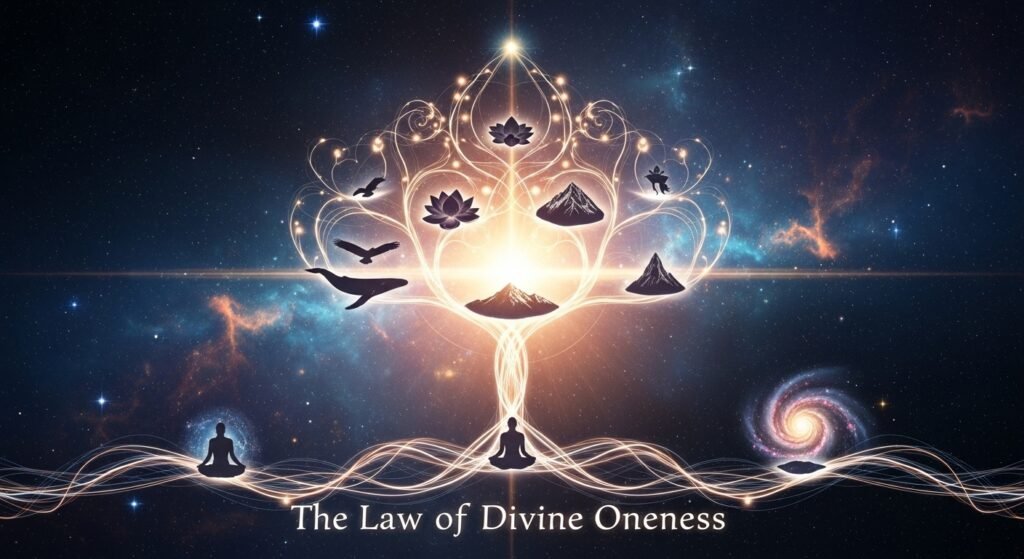
2. Principle 1: The Law of Divine Oneness
The Law of Divine Oneness states that everything in the universe is interconnected and part of a single whole. This principle emphasizes unity and interdependence.
When we recognize oneness, we see how our thoughts, words, and actions affect the collective consciousness.
This awareness fosters empathy, compassion, and ethical responsibility—cornerstones of spiritual ethics.
Living in alignment with this law encourages cooperation, kindness, and environmental stewardship.
In Depth:
- We are energetically connected to all life forms.
- Separation is an illusion; our well-being is tied to others’.
- Actions motivated by selflessness support universal harmony.
- Understanding oneness diminishes prejudice and fosters inclusivity.
- Aligning with this law dissolves barriers and fosters peace.
Practice Points:
- Meditate on interconnectedness regularly.
- Engage in acts of service rooted in empathy.
- Foster community and collaborative projects.
- Make choices that consider collective impact.
- Practice forgiveness recognizing shared humanity.
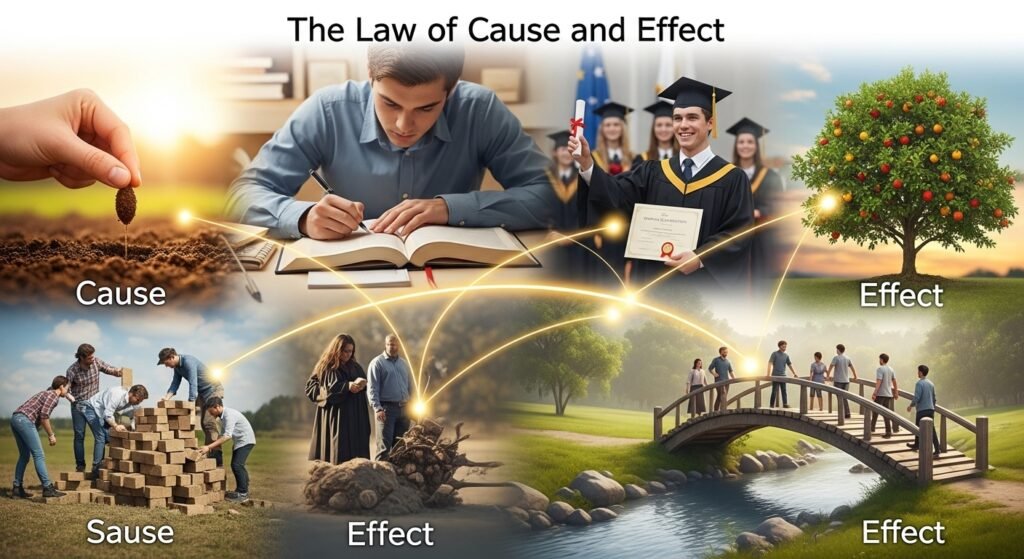
3. Principle 2: The Law of Cause and Effect
Also known as karma, the Law of Cause and Effect asserts that every action generates a corresponding reaction, physically, emotionally, or spiritually.
This law highlights accountability and the ethical imperative to act consciously.
Recognizing this helps cultivate mindfulness regarding intentions and consequences.
It encourages us to sow positive seeds to reap beneficial outcomes.
In Depth:
- Every choice influences future experiences.
- Negative actions often result in suffering or obstacles.
- Positive deeds promote growth and harmony.
- This law underscores the importance of personal responsibility.
- Awareness of this dynamic fosters intentional living.
Practice Points:
- Reflect before acting to anticipate impact.
- Take responsibility for past actions.
- Cultivate positive habits to build good karma.
- Apologize and make amends when needed.
- View setbacks as opportunities for learning.

4. Principle 3: The Law of Vibration
The Law of Vibration states that everything in the universe is in constant motion, vibrating at different frequencies.
Our thoughts, emotions, and energies emit vibrations that attract similar energies, influencing the circumstances and experiences we encounter.
Maintaining positive vibrations through uplifting thoughts and emotions helps attract opportunities and relationships that align with our highest good.
Conversely, negative vibrations can create resistance and unwanted outcomes.
By becoming aware of our vibrational state, we can consciously shift it through practices like meditation, gratitude, and mindfulness.
Aligning our inner energy with our desires creates harmony between ourselves and the universe.
This law highlights the power of energetic alignment in manifesting a balanced and successful life.
Ultimately, understanding and working with vibration empowers us to shape our reality consciously.
In Depth:
- Emotions like love and joy vibrate at higher frequencies.
- Negative emotions like fear lower vibration, attracting challenges.
- Maintaining positive vibrations supports manifestation.
- This law connects mindset with material outcomes.
- Cultivating self-awareness enhances vibrational control.
Practice Points:
- Use affirmations and visualizations daily.
- Practice gratitude and mindfulness.
- Surround yourself with uplifting influences.
- Engage in activities that raise your vibration.
- Release negativity through journaling or therapy.
5. Principle 4: The Principle of Truthfulness and Integrity
The Principle of Truthfulness and Integrity is essential for living an authentic and balanced life.
It requires honesty in both our words and actions, fostering trust within ourselves and in our relationships with others.
Living with integrity means aligning our behavior consistently with our deepest values and beliefs, creating harmony between what we say and do.
This principle discourages deception, half-truths, and self-denial, as they lead to inner conflict and external disconnection.
Embracing truthfulness strengthens our credibility and helps cultivate genuine connections based on transparency.
It also supports personal growth by encouraging self-reflection and accountability.
Ultimately, truthfulness and integrity lay the foundation for ethical decision-making and spiritual development.
In Depth:
- Truthfulness builds credibility and respect.
- Integrity supports consistency and reliability.
- Deception leads to inner conflict and external disharmony.
- Honesty promotes clearer communication and boundaries.
- Spiritual growth depends on sincere self-examination.
Practice Points:
- Practice radical honesty in communication.
- Regularly reflect on personal values.
- Hold yourself accountable for alignment.
- Address discrepancies between beliefs and actions.
- Foster environments that encourage ethical behavior.
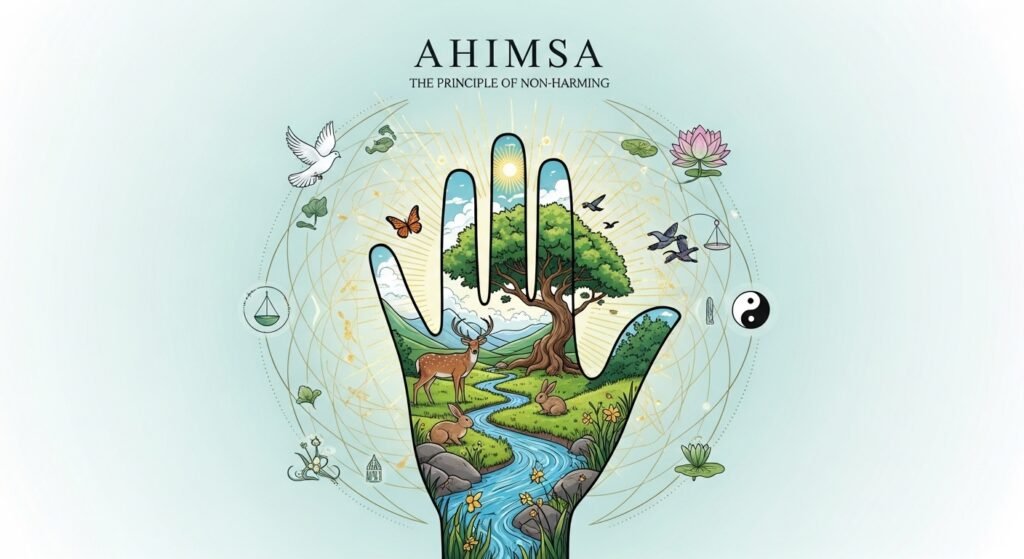
6. Principle 5: The Principle of Non-Harming (Ahimsa)
The Principle of Non-Harming, or Ahimsa, is a fundamental spiritual ethic that calls for kindness and non-violence in thought, word, and action.
It encourages us to avoid causing harm to any living being, including ourselves, fostering compassion and respect for all forms of life.
Practicing Ahimsa promotes inner peace and helps create a more harmonious world by reducing suffering and conflict.
This principle extends beyond physical non-violence to include refraining from harmful speech and destructive behaviors.
Embracing Ahimsa leads to deeper empathy and encourages restorative, peaceful interactions in daily life.
In Depth:
- Avoid causing physical, emotional, or psychological harm.
- Practice patience and understanding toward others.
- Cultivate compassion for all beings.
- Recognize subtler harms like gossip or judgment.
- Promote restorative justice over punishment.
Practice Points:
- Reflect before speaking to ensure kindness.
- Practice forgiveness to heal relationships.
- Reduce environmental footprints voluntarily.
- Engage in advocacy for vulnerable communities.
- Meditate on loving-kindness regularly.

7. Principle 6: The Law of Detachment
The Law of Detachment teaches us to maintain commitment to our goals while releasing attachment to specific outcomes.
This spiritual principle encourages surrendering control and trusting the natural flow of life, reducing anxiety and resistance.
By practicing detachment, we cultivate inner peace and resilience, allowing us to adapt gracefully to change and uncertainty.
It helps us avoid frustration that arises from clinging too tightly to desires or expectations.
Detachment does not mean indifference but rather an open-hearted acceptance of whatever unfolds.
This balance between effort and surrender enables creativity and opens doors to unexpected opportunities.
Embracing the Law of Detachment nurtures freedom from fear and deepens our spiritual growth. Ultimately, it aligns us with the flow of the universe.
In Depth:
- Attachment leads to suffering when desires are unmet.
- Detachment fosters equanimity and peace.
- Surrendering control enhances flow and serendipity.
- Commitment remains without rigid fixations.
- Practicing detachment supports spiritual freedom.
Practice Points:
- Use meditation to release control.
- Reflect on impermanence daily.
- Cultivate trust in the universe’s wisdom.
- Observe thoughts without over-identification.
- Accept change as natural and necessary.

8. Principle 7: The Ethic of Compassionate Stewardship
The Ethic of Compassionate Stewardship calls us to care responsibly and lovingly for ourselves, others, and the planet.
It emphasizes nurturing all resources—physical, emotional, and environmental—with mindfulness and respect.
This principle encourages sustainable practices that protect and preserve life for future generations.
Compassion motivates us to act with empathy, justice, and fairness in our interactions and decisions.
Stewardship is an active commitment, not just a passive ideal, requiring conscious choices that support collective well-being.
By embodying this ethic, we contribute to healing social inequalities and environmental degradation.
Compassionate stewardship fosters a sense of interconnected responsibility, reminding us that true success includes caring for the whole.
It ultimately nurtures harmony between humanity and the natural world.
In Depth:
- Stewardship respects finite resources and honors sustainability.
- Compassion motivates actions benefiting collective welfare.
- It involves proactive care and advocacy.
- Builds legacy and accountability for future generations.
- Embodies the highest form of spiritual responsibility.
Practice Points:
- Choose sustainable products and lifestyles.
- Support fair trade and ethical businesses.
- Volunteer or donate to environmental and social causes.
- Educate others on responsible living.
- Lead by example in community involvement.
Table: Overview of Universal Laws & Spiritual Ethics Principles
| Principle | Essence | Practical Benefits |
|---|---|---|
| Law of Divine Oneness | Interconnectedness of all beings | Empathy, unity, collaboration |
| Law of Cause and Effect | Every action has consequences | Accountability, conscious choices |
| Law of Vibration | Energy attracts like energy | Positive mindset, manifestation |
| Truthfulness and Integrity | Honesty in thoughts and actions | Trust, authenticity, clear communication |
| Non-Harming (Ahimsa) | Avoidance of harm in all forms | Peace, compassion, restorative justice |
| Law of Detachment | Letting go of attachment | Resilience, flow, reduced anxiety |
| Compassionate Stewardship | Caring for life and environment | Sustainability, social justice, legacy |
Frequently Asked Questions (FAQs) About Universal Laws & Spiritual Ethics
1. What are Universal Laws & Spiritual Ethics?
They are timeless principles that describe natural order and moral guidelines for balanced, conscious living.
2. How do Universal Laws impact daily life?
They govern cause-effect relationships and energy flows, influencing our experiences and outcomes.
3. Can anyone practice Spiritual Ethics?
Yes, these ethics transcend religion and culture, accessible to all who seek mindful, ethical living.
4. What is the importance of the Law of Cause and Effect?
It teaches responsibility by showing how our actions shape present and future realities.
5. How does the Law of Vibration relate to emotions?
Our emotions emit vibrations that attract similar energies, impacting what we experience.
6. Why is non-harming essential?
Avoiding harm supports inner peace and fosters compassionate, healthy relationships.
7. How can detachment improve mental health?
It reduces suffering by easing anxious attachments to outcomes or possessions.
8. What is compassionate stewardship in practical terms?
It’s actively caring for people, animals, and the environment through responsible choices.
9. Are Universal Laws scientifically proven?
While not always measurable scientifically, they align with many scientific principles like energy conservation.
10. How can I start applying these principles today?
Begin with self-awareness practices like meditation, adopt ethical habits, and reflect on your interconnectedness.
Conclusion
Embracing Universal Laws & Spiritual Ethics offers an enduring pathway to a balanced, fulfilling life.
These seven timeless principles illuminate how aligning with the deeper truths of interconnectedness, cause and effect, vibration, honesty, non-harming, detachment, and compassionate stewardship fosters sustainable well-being for ourselves, our communities, and the planet.
By integrating these insights into daily living, we cultivate not only personal growth but also collective harmony—empowering us to navigate life’s complexities with wisdom, responsibility, and grace.
Living in alignment with universal laws and spiritual ethics is not a distant ideal but a practical, transformative journey accessible to all committed to creating positive and lasting change in the world.